




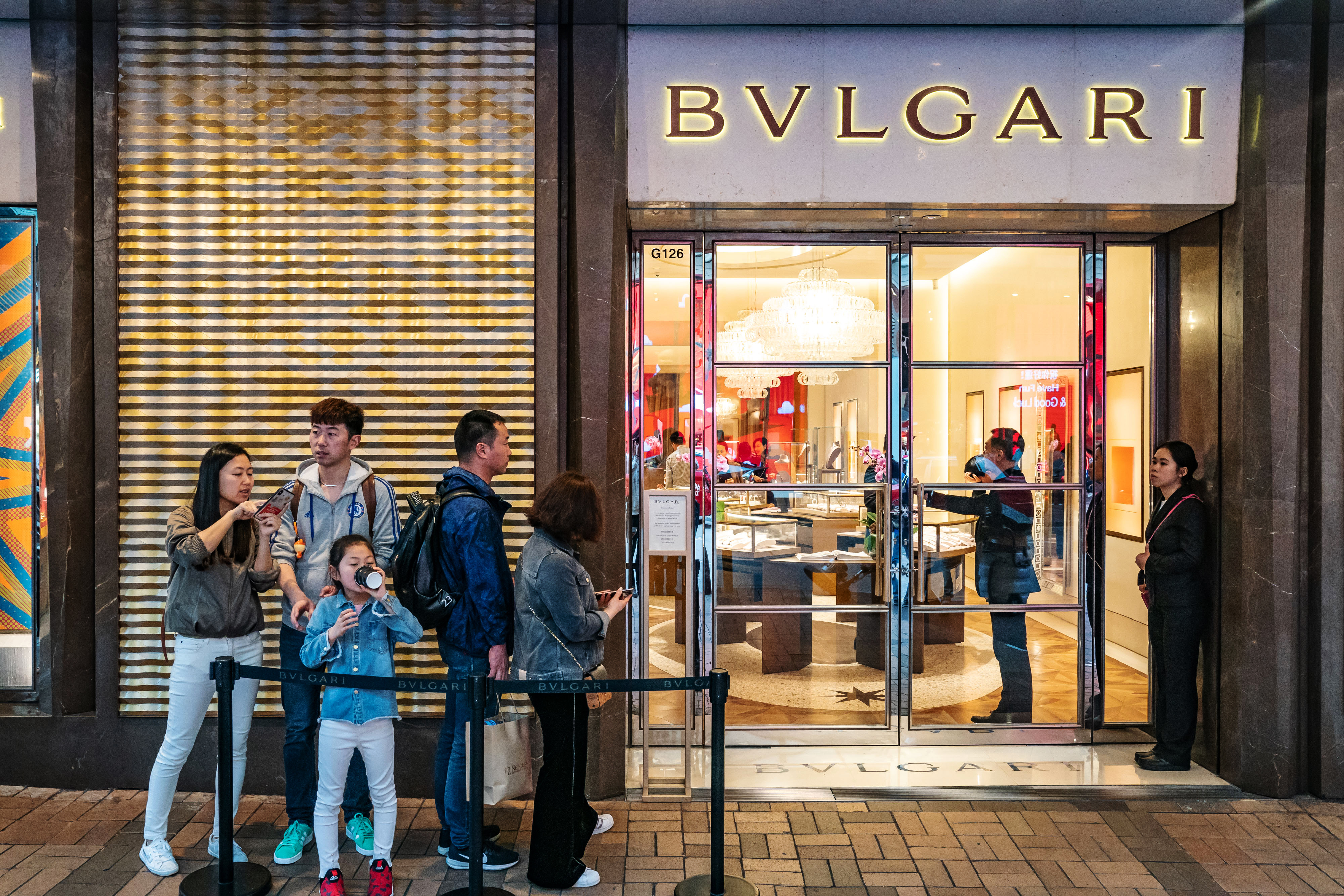
 Shoppers wait in line outside a Bvlgari SpA store on Canton Road in the Tsim Sha Tsui district of Hong Kong, China, on Sunday, Feb. 3, 2019. (Photo: Anthony Kwan/Bloomberg)
 The LVMH-owned jeweller has seen a more visible downturn this year in China at its brick-and-mortar stores versus online channels that can reach more customers including those in smaller cities, Babin added Wednesday in a roundtable interview at the annual China International Import Expo in Shanghai.
Read More: LVMH’s Empty Chinese Megastore Signals Deepening Luxury Crash
His forecast comes as luxury giants from Swiss watchmakers to fashion brands struggle to lure back Chinese consumers. The world’s second-largest economy, long a cornerstone for global retailers, is yet to recover from the post-Covid slowdown that’s made its once label-obsessed shoppers increasingly frugal.
LVMH’s sales in the region that includes China fell 16% in the third quarter, more than its 14% drop in the previous three months. Kering SA warned that its annual profit will fall to its lowest level since 2016 after comparable sales at its biggest label, Gucci, tumbled 25% in the quarter due to the mainland slowdown.
Babin said earlier this year that Bulgari’s focus on the more stable women’s watch market — and the fact that it makes the majority of its own parts like cases, dials and movements — gives it the ability to adjust production and ride out a decline in demand, including in China.