




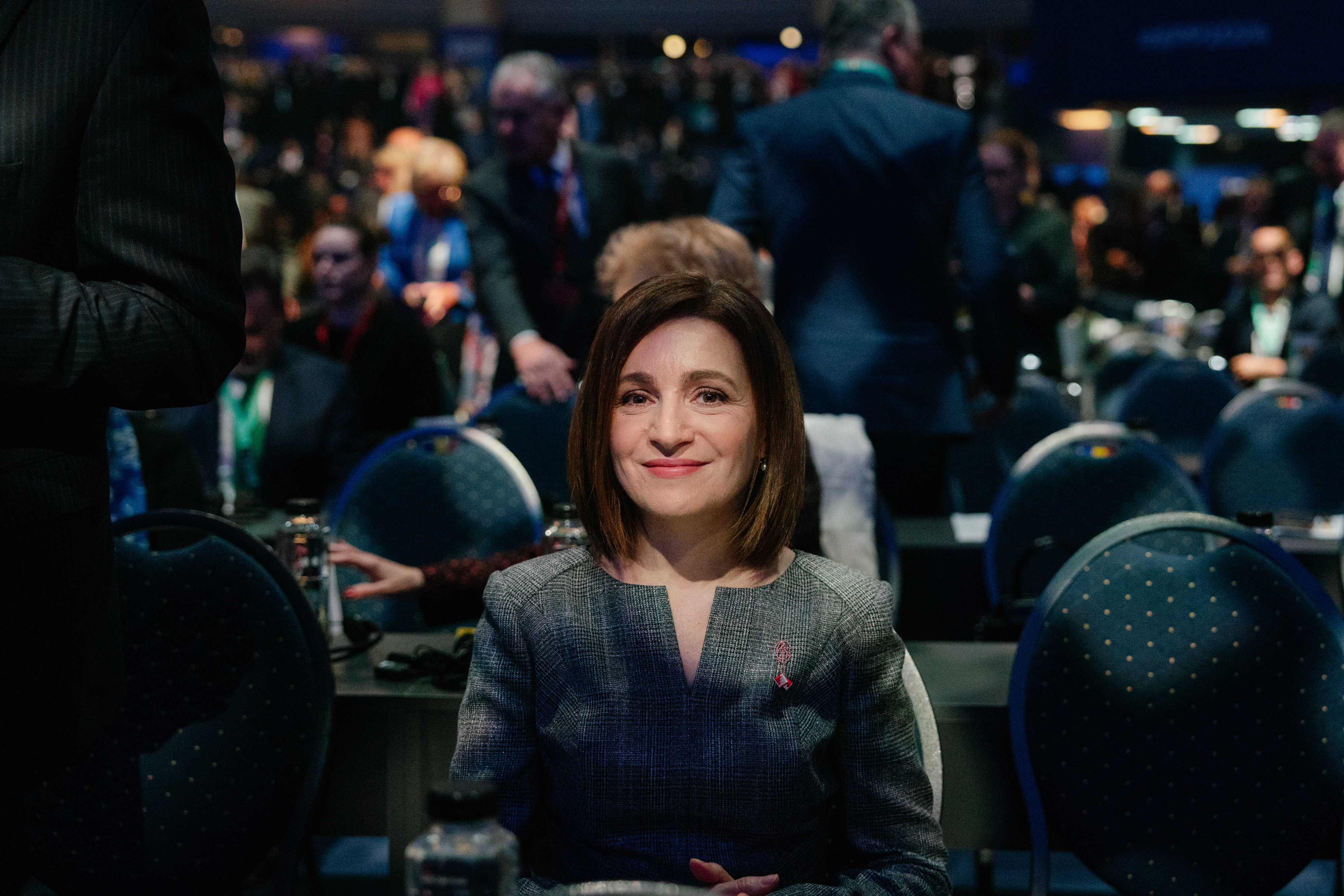
 Maia Sandu, Moldova's president, at the European People's Party congress in Bucharest, Romania, on Wednesday, March 6, 2024. The European People's Party congress in Bucharest is expected to validate Ursula von der Leyen as their lead candidate for another term as the European Commission's President. Photographer: Andrei Pungovschi/Bloomberg via Getty Images
 Ministry spokeswoman Maria Zakarova, in a commentary on her ministry's website, also said the outcome, with Sandu securing victory largely because of support from Moldovans living abroad, exposed a "deep split" in Moldovan society.
"It would be no exaggeration to say that this was the most undemocratic election campaign in all the years of Moldovan independence," Zakharova said.
"The distinguishing features were the authorities' unprecedented repression of the opposition and independent media, above all Russian-language media, and overt interference by the West in the electoral process."
Zakharova said the polarisation exposed by the outcome was "provoked by the short-sighted policy of the country's leaders and blatant interference from the West".
Sandu has long denounced Russia's invasion of Ukraine and accused Russia of plotting to topple her administration. After the election's first round last month, she complained of a campaign to bribe voters to vote against her and a referendum on European Union membership, which passed with a small majority.
(Reporting by Ron Popeski; editing by Barbara Lewis)