




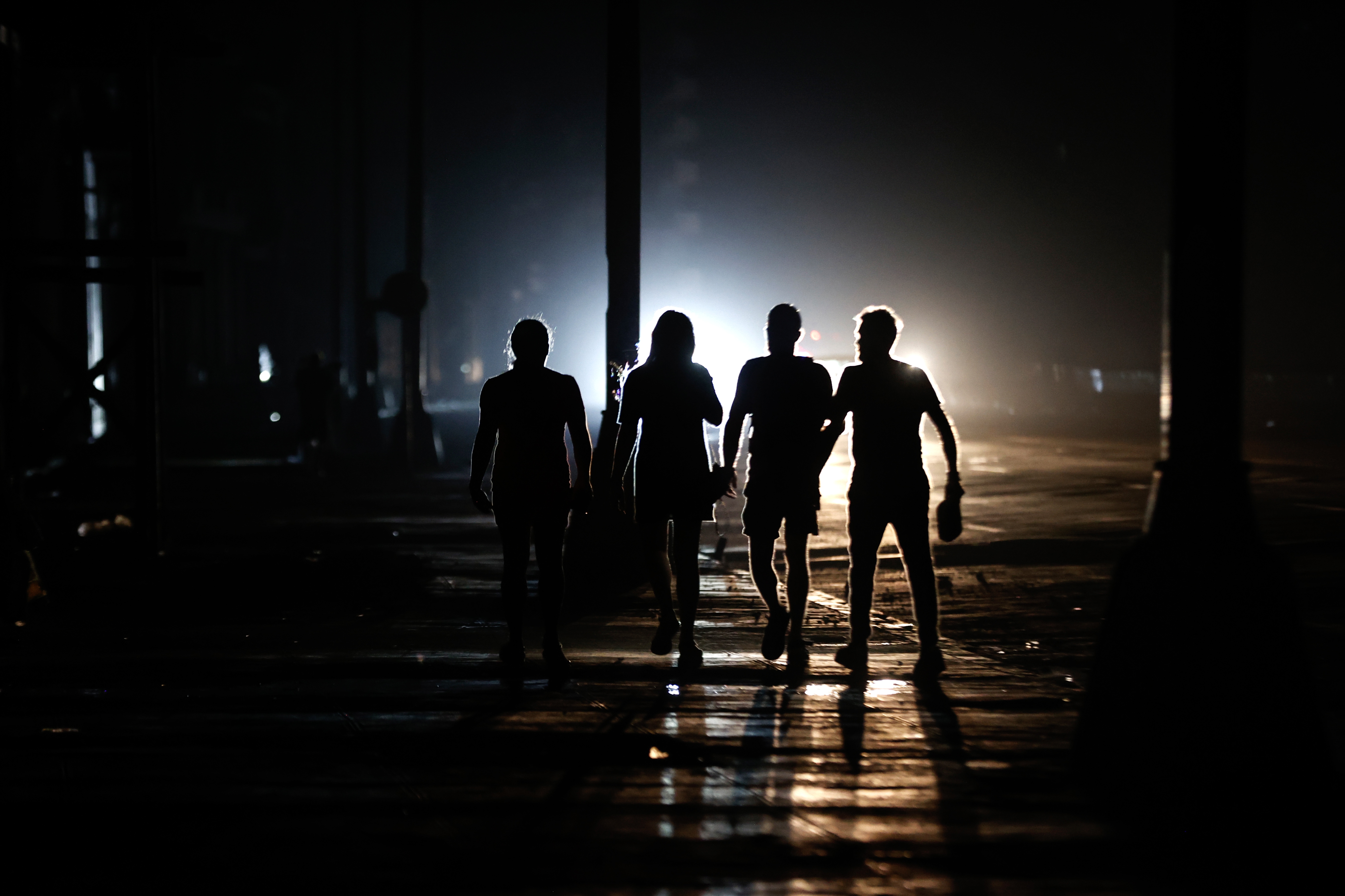
 People walk down a street during a blackout, in Havana, Cuba, 20 October 2024 (issued 21 October 2024). The restoration of electricity in the affected areas of Cuba, including Havana, is in progress, after Cuba's Ministry of Energy and Mines reported on 20 October a third total failure of the National Electric System (SEN) in less than three days. EPA-EFE/ERNESTO MASTRASCUSA
 The island's far eastern province of Guantanamo was particularly hard hit by Oscar, which made landfall as a category one hurricane and unleashed more than 15 inches of rain in some areas. The cyclone was downgraded to a tropical storm before veering north to the Bahamas earlier this week.
The storm, combined with a nearly unprecedented electrical grid collapse on Friday, created a nightmare scenario in a country already suffering dramatic food, fuel and medicine shortages.
The crisis prompted scattered protests throughout Havana and elsewhere in the country.
Officials said late on Tuesday seven people had died as a result of the storm. Cuba's armed forces had rescued nearly 500 people from remote areas isolated by floodwaters or landslides, with upwards of 4,000 residents still housed in shelters.
Flash floods destroyed homes, roads, agricultural lands and already decrepit infrastructure throughout the majorcoffee-producing region. Wind and rain had damaged at least 2,280 homes, state-run media reported.
Communications were still spotty in rural areas, and most of the eastern province remained without power as emergency workers cleaned up tangles of downed power lines.
The United Nations said on Wednesday it would support Cuba in recovery efforts following Oscar.
The storm had also complicated the recovery of Cuba's already precarious electrical grid. Cuba stabilized its electrical service on Tuesday, but warned that outages would continue as before the grid collapse.
Cuba's outdated power plants, struggling to keep the lights on, reached a full crisis this year as oil imports from Venezuela, Russia and Mexico dwindled, culminating in last Friday's grid collapse.
A generation deficit of about one-third total demand was expected on Wednesday, the national electric company said, leaving many Cubans still in the dark.
(Reporting by Marc Frank and Dave Sherwood; Editing by Richard Chang)