




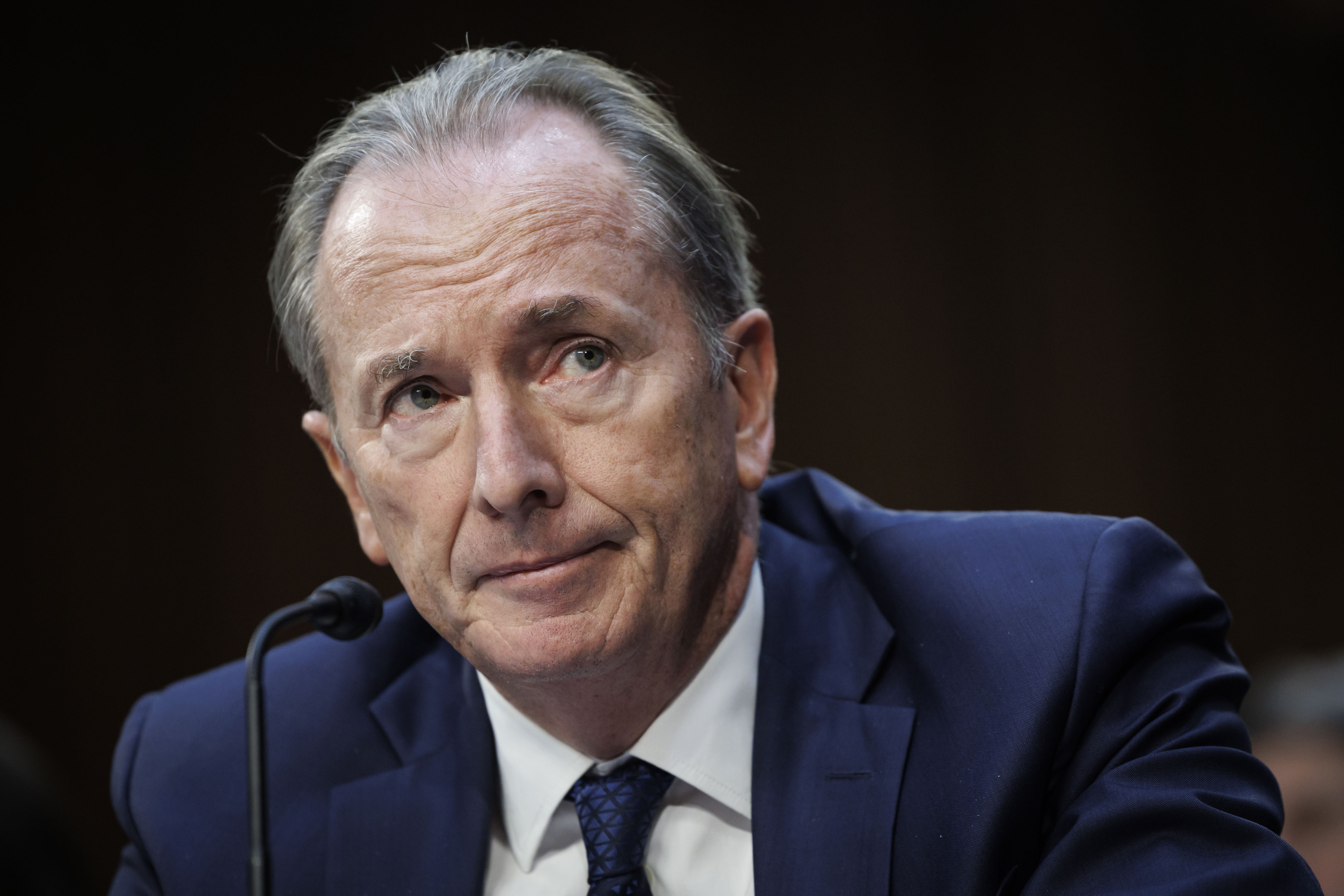
 James Gorman, chairman and chief executive of Morgan Stanley, during a Senate Banking, Housing, and Urban Affairs Committee hearing in Washington, DC, US, on Wednesday, Dec. 6, 2023. The heads of the biggest US banks will use the hearing to make their case for watering down rule proposals they argue will harm the economy.
“A critical priority before us is to appoint a new CEO, which we now expect to announce in early 2026,” Gorman, 66, said in the statement. “This timing reflects the progress the Succession Planning Committee and the Board are making, and will allow ample time for a successful transition before the conclusion of Bob Iger’s contract in December 2026.”
CEO succession at Disney has been tumultuous and a subject of much speculation. Iger returned to the top job in late 2022 for an initial period of two years after the ouster of his handpicked successor, Bob Chapek. The company has since extended his contract. In Iger’s first tenure, he and the board negotiated several extensions over 15 years.
Since his return, Disney has adopted a more formal succession planning process, creating the special committee that Gorman chairs. Iger has insisted he is leaving this time for good when his contract expires.
Gorman, who is executive chairman of Morgan Stanley and is stepping down from that role on Dec. 31, defied deeply entrenched Wall Street norms with a bloodless handoff at the investment bank, picking a successor from within the firm while persuading the losing candidates to stay. His departure caps a nearly two-decade run at the firm.
In addition to Gorman, the Disney board’s succession planning committee includes General Motors Co. CEO Mary Barra and Calvin McDonald, CEO of Lululemon Athletica Inc. The committee met six times in fiscal 2024, Disney said.
Disney is weighing both internal and external candidates to succeed Iger, whose second term as CEO runs through 2026.
Disney’s four divisional heads — TV chief Dana Walden, ESPN’s Jimmy Pitaro, theme-parks boss Josh D’Amaro and Alan Bergman, who heads the film business — are competing for the CEO role, Bloomberg has reported.
Comments
Scroll down to load comments...