




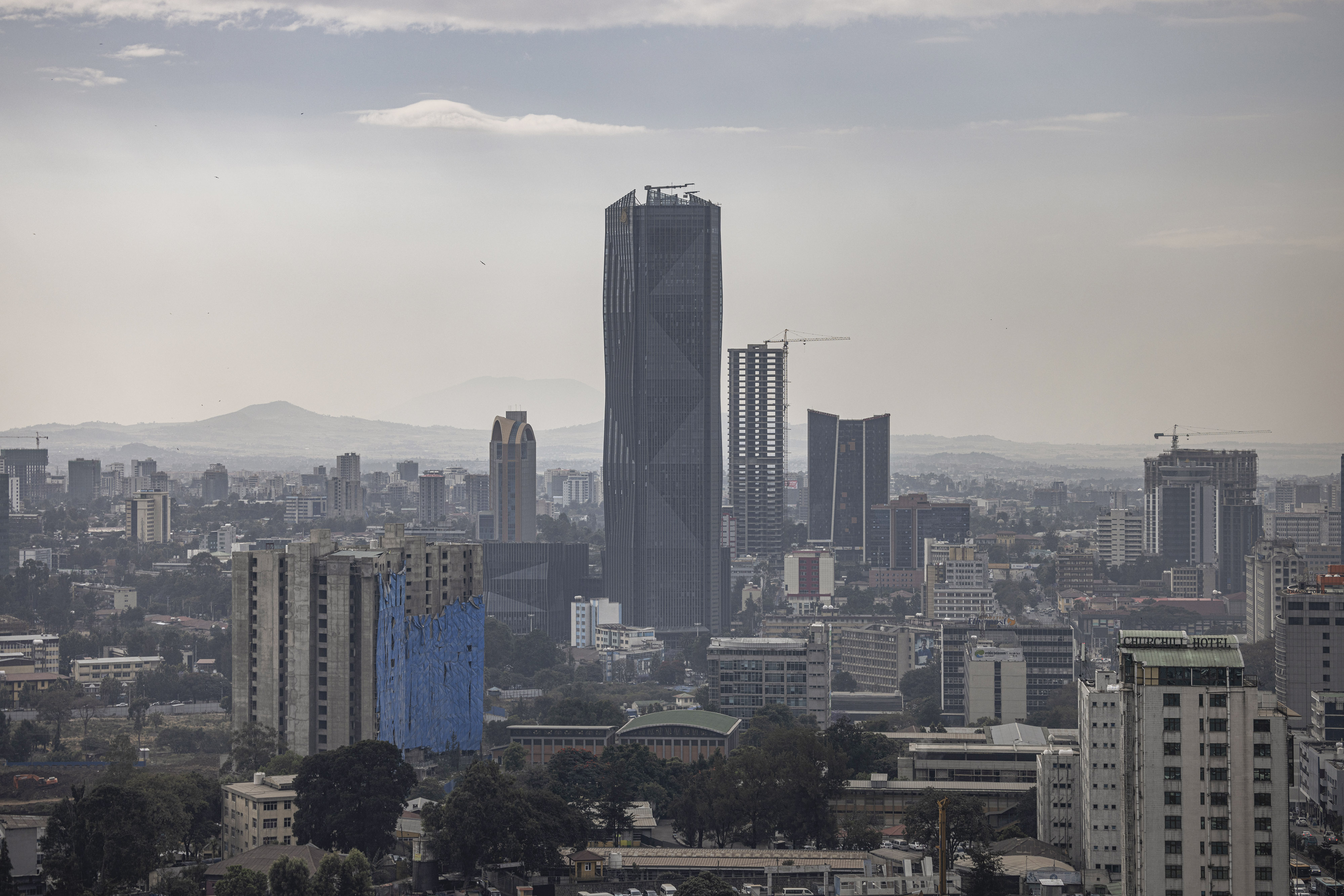
 The headquarters of the Commercial Bank of Ethiopia, center, and skyscraper offices in Addis Ababa, Ethiopia, on Thursday, Dec. 7, 2023. The Horn of Africa nation has been seeking to rework its liabilities since 2021 as a civil war in the northern Tigray region soured investor sentiment and sapped economic growth. Photographer: Michele Spatari/Bloomberg
Prime Minister Abiy Ahmed’s administration earlier this year ended half a century of control of its currency and is easing rules of doing business to lure investment into East Africa’s biggest economy and help rebuild the war-ravaged country. The debut IPO will help start the nation’s stock exchange, with the government pledging to sell shares in six companies in the next five years.
The government and dissident Tigrayan fighters signed a pact in 2022 to end a two-year conflict that had dissuaded investors.
Sign up for the twice-weekly Next Africa newsletter for the latest business and economic news from the continent.
Ethiopia in December became Africa’s latest sovereign defaulter, joining Zambia and Ghana. All three have been trying to restructure billions of dollars in external debt using the Group of 20’s Common Framework mechanism.
The nation’s removal of the birr’s peg to the dollar unlocked more than $20 billion of financing. That includes a $3.4 billion loan from the International Monetary Fund. The pledge helped pave the way for the government to start restructuring its $1 billion eurobond.
Ethiopia — the only one of Africa’s five biggest economies that doesn’t have a stock exchange offered shares in the Ethiopian Securities Exchange to institutional investors in April. It got bids from FSD Africa, the Trade and Development Bank, Nigerian Exchange Group, 16 domestic commercial banks, 12 insurance companies and 17 local investors, according to Chief Executive Officer Tilahun Kassahun.
The government expects the stock exchange to help local companies find new investors to fund expansion.
Ethio Telecom will list on the ESX after Jan. 3, CEO Frehiwot Tamru said. The stock will be sold on the company’s mobile money platform, telebirr.
Comments
Scroll down to load comments...