




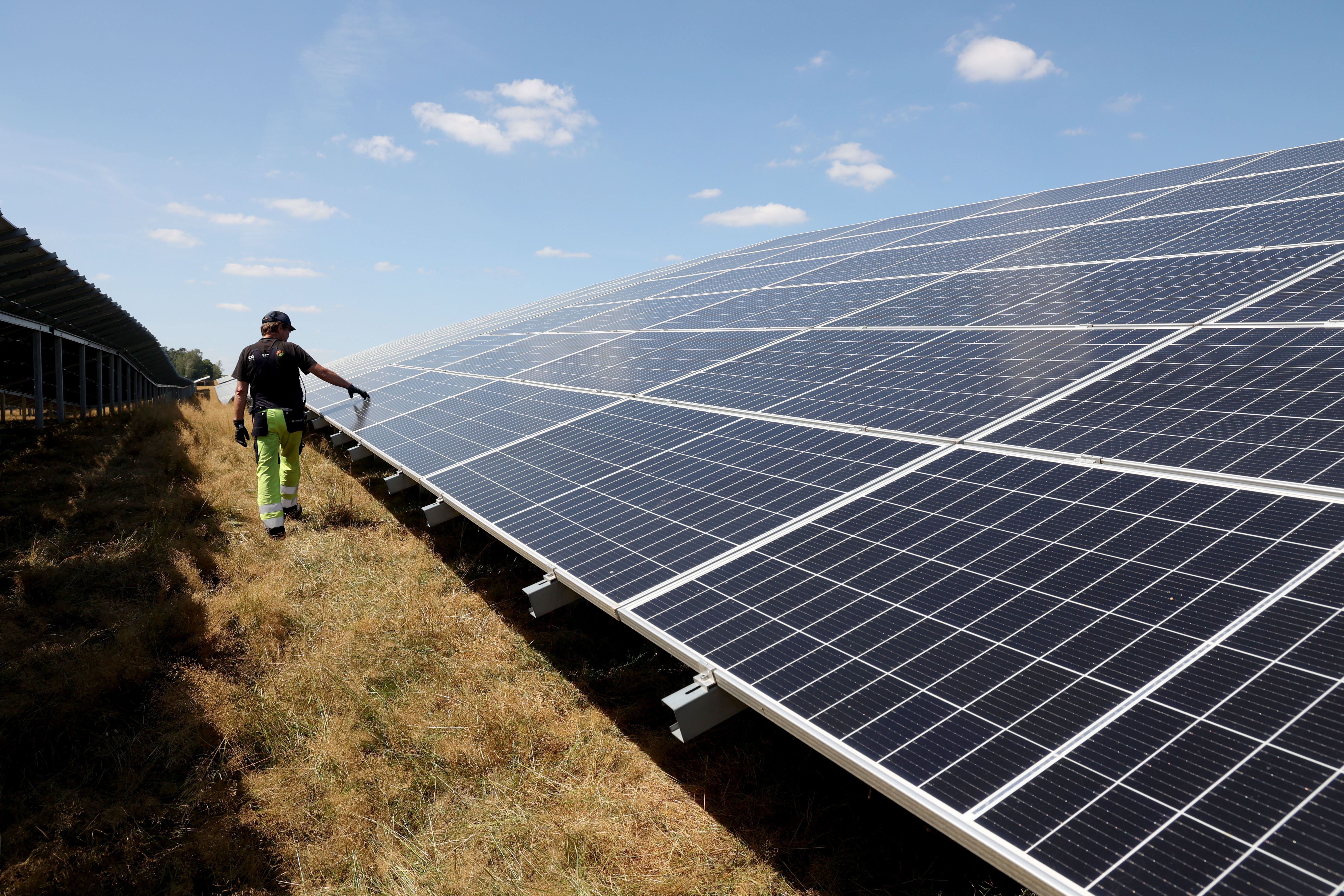
 A technician checks a solar panel at the Weesow-Willmersdorf solar park, operated by EnBW Energie Baden-Wrttemberg AG, in Werneuchen, Germany, on Tuesday, Aug. 2, 2022. The European Union seeking to double solar capacity to 320GW by 2025 and to hit 600GW by the end of the decadewhich would make solar Europe's biggest source of electricity, whereas today it's not even in the top five. Photographer: Liesa Johannssen-Koppitz/Bloomberg
The expansion of solar power, led by Germany, is upending traditional energy economics in Europe. Its lower cost relative to nuclear and fossil-fuel generation — as well as an encouraging regulatory framework — has driven a surge in installations, while many coal-fired plants have been retired.
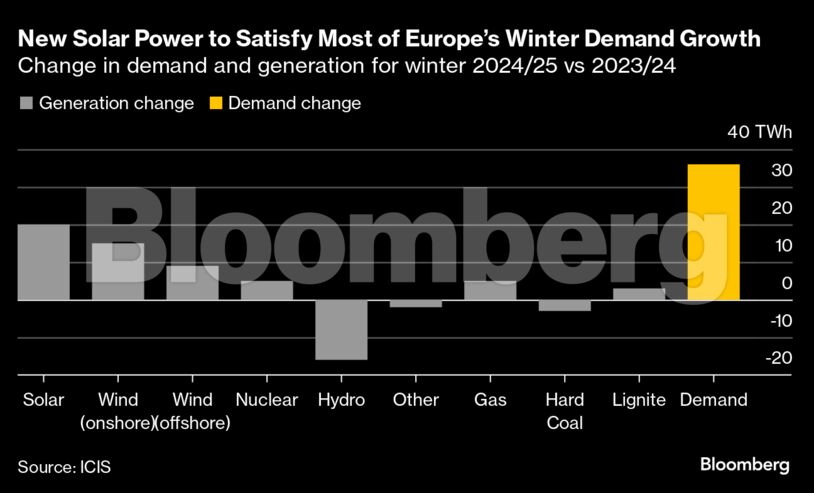
With renewables’ capacity growth outpacing gains in consumption, the region is looking well-supplied during the peak demand season.
“The European power market is in a pretty comfortable position from a supply-and-demand perspective heading into the winter period,” said Matthew Jones, head of power analytics at ICIS.
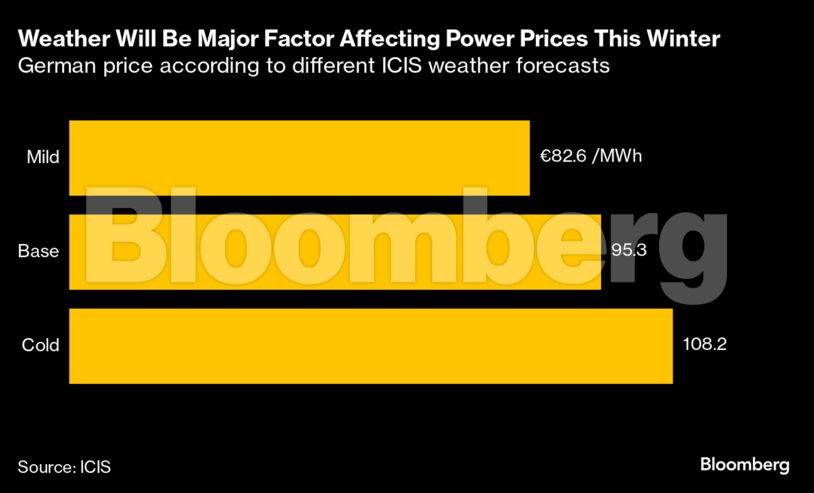
The analysis also highlights different weather scenarios and their impact on the market. A colder-than-normal winter would see prices in Germany increase 14% from a base case, while milder conditions may result in a 13% decline.
The German year-ahead power contract fell 0.361% to €85.50 a megawatt-hour, data from European Energy Exchange AG show. The French equivalent was up 0.0141% at €70.90.
Comments
Scroll down to load comments...