




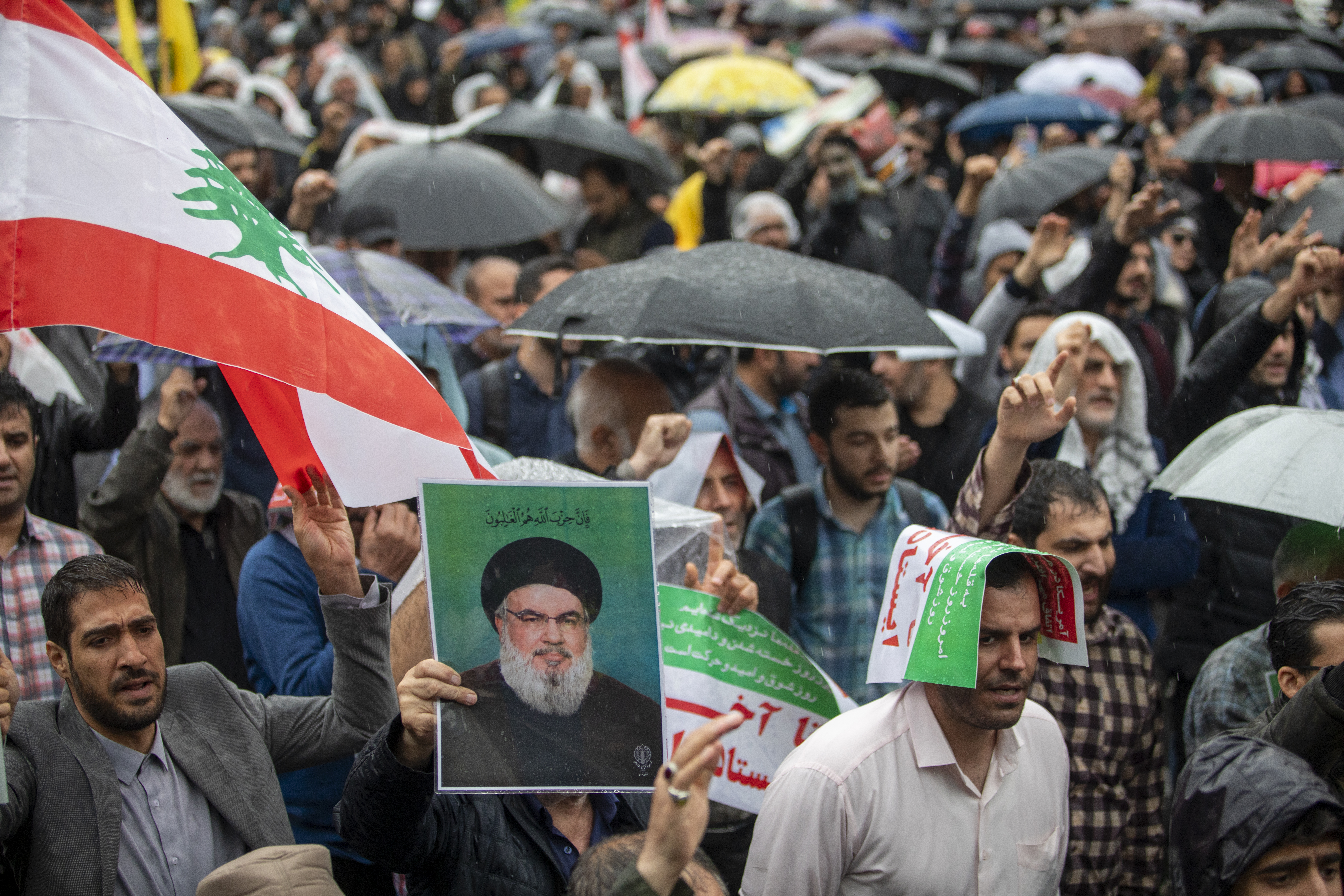
 Iranians protest with anti-Israeli and anti-American slogans while participating in a protest rally to condemn the Israeli airstrike in Lebanon that killed Hassan Nasrallah and several Hezbollah commanders in Tehran, Iran,on September 28, 2024 in Tehran, Iran. Israel announced earlier that it had killed Hassan Nasrallah, leader of the Iran-backed Lebanese militant and political group Hezbollah, in overnight strikes on southern Beirut. (Photo by Majid Saeedi/Getty Images)
“There was a lot of public opinion and pressure on Iran to do something,” said Foad Izadi, professor of world studies at the University of Tehran.
Iran then fired about 200 ballistic missiles at Israel on Tuesday night, an assault similar in nature to the salvo that followed the bombing of its consulate in Damascus in April. That attack was broadly seen as deliberately measured and was thwarted by Israel, the US and other allies. This week’s barrage was also mostly intercepted, though Iran gave less warning and more missiles breached Israeli airspace.
Iran’s restraint followed a lack of significant response to the assassination of Hamas leader Ismail Haniyeh in Tehran in July, a killing widely suspected to have been carried out by Israel, though it didn’t claim responsibility. That underscored Tehran’s insistence that it wants to avoid a wider conflict and help secure a cease-fire in the Israel-Hamas war in Gaza, which has been raging for almost a year.
Read More: Death of a Hamas Chief Suggests Failure at Heart of Iran’s Rule
Yet a truce in the Palestinian territory hasn’t materialized and Israeli Prime Minister Benjamin Netanyahu has instead switched focus to Lebanon, launching a major bombardment of the south of the country last month.
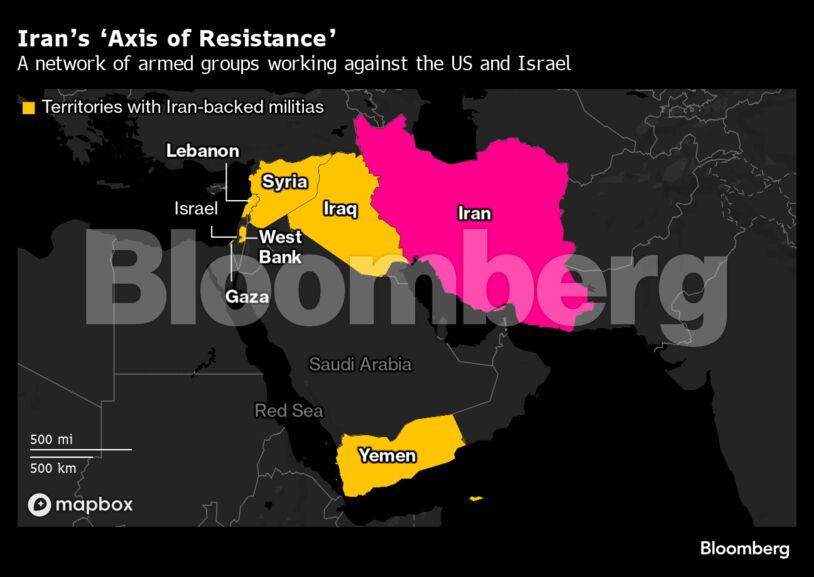
Ahmed Al-Heela, a Palestinian expert on Iran’s axis of resistance — the name given to its network of allied militia groups — said: “Israel messed with Iran’s national security” when it killed Nasrallah and went after Hezbollah.
“There is an organic and structural connection between the IRGC and Hezbollah,” he told Al Jazeera’s Arabic-language news channel, referring to Tehran’s Islamic Revolutionary Guard Corps. He added that Netanyahu’s talk of redrawing the map of the Middle East and pushing back Iran’s influence in the Levant spurred the leadership of the Islamic Republic into action.
Tuesday night’s strike is unlikely to be enough to restore Khamenei’s reputation. It caused little significant damage and has received a mixed response from the Middle East’s minority Shiite Muslim population that he aspires to lead.
Ali Mourad, a law professor at the Beirut Arab University and a native of the Shiite-dominated Lebanese south, said celebratory gunfire echoed in Beirut for almost 30 minutes after Iran’s barrage. The actions boosted the morale of Hezbollah’s followers albeit momentarily, he said by phone, with the group still on the back foot.
“People feel orphaned, Nasrallah was a source of their strength,” Mourad said. “They are blaming Iran and don’t understand its intentions and the battle trajectory.”
Many took to social media to express despair at what they see as Iran’s toothless response to Israeli aggression, which has left tens of thousands dead in Gaza and, more recently, Lebanon.
“Enough! Stop lying to us, you are killing us, slaughtering us for what? For Iran,” Moustapha el-Malek, a Shiite Lebanese living in Lebanon said in an impassioned video that was shared on X.
Comments
Scroll down to load comments...