



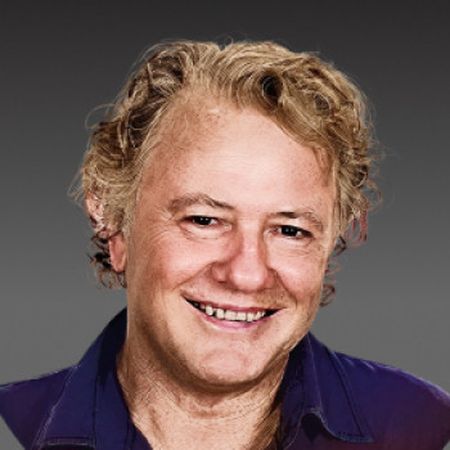
 Oobah Butler reacts to news just in, in his Vice video. Watch to find out what he’s reacting to. (Screenshot)
When you write about food and restaurants, as I do, people make certain presumptions about you. Obviously, you’d never stoop so low as to eat a hamburger or hotdog. You have “standards” and you expect them to be met. You eat pretty much everything, and that includes strange insects and reptiles in faraway lands, and you have the anecdotes to prove this.
I meet none of the above requirements. I love a good burger, and I relished the hotdogs I bought from street stands in Manhattan a decade ago because we didn’t have any budget to dine in any of the restaurants. My “standards” are simple: is the meat tender? Don’t overcook my eggs. Medium rare means medium rare, not “hmmmm, I think I’ll leave it on another minute, fingers crossed”. Just do the job you’re paid for, chef. And no, if you present me with a wriggly critter because people with supposedly refined palates “will eat anything”, no I bloody won’t. The whole point is that my palate likes nice things. Simple as that.
My idea of a good restaurant is one where the environment is attractive and fun, the food is properly cooked, there’s some flare at play on the menu, there are lots of cooking techniques but few gimmicks, the presentation is attractive but sensible, and keep those foams, gels and squiggles and splotches away from my plate. I don’t like serving staff to bow and scrape, just to serve our food with a smile and not behave as if they’re a part of our table. And please don’t interrupt our conversation to ask if everything is okay. Especially when the punchline is approaching.
And the restaurant must be real.
I never consult TripAdvisor, ever. In fact, when I’m planning to visit a town or suburb and I google restaurants in that vicinity, and when TripAdvisor reviews come up at the top, I scroll down to find alternatives, and the more local the better. I have never trusted TripAdvisor, and I have never been quite sure why, other than that I find them annoyingly ubiquitous, unbending and condescending.
But just how relevant is this American watchdog of what is supposedly good and mediocre in restaurants worldwide? How trustworthy is it as a guide? Can you really take the word of their “reviewers” as a good or valid judgement of a venue? How do you know they don’t have an axe to grind?
How do you know the review you’re reading reflects a balanced, objective appraisal by a well informed person with no “side” or agenda, or if they appreciate the kind of restaurant that you like? How do you know the restaurant really is what the “reviewer” says it is? Serves the stated cuisine? Is findable at the address given? Serves the food that is claimed?
How do you know that the restaurant even exists?
Because TripAdvisor says so? So you trust TripAdvisor to have checked everything out, right? Are you sure about that?
You shouldn’t be.
/file/dailymaverick/wp-content/uploads/2024/09/shed.jpg "Diners would choose their live chicken from the selection in this garden shed, like you might choose a lobster from a tank. (Screenshot)")
This isn’t new, but I only encountered it last week, and it is worth an airing. It is a video that will turn on its head everything you thought you knew and trusted about TripAdvisor. It was made six years ago (so you may have encountered it before) by Oobah Butler, a young British journalist, author and filmmaker (and now TV presenter) who has keen instincts and a bold, sneaky approach to his craft, and he will go far. Well, he already is going far — he has a UK Channel 4 documentary series called The Great Amazon Heist, and is a host of Catfish UK, which uncovers the creators of fake personas on the internet who trick people for personal gain.
But you haven’t watched the video yet…
Oobah, who has quickly shot into the echelons of my short list of heroes (David Bowie is and always will remain No 1), became a bit of a cause célèbre after his video went viral on YouTube, though not every British presenter quite understood what he was doing.
He’s a proper journalist, a natural, he speaks my language as a fellow journo, and he pillories the pretentiousness that I despise in this field that I write about. He acknowledges early on in the video that his first writing job was writing fake reviews for restaurants.
As he said in that video, “I would do that and they’d give me a tenner, boom! Businesses’ fortunes would genuinely be transformed.”
/file/dailymaverick/wp-content/uploads/2024/09/foot.jpg "Ooobah Butler puts his foot in it. (Screenshot)")
What this tells us is that, yes, he was prepared to do that because he needed the dosh. But it also tells us that restaurants do this. They pay people to write fake reviews that will say how wonderful the place is (regardless of whether it’s genuinely fabulous or too awful for speech), so how do we know which is the honest review? Okay, fair enough, the negative review will obviously have been written by a real customer, which is the least one could hope for. But what’s to stop somebody with an axe to grind from paying a couple of his mates “a tenner” or more to get his vengeance?
Knowing from firsthand experience that posting fake “reviews” on TripAdvisor undeniably did happen, Oobah thought deeper.
“That made me see TripAdvisor as, like, a false reality that everyone took completely seriously. Over the years I just thought that the only thing about TripAdvisor that is unfakeable is a restaurant itself, and one day I thought, ah, maybe it is actually fakable.”
He’s a cheeky chappie, to use the British vernacular, up for a prank and a laugh, but underlying his investigations is an eye for the sham and the shyster. And they are things and people that deserve to be exposed. He writes (or wrote) for Vice, making a living off doing such things — he wrote a story about crashing Fashion Week in Paris, and sent “an attractive more successful lookalike” to the high school reunion of their bullied classmate.
On Good Morning Britain, presenter Sarah Ferguson called him”a naughty boy”, seeming to misconstrue his role as an undercover journalist for somebody merely wanting to scam TripAdvisor (like the “reviews” he once wrote for a tenner). It’s not quite the same thing. He had been a “naughty boy” back then, but we all grow up to do things that have more meaning, and this was a proper grown-up job.
/file/dailymaverick/wp-content/uploads/2024/09/lust.jpg "The menu would offer moods, rather than dishes. (Screenshot)")
He crafted his video about the fake restaurant through a series of masterstrokes. One, you eat outside, Two, “it’s weird as f**k”, Three, “it’s homely, which means tiny”; and 4, it’s appointment only. He had a “trap phone” for all “bookings”. He built a Shed at Dulwich website with “photos that did the trick” (his foot impersonating a ham hock). A sound engineer to play restaurant sounds and a microwave ding. Fake reviews that sounded credible were posted and helped get it accredited on TripAdvisor. They don’t serve dishes, they serve “moods” (on the nail, that). The name itself is genius; The Shed at Dulwich is exactly the sort of name that the more pretentious “foodies” will sit up and pay attention to. Imagine — half of London was saying that name. “Oooh, have you been to The Shed at Dulwich?” I’d put money on at least some people replying, “Oh yes, we were there last Saturday, it’s awesome.”
Then, the burst bubble as the video was aired and went viral. Even the Guardian’s Jay Rayner gave Oobah the thumbs-up. (I have to wonder about that name BTW… I wouldn’t be surprised if it’s a nom de plume and an in-joke. Not Rayner, Oobah.)
He should be writing whodunnits, in reverse. That The Shed at Dulwich got to number one is astounding. The #No1 London restaurant of more than 18,000! And it didn’t exist.
There is no moral redemption for TripAdvisor, which will only continue to flourish because of the stupidity of the people who rely on their opinions. Oobah Butler (seriously, uber butler?) or whatever his real name is proved what I have long known, that many of those who follow food and food trends and chase after every new flavour-of-the-month restaurant or chef trust the opinions of others more than they do their own palates and instincts.
I’ll treasure this video and come back to it often, the way I come back to Fawlty Towers whenever I want a slice of something that’s farcical but can be trusted to entertain me and leave me smiling. And which has confirmed my suspicions and my hunches: that TripAdvisor cannot be presumed to be trustworthy. What about all the other reviews? Which are true, and which are fake? And what is Oobah Butler’s real name? DM