



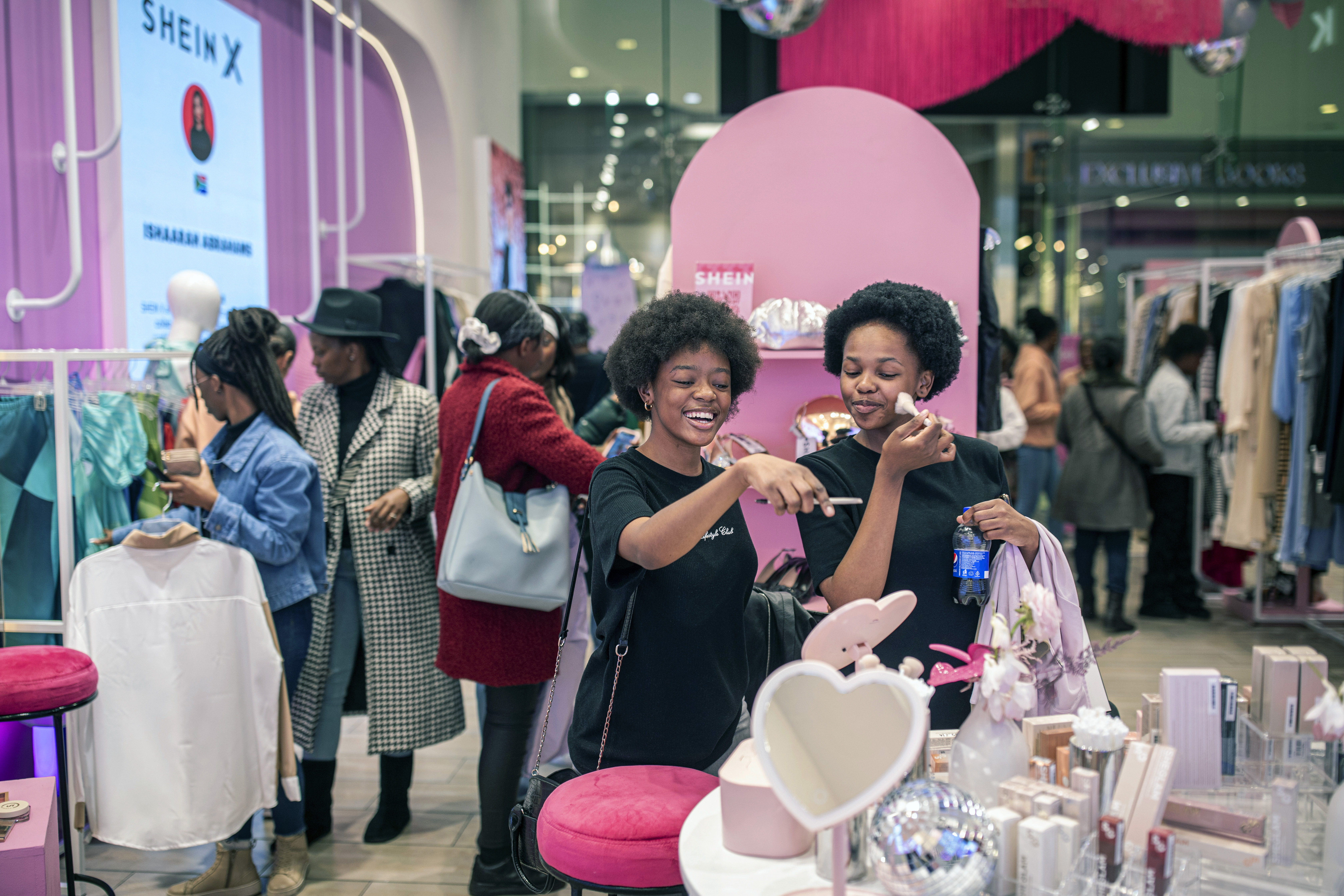
 JOHANNESBURG, SOUTH AFRICA - AUGUST 2: Young women try makeup at the SHEIN pop-up store in Mall of Africa on August 2, 2024, in Johannesburg, South Africa. The pop-up will showcase SHEIN's wide range of affordable apparel and accessories for the first time in South Africa. The company, founded in China, have expanded rapidly worldwide since the Covid-19 Pandemic. (Photo by Per-Anders Pettersson/Getty Images)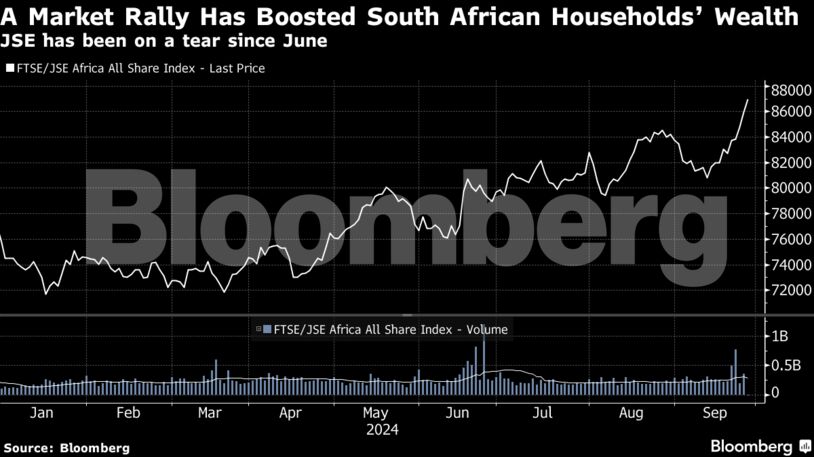
South Africa’s FTSE/JSE All-Share Index rose 6.9% in the quarter after declining 3% in the prior three months. Gains were fueled, in part, by optimism over the formation of a business-friendly governing coalition in June. The African National Congress formed a so-called government of national unity after losing its outright parliamentary majority for the first time in 30 years in May 29 elections.
The central bank also highlighted that the yield on 10-year South African rand-denominated government bonds have declined notably. They’ve dropped by around 240 basis points to 10.1% from 12.5% on April 16.
“The downward trend was supported by, among other factors, the appreciation in the exchange value of the rand, the moderation in domestic consumer price inflation and positive investor sentiment following the formation of the GNU,” the central bank said.
“The decrease also reflected lower international bond yields, driven by expectations of interest rate cuts by the Fed in particular” and other central banks, it said. The Federal Reserve lowered US rates by a half-point last week.
The GNU has committed to accelerating reforms to boost economic growth that’s remained stagnant for a decade.
Read More: South Africa’s Coalition Government Triggers Wave of Investment
Within days of it being formed, ArcelorMittal SA reversed a decision to shutter two steel plants that support 80,000 jobs. Soon after, Qatar Airways bought a stake in South African airline SA Airlink Pty Ltd. A $70 million auto-parts facility to supply Toyota Motor Corp., which just three years ago said it might leave the country, has since opened and Anglo American Plc announced a $625 million iron-ore investment.
Other Highlights
- The absolute value of South Africa’s positive net international investment position increased to a record high of 2.5 trillion rand ($145 billion) in the first quarter from a revised 2 trillion rand in the prior three months, the central bank said in response to emailed questions.
- As a ratio of gross domestic product, it was 35.8% in the first quarter — the second highest on record. The highest was 36.5% in the second quarter of 2020, it said.
- South Africa’s total external debt increased marginally to $158.3 billion at the end of March from $158.1 billion in the prior quarter, according to the bulletin.
- Foreign currency-denominated external debt rose to $91.8 billion in the first quarter from $89.4 billion in the prior three months partly due to the government borrowing $1 billion from the World Bank and €500 million from the KfW Development Bank.
- Household debt as a percentage of nominal disposable income edged lower to 62.2% in the second quarter from 63% in the prior three months.
- Net flow of capital on South Africa’s financial account switched to an outflow of 18.1 billion rand in the second quarter from an inflow of 51.4 billion rand in the previous three months.
- Portfolio investment liabilities recorded a further outflow of 20.1 billion rand in the second quarter.
- Growth in labor productivity in the formal non-agricultural sector accelerated marginally to 1.7% in the first quarter from 1.6% in the prior three months.
Comments
Scroll down to load comments...