




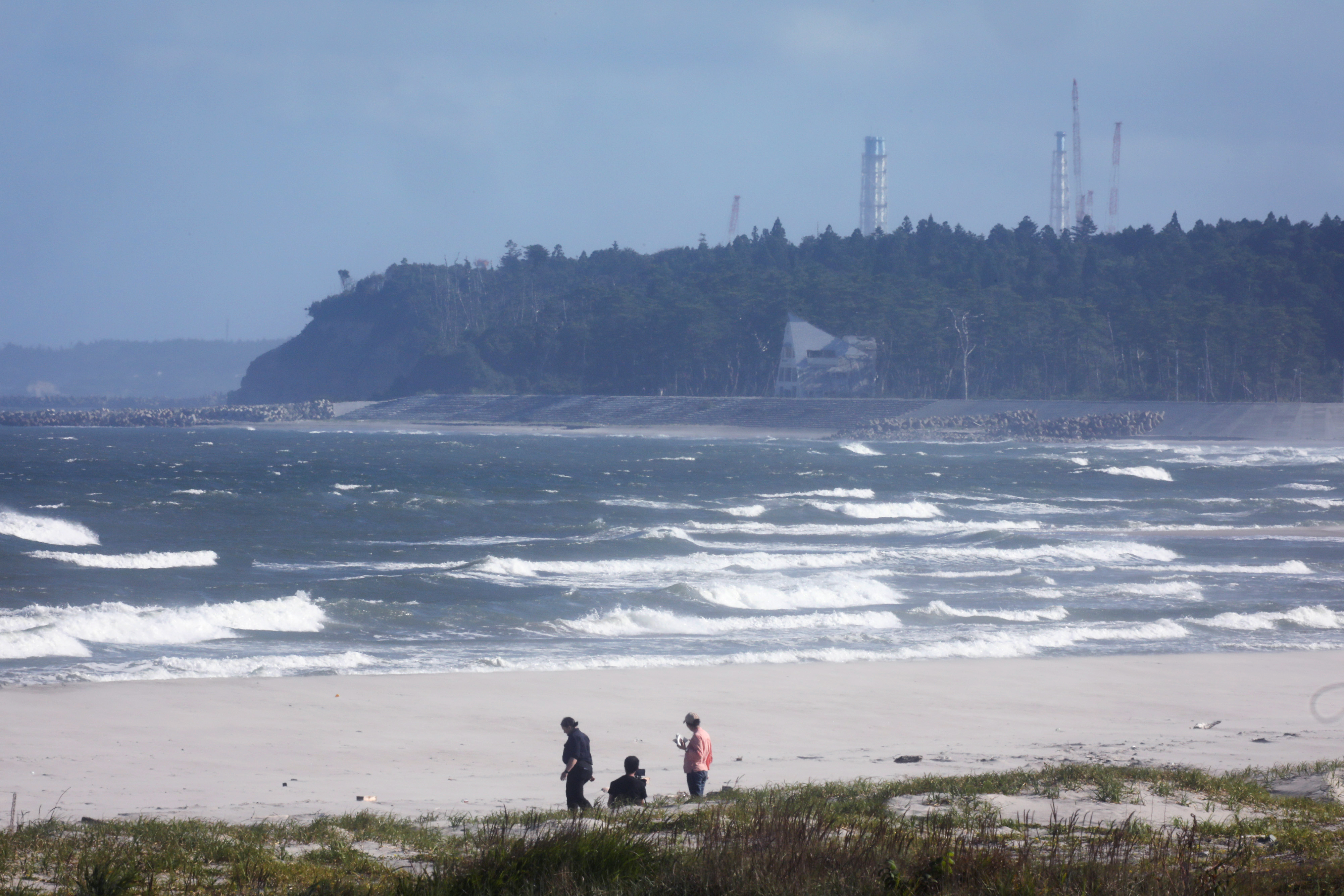
 Fukushima Dai-Ichi nuclear power plant, back, in Futaba, Fukushima Prefecture, Japan, on Thursday, Aug. 24, 2023. Japanese utility Tokyo Electric Power Co. (Tepco) has started to release treated radioactive water from the wrecked nuclear power plant into the Pacific Ocean, part of its nearly $150 billion effort to clean up the worst atomic accident since Chernobyl. Photographer: Kentaro Takahashi/Bloomberg via Getty Images
 Beijing banned purchases of seafood originating in Japan about a year ago citing risk of radioactive contamination after Tokyo Electric Power 9501.T started releasing treated water from the Fukushima plant into the Pacific Ocean.
Under the agreement, Japan would establish a long-term international monitoring arrangement and allow stakeholders to conduct independent sampling and monitoring.
"We conveyed that we are ready to conduct additional monitoring on the treated water," Japanese Prime Minister Fumio Kishida told reporters. "China in turn said it would begin to revisit its import restrictions on Japanese marine products, and will steadily increase imports for products that meet Chinese standards."
The Chinese criteria that the Japanese products must meet are not country-specific and apply to all imports, he added.
Before the ban, China was the biggest market for Japanese seafood exports. Japan's exports of agricultural, forestry and fishery products in the first half of 2024 fell for the first time since 2020, hit by China's ban.
Chinese foreign ministry spokesperson Mao Ning said, however, that the agreement did not mean an immediate resumption of imports and that Beijing remains opposed to the discharge of the water from Fukushima.
"We will carry out technical consultations with the Japanese side and gradually resume the import of Japanese aquatic products," she told a regular press conference in Beijing.
Japan has maintained that the water release is safe, noting the International Atomic Energy Agency (IAEA) has also concluded the impact it would have on people and the environment was "negligible".
Japan's position that the ban must be lifted immediately likewise remains unchanged, foreign ministry official Hiroyuki Namazu said at a briefing following Kishida's announcement.
There was no clear timeline for when Beijing's import restrictions may be lifted, or what steps may be taken for that to happen, he added.
IAEA welcomed the agreement.
"I wish to commend the government of Japan for its continued engagement with the IAEA, and the government of China for the constructive consultations held with the agency in support of this bilateral process that comes to a positive conclusion today," Director General Rafael Grossi said in a statement.
Japan in August 2023 began pumping more than a million metric tons of treated radioactive water from the Fukushima Daiichi nuclear power plant, destroyed in a 2011 earthquake and tsunami. The process will take decades to complete.
(Reporting by Sakura Murakami in Tokyo, Joe Cash and Beijing Newsroom; Writing by Chang-Ran KimEditing by Jamie Freed, Lincoln Feast and Christina Fincher)