




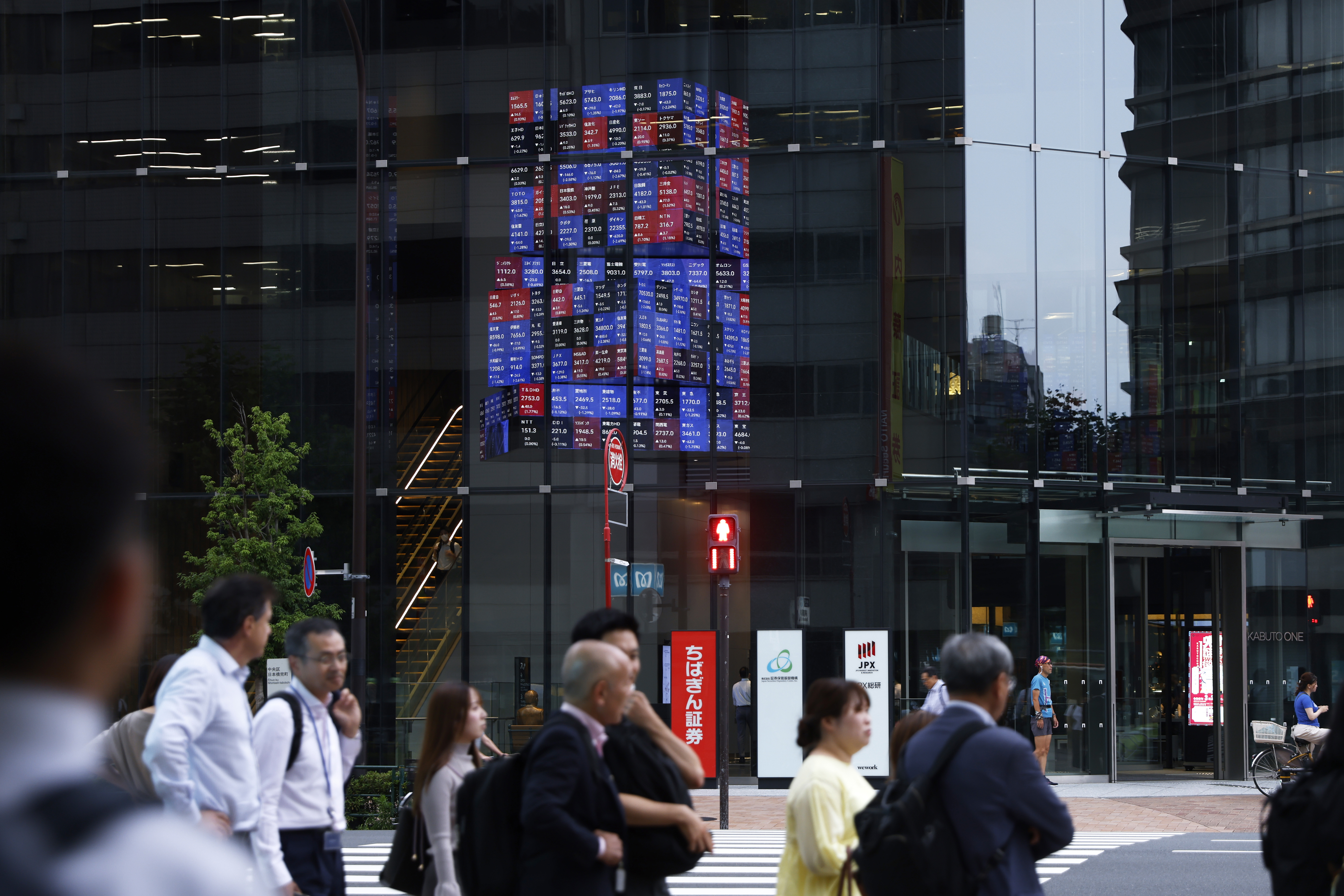
 An electronic stock board displayed inside the Kabuto One building in Tokyo, Japan. (Photo: Kiyoshi Ota/Bloomberg)
Stocks fluctuated in the region, with the yen’s rise to around 141 per dollar pressuring those in Japan, an export-oriented economy. Benchmarks rose in Australia and Hong Kong, following a fourth day of gains on Wall Street.
The policy-sensitive two-year Treasury yields dropped five basis points in Asian trading, weighing on the dollar as emerging Asian currencies including the Korean won carried over a rally from Latin America.
The range-bound trading in equities suggests caution ahead of next week’s Fed policy meeting, after data showed Thursday that the US producer price index picked up slightly in August after the previous month’s numbers were revised lower. Meanwhile, categories that feed into the Fed’s preferred inflation gauge were muted.
While the latest figures did little to alter expectations that the US central bank will start reducing interest rates, the latest decline in Treasury yields and the dollar’s broad weakness suggests some investors are still betting on a bigger-than-usual first cut of 50 basis points. A Wall Street Journal article highlighting the Fed’s tough balancing act of simultaneously managing inflation and growth added to the debate.
Markets are seeing “a delayed reaction to the dovish repricing of FOMC rate cuts yesterday following the US PPI data which kept the door open for a 50bps cut next week,” said Carol Kong, a currency strategist at Commonwealth Bank of Australia. “Though we still believe a 25bps cut is much more likely than a 50bps cut, the possibility of a 50bps cut will keep the US dollar heavy in the meantime.”
Thursday’s wholesale inflation data followed the more closely watched consumer price index, which showed underlying inflation accelerated in August. Yet policymakers have made it clear that they’re currently highly focused on softness in the labour market, which is more likely to drive policy discussions in the months ahead.
“With PPI basically repeating yesterday’s CPI reading and jobless claims in line with expectations, the decks have been cleared for the Fed to kick off a rate-cutting cycle,” said Chris Larkin at E*Trade from Morgan Stanley. “The markets are anticipating an initial 25 basis-point cut, but the discussion will soon turn to how far and fast the Fed is likely to trim rates over time.
Gold rose to a fresh record, fueled by the dollar’s decline and another set of US data on Thursday that showed an uptick in applications for unemployment benefits.
BOJ hike
In Japan, just over half of central bank watchers see authorities conducting their next rate hike in December, while none expects a policy move when the board meets next week, according to a Bloomberg survey.
In the past four weeks, five of nine board members have telegraphed their intention to raise rates again if the bank’s inflation outlook is realised. Market volatility in the days after the Bank of Japan’s July 31 rate hike hasn’t spooked policymakers enough to derail them from the normalisation path.
“Chances are extremely low for a rate hike at this meeting,” Masamichi Adachi, chief Japan economist at UBS Securities, said. “It’s too early to discern the impact of the July rate hike and market rout.”
Nevertheless, some hedge funds are adding bullish yen wagers in the options market on their expectation that the currency will extend the rally that’s made it the world’s top performer this quarter.
In China, the CSI 300 stock benchmark gave up earlier gains to turn flat, after falling to the lowest since January 2019 Thursday.
While President Xi Jinping called on officials to achieve the country’s annual growth target of around 5%, a relentless rally in Chinese government bonds extended, pushing 10-year yields to a level unseen since official records became available in 2002.
Chinese markets will be closed Monday and Tuesday for a public holiday.
In Asia, data set for release includes Japan industrial production, trade balance figures for India and gross domestic product for Sri Lanka.
West Texas Intermediate, the US oil price, edged higher after rising more than 2% Thursday as storm Francine disrupted production in the Gulf of Mexico.
Comments
Scroll down to load comments...