




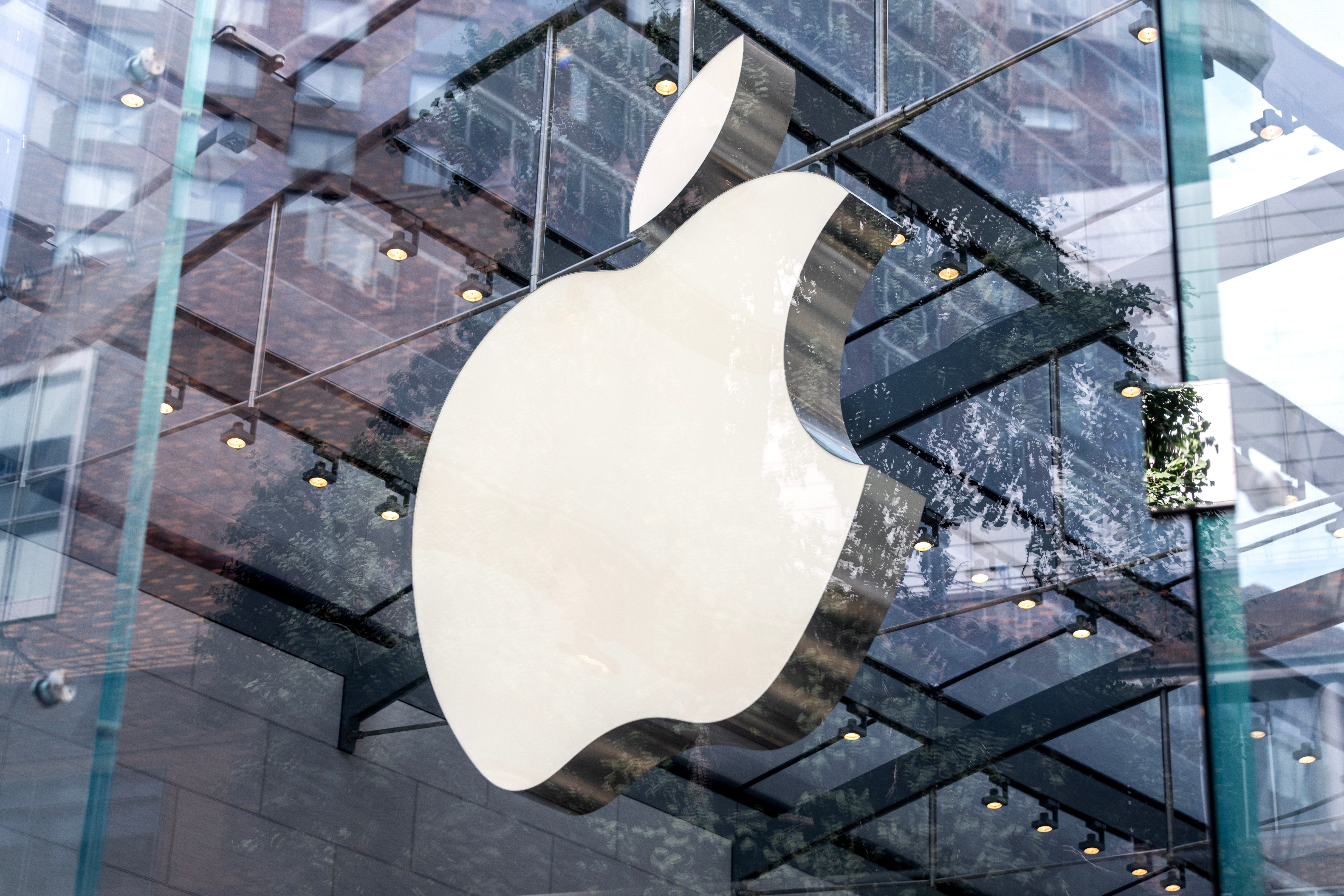
 An Apple Store in New York, US, on Monday, July 29, 2024. Apple Inc. is scheduled to release earnings figures on August 1.
The Series 10 version of the watch has 30% more screen area, even with a thinner design, Apple said during a presentation dubbed “It’s Glowtime,” which was streamed from its headquarters in Cupertino, California. The sleep apnea feature will be available in more than 150 regions, Apple said.
Artificial intelligence is expected to be a major theme of the event, which kicked off at 10 a.m. local time. The company has been readying a suite of AI tools called Apple Intelligence that it hopes will entice consumers to buy upgraded devices. Customers will need a recent iPhone — Apple’s flagship product — to handle the capabilities.
Apple Intelligence will include an upgraded Siri digital assistant and the ability to create custom emoji with text prompts. The event’s “Glowtime” theme is a reference to the look of Siri’s new interface. But much of the technology won’t arrive until the coming months, potentially limiting its impact on iPhone sales.
The new watch is about 10% thinner than the Series 9 version. It also comes in a new titanium model that’s lighter than aluminum models. The device starts at $399 and will be released Sept. 20. A new version of the higher-end Ultra version also was announced, and it goes on sale that day for $799.
The event included an updated version of the standard $129 AirPods, which shrinks the size of the case and adds a USB-C charger. A $179 version also will be available — a midrange product — with noise cancellation. That used to only be available on the higher-end AirPods Pro.
And the company introduced a new line of $549 AirPods Max headphones in new colors, also with USB-C charging. Like the other new products, the new devices will debut on Sept. 20. Apple didn’t debut a new version of its AirPods Pro, but introduced new features such as a hearing test and the ability to act as a hearing aid. Those capabilities will be offered as a software update this fall.
The iPhone debut — expected later in the presentation — is usually Apple’s most important announcement of the year. The device accounts for roughly half of the company’s annual revenue, and it helps fuel additional sales in the form of accessories and services.
Apple doesn’t typically hold its iPhone event on a Monday, but the earlier timing lets the company get out ahead of an eventful Tuesday: A US presidential debate is scheduled for that day, and the European Commission is set to announce whether Apple has to pay $14 billion in taxes.
Apple is playing catch-up in the world of generative artificial intelligence, where tech peers like Alphabet Inc.’s Google and Microsoft Corp. have made strides. Monday’s presentation is partly a pitch to consumers — and Wall Street — that Apple should be taken seriously in AI.
But the company’s AI technology is still in early stages. Apple Intelligence has faced numerous delays, and many key features won’t arrive until next year. For now, the technology is focused on summarizing messages and notifications, rather than matching the gee-whiz capabilities of rival systems.
Comments
Scroll down to load comments...