




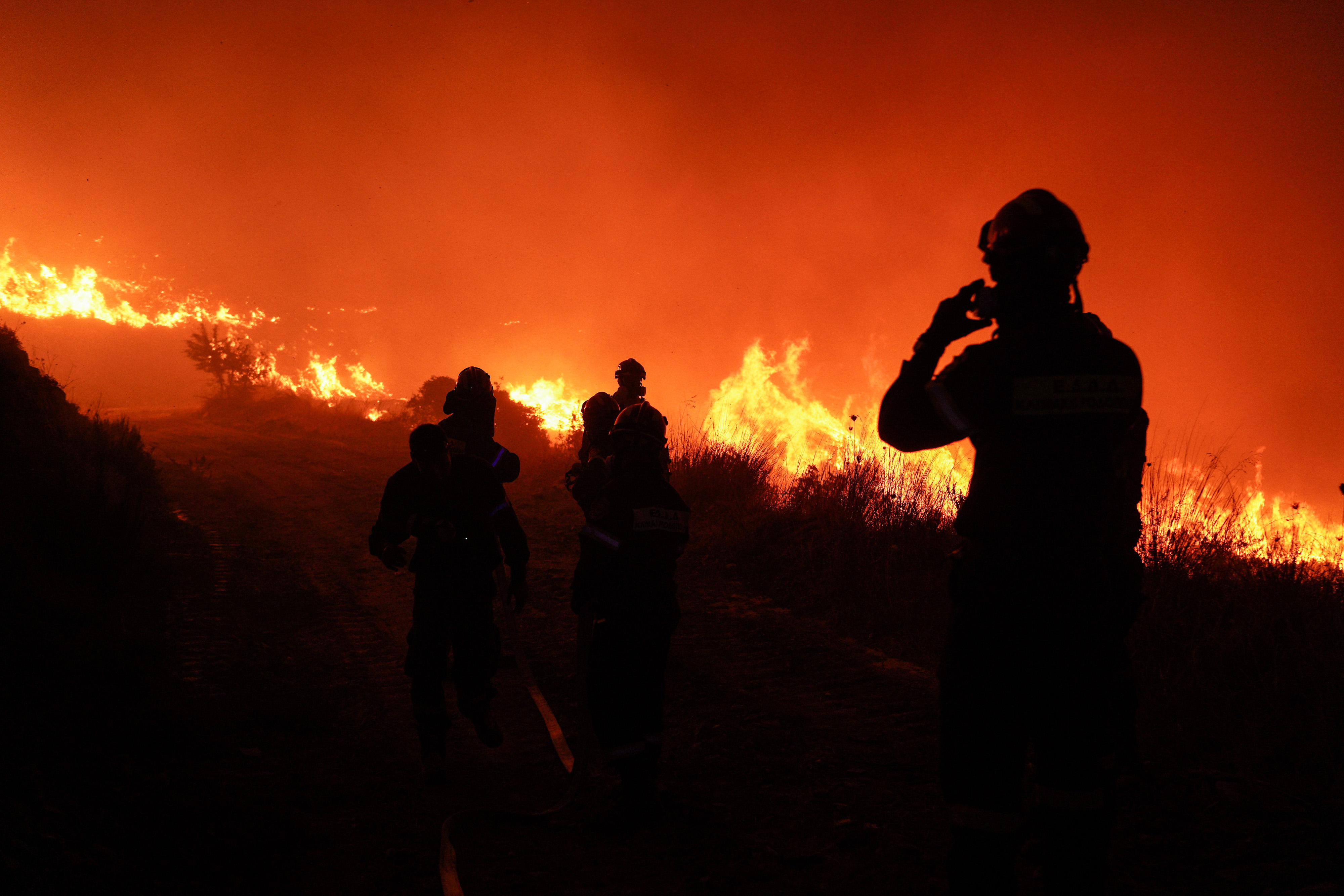
 Firefighters attempt to control a wildfire in Dionysos, Greece, on Monday, Aug. 12, 2024. A huge wildfire is threatening suburbs on the outskirts of Athens, forcing thousands of people to evacuate as houses were set alight and local hospitals put at risk. Photographer: Nick Paleologos/Bloomberg
 The European Union’s Copernicus Climate Change Service reported that for June to August, global temperatures were 0.69°C above historical averages, beating the previous high set last year. The record for the world’s highest average temperature was broken on a number of days over the summer.
Climate change is increasing the frequency and intensity of heat waves, triggering extreme weather events from droughts and wildfires to violent storms and flooding. Over the past 12 months, the global average temperature was 1.64°C higher than pre-industrial levels, above the 1.5°C threshold that policymakers and scientists say threatens life on the planet.
In Europe, the heat over the June to August period was 1.54°C above the 1991-2020 average, according to Copernicus. The most extreme conditions were recorded in the Mediterranean region and Eastern Europe, while the UK, Iceland, parts of Ireland, the west coast of Portugal and southern Norway were cooler than the norm.
This summer the effects of a strong El Niño or warming in the Pacific started winding down to give way to the La Niña phenomenon. This shift in weather patterns usually means less extreme heat but can also bring droughts to some places even as it produces flooding and hurricanes in others.