




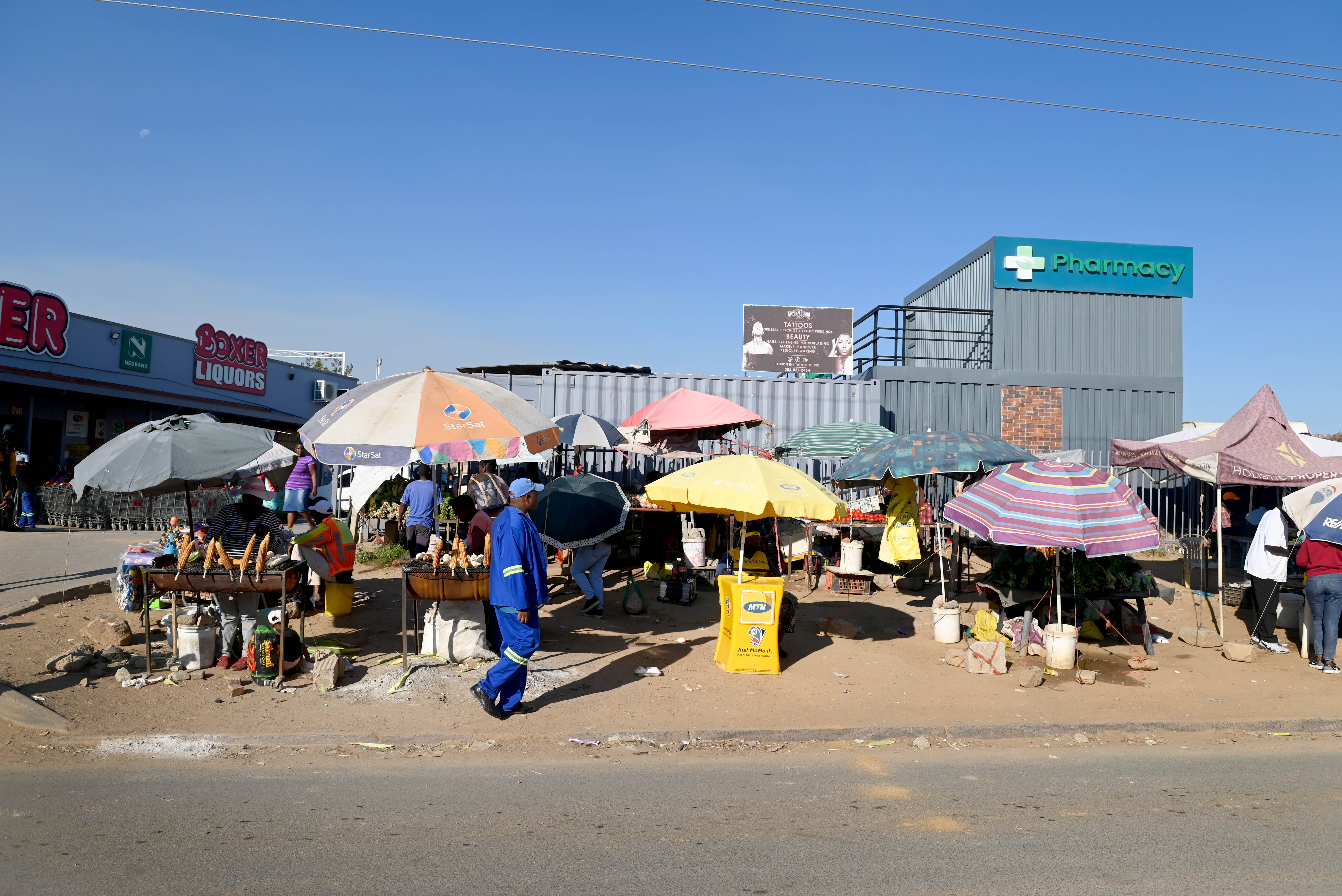
 Stores in Johannesburg. Photographer: Leon Sadiki/Bloomberg
The continued improvement was driven by retailers and new vehicle dealers who are anticipating a boost from interest-rate cuts expected to begin later this month.
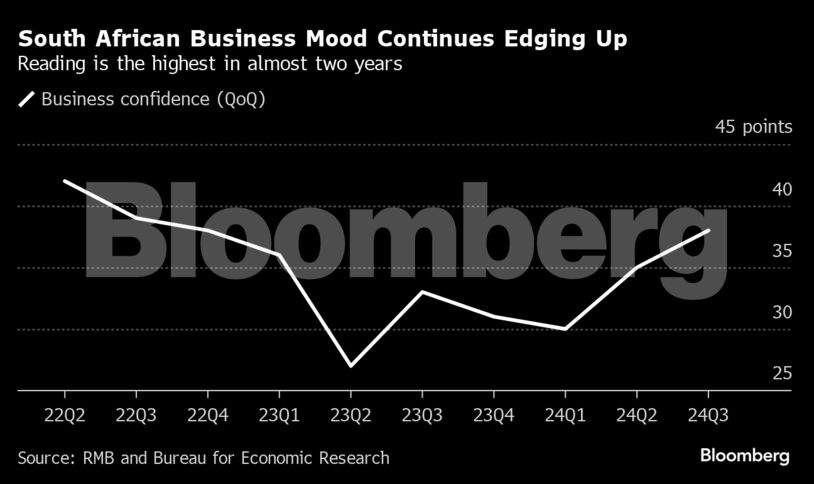
The reading is the highest since the last quarter of 2022 and the first survey conducted after South Africa held elections that cost the African National Congress its outright parliamentary majority. Its electoral loss led to the formation of a business-friendly coalition government including the Democratic Alliance, and eight other smaller parties.
The release adds to other positive data suggesting a turnaround in the economy. On Tuesday, data from the statistics agency showed South Africa’s economy expanded 0.4% in the second quarter, compared with no growth in the prior three months. The improvement in economic performance coincided with a reprieve from rolling electricity outages, known locally as load shedding, which haven’t been instituted by state utility Eskom Holdings SOC Ltd. since the end of March.
However, “there was not enough demand to fuel a faster uptick in sentiment,” the report noted, citing continued pressure on consumers and sluggish export demand reported by manufacturers.
Read More: South Africa’s Economy Returns to Growth, Rate Cut Still in View
“Fortunately, the widely anticipated interest rate cut in South Africa later this month, on the back of lower consumer inflation and a boost from the introduction of the two-pot retirement system should spur domestic demand through the remainder of the year,” said Isaah Mhlanga, chief economist at RMB. “This should benefit sentiment, but logistical constraints remain top of mind and will need to be urgently tackled to support a sustained lift in business confidence.”
Comments
Scroll down to load comments...