



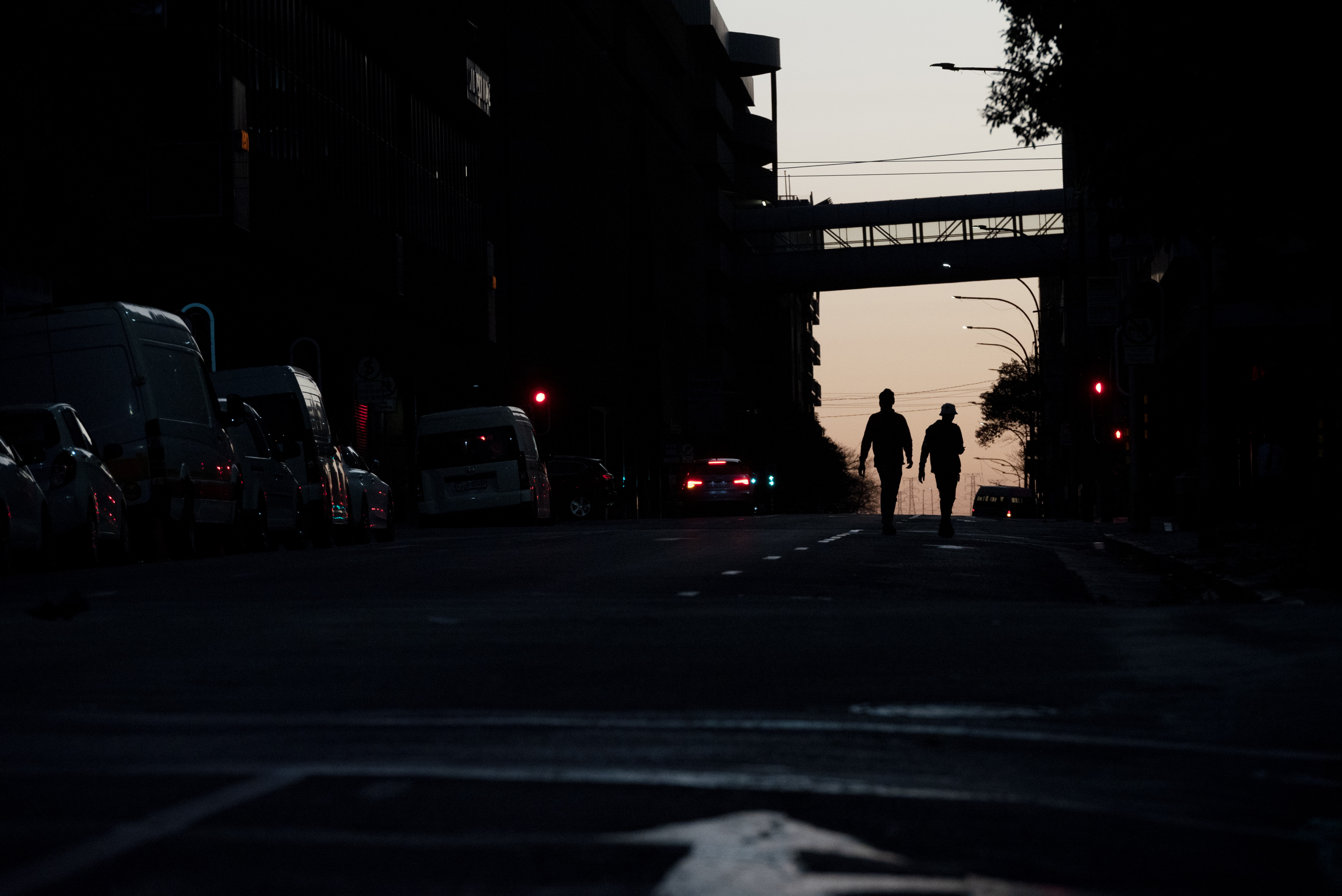
 Residents of Yeoville, Bellevue, and surrounding areas endure the ongoing collapse of energy infrastructure in Johannesburg, South Africa. It is life as usual as the sun sets, despite the high electricity costs in Johannesburg on Saturday, August 11, 2024. As the inner city's power grid deteriorates, City Power, the local utility, has introduced prepaid meters to compel residents to pay for electricity. Photographer: Leon Sadiki/Bloomberg
“There’s a growth side and there’s an inflation side; there may be a double whammy, there may be a good story here,” Deputy Governor Rashad Cassim told reporters in Johannesburg on Thursday. “Let’s hope that for the first time, given the fact that loadshedding, or the lack of it post the election, that there will be an upward revision of the forecast and that will be very good for the economy.”
Read More: BER Sees South African Growth Lifting to 2.2% in 2025 on Reforms
The central bank currently expects the economy to grow 1.1% in 2024 and 1.5% next year, and forecasts inflation to slow to below the 4.5% midpoint of its target range where it prefers to anchor expectations in the fourth quarter. It is currently at 4.6% and the spread between the South African Reserve Bank’s policy benchmark and the annual inflation rate is at its highest level in 18-years.
A slowdown in inflation would boost the case for interest rate cuts, which would also help stimulate growth.
Governor Lesetja Kganyago has repeatedly said that the monetary policy committee would only be comfortable lowering borrowing costs when inflation eases sustainably toward 4.5%.
Forward rate agreements — used to speculate on borrowing costs — are pricing in about 62 basis points of interest-rate cuts by year-end from the current level of 8.25.
Comments
Scroll down to load comments...