




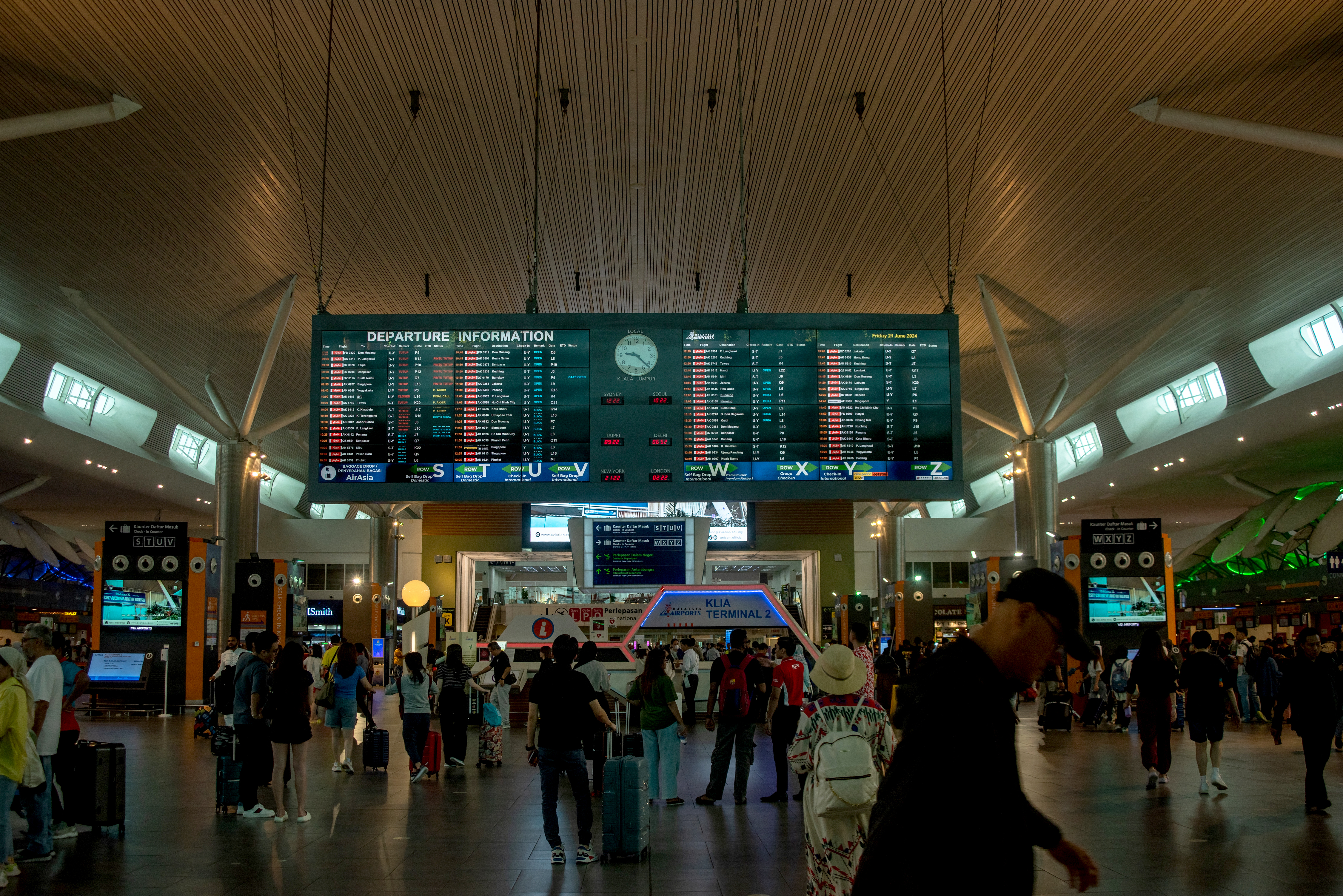
 Passengers check flight details on an overhead flight information display in the departure hall of the Kuala Lumpur International Airport 2 (KLIA 2) in Sepang, Selangor, Malaysia, on Friday, June 21, 2024.
 Transport regulators around the world are pressuring carriers to improve standards after a series of flight schedule meltdowns and questionable business practices sparked calls for reform. In Australia, Qantas Airways Ltd. was sued for allegedly selling seats on thousands of cancelled flights.
Malaysia’s new rules, which take effect from Monday, will also apply to passengers who chose not to proceed with the delayed flight and opt to purchase a different flight altogether.
The country’s flagship carrier has been suffering a series of disruptions due to ongoing engine-related problems on its Airbus SE A330 aircraft. Malaysia Airlines said earlier this month that it needs to reduce its flight network between now and December.
Refunds will need to be offered via the original means of payment, Malaysia’s transport ministry said.
Earlier this year, the US Department of Transportation ordered airlines to provide automatic refunds for flights that are axed or significantly delayed. Protections for travellers in the US were strengthened after spiralling complaints about airlines refusing or delaying refunds.
Australia meanwhile has started consulting on wholesale reforms to boost competition and consumer rights in aviation, including making it easier for passengers to be refunded.
Qantas CEO Vanessa Hudson, talking to investors after the release of the carrier’s full-year financial results on Thursday, said that forcing airlines to refund fares for cancellations and delays just adds to ticket costs, because airlines will look to recoup the added expenses elsewhere.
Malaysia said airlines found to be contravening the new regulations may be fined a maximum of 200,000 ringgit ($46,000) and the amount could be more for subsequent breaches.
Comments
Scroll down to load comments...