




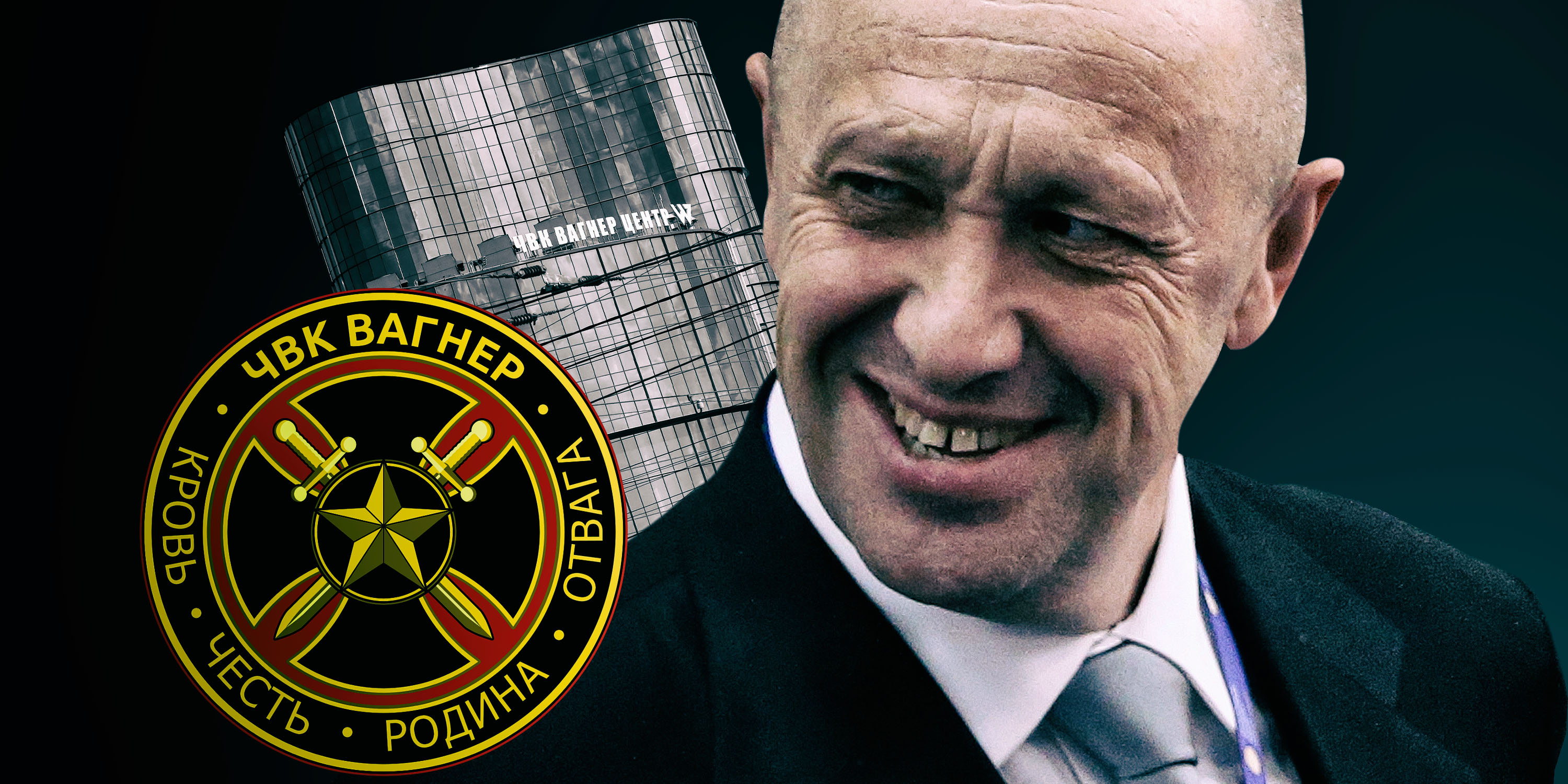
 Wagner Group leader Yevgeny Prigozhin on 17 June 2016 in St Petersburg, Russia. (Photo: Mikhail Svetlov / Getty Images) | Wagner Group logo. (Image: Wikimedia) | The PMC Wagner Center logos on a building in St Petersburg, Russia, 27 June 2023. (Photo: EPA-EFE / Anatoly Maltsev)
 Read More: Russia Hires Its Own Africa Army to Succeed Wagner’s Mercenaries
Violence has also surged in Niger and Burkina Faso, which like Mali brought in Wagner after military coups led to the withdrawal of European forces and United Nations peacekeepers from the region last year. All three countries have been facing decade-long Islamic insurgencies, though the mercenaries have done little to turn the tide.
“The Sahelien regimes view the Wagner Group’s presence as a win-win,” Heni Nsaibia, Acled’s associate analysis coordinator for West Africa, said in the report, referring to how the mercenaries help keep the juntas in power. “In Mali, they pay $10 million a month for protection. That’s more than they spend on the budgets for major ministries like justice, family affairs, or environment.”
In the Central African Republic, where Wagner deployed in 2019, the group has been particularly dangerous to civilians, with the reported number of people killed by Russian mercenaries this year already exceeding the total for all of 2023, according to data compiled by ACLED.
In all four countries, Wagner has continued to operate alongside and with the Africa Corps, a mercenary group under the control of Russia’s defense ministry that began recruiting shortly after Prigozhin’s death.