




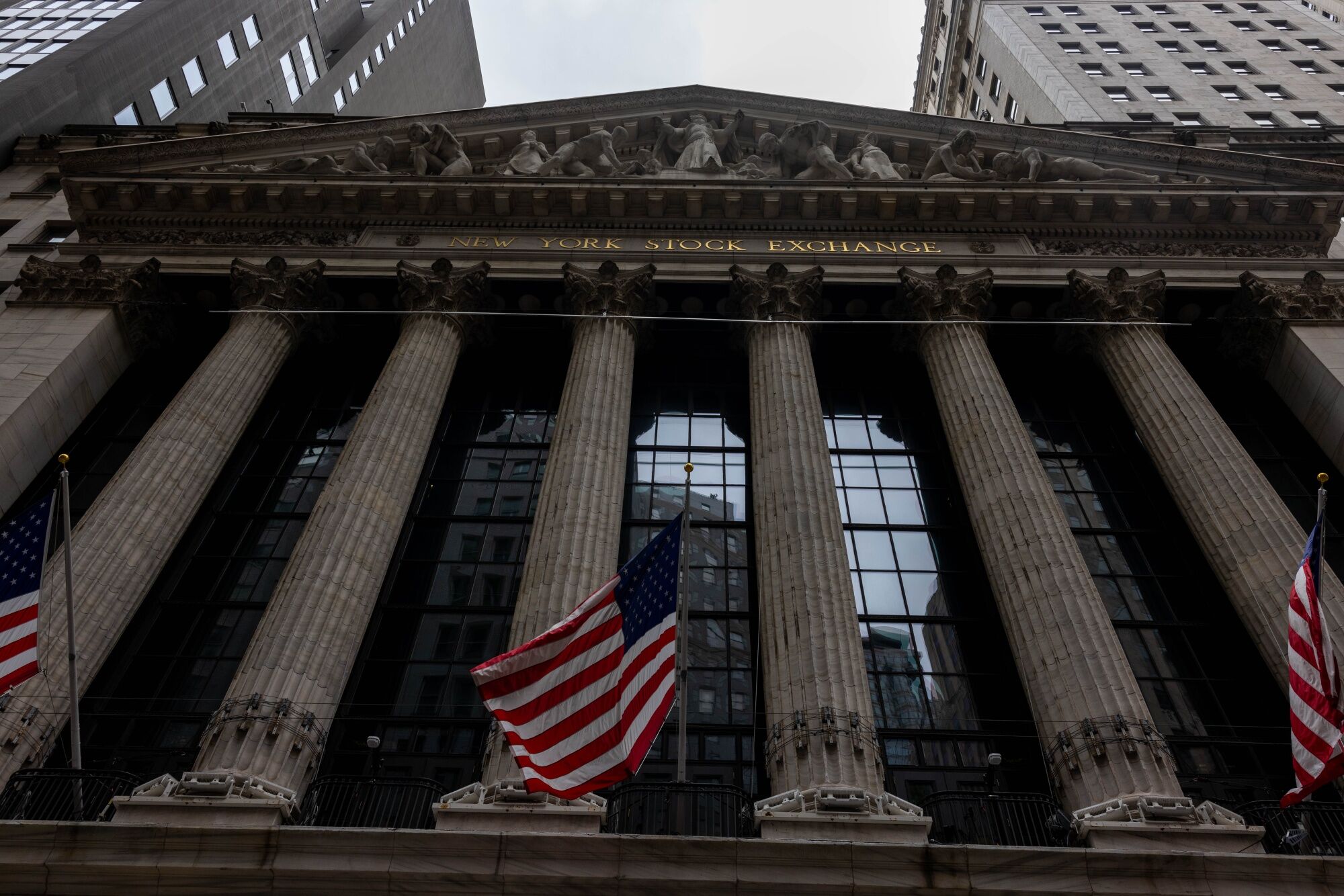
 The New York Stock Exchange (NYSE) in New York, US, on Thursday, May 16, 2024. (Photo: Alex Kent/Bloomberg)
The Topix and Nikkei indexes were set slid about 20% from record highs with both benchmarks set for three-day declines that would be the worst since the 2011 Fukushima nuclear meltdown and put them into bear markets. The yen rallied over 1% on bets the Bank of Japan will keep raising interest rates.
Shares in Korea, Taiwan and Australia also slid, prompting a gauge of regional shares to slump the most in three years. Concerns on the US economic outlook spurred demand for fixed-income assets, with global bonds erasing their losses for the year and a rally in Treasuries sending two-year yields to the lowest since May 2023.
The price action underscores how quickly sentiment has shifted away from expectations the Fed will be able to engineer a soft landing for the US economy. Data on Friday showed that US nonfarm payrolls recorded one of the weakest prints since the pandemic, and the jobless rate unexpectedly climbed to above the Fed’s year-end forecast, triggering a closely watched recession indicator.
“It’s a pretty dramatic shift in narrative, which shows how much of the recent trends were backed by expectations of a US soft landing,” said Charu Chanana, head of currency strategy at Saxo Bank A/S. “The more the US soft landing assumption gets questioned, the further pullback we could see in equities and strategies funded with the low-yielding currencies where positioning has been massively skewed.”
After a Treasuries rally on Friday, Japan’s benchmark 10-year bond yield fell to its lowest since April, slipping as much as 17 basis points to 0.785% on Monday. New Zealand yields declined a similar amount, while Australian bonds were closed for a bank holiday a day before the Reserve Bank of Australia’s policy meeting.
Bond traders have repeatedly misjudged where interest rates have been headed since the end of the pandemic, however, at times overshooting in both directions and caught off guard when the economy bucked recession calls or inflation defied expectations. At the end of 2023, bond prices also surged on conviction that the Fed was poised to start easing policy, only to give back those gains when the economy kept exhibiting surprising strength.
Asian currencies pushed higher on Monday, while the Mexican peso’s slump extended as traders continued to unwind emerging market carry trades. The sudden appreciation in funding currencies has damaged the popular bets, which typically involve traders borrowing at lower rates to invest in higher-yielding assets.
In commodities, oil rose on Monday amid reports Iran may strike Israel to avenge assassinations of Hezbollah and Hamas officials. Elsewhere, Bitcoin sank more than 10% at one point before paring some of the decline. Gold fluctuated
Comments
Scroll down to load comments...