




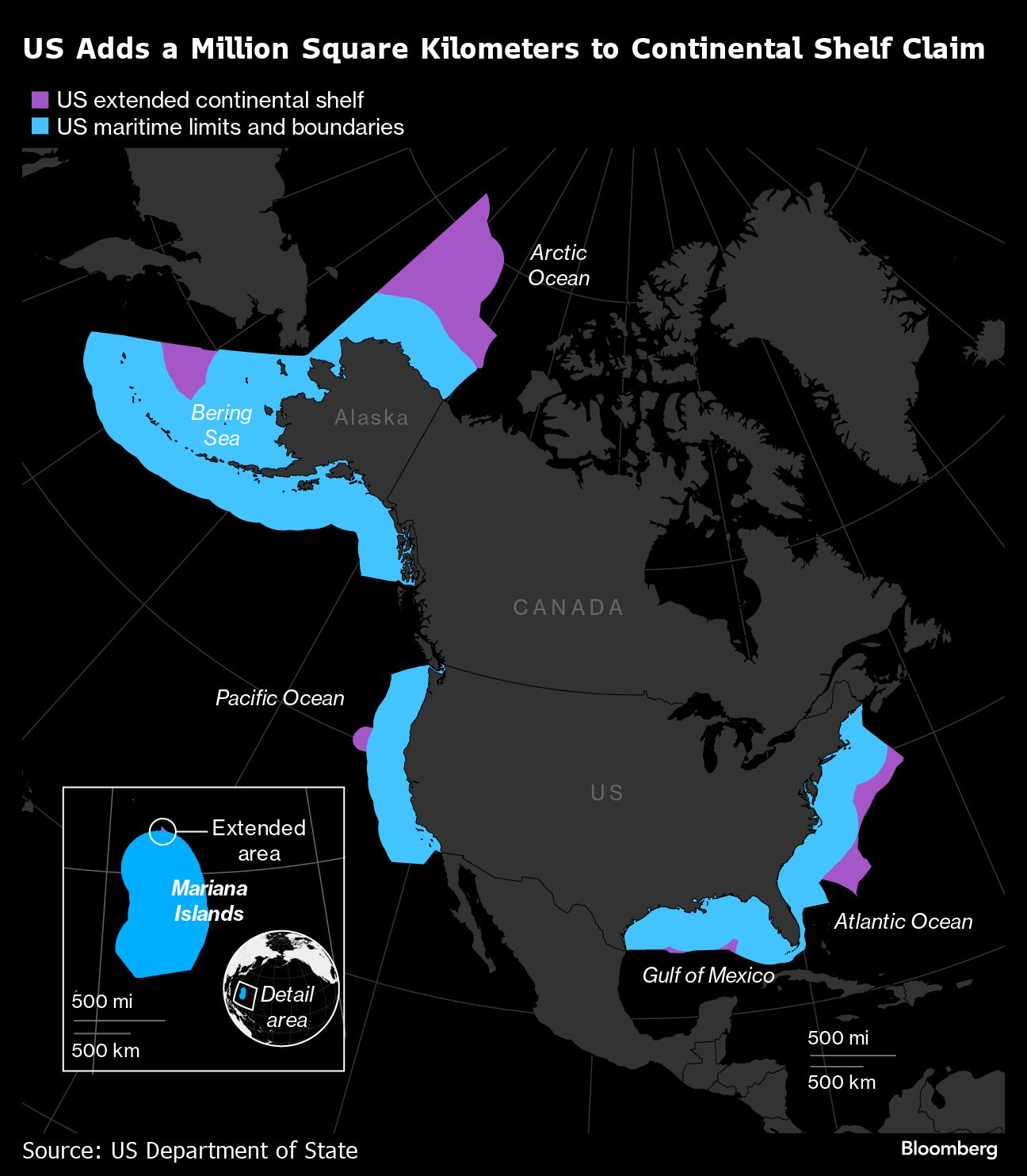
 China and Russia are challenging the legality of US claims to the seabed floor.
The comments came during a debate at a session of the International Seabed Authority in Kingston, Jamaica, in response to recent claims by the US that would add about 1 million square kilometres to its continental shelf in the Bering Sea, Pacific Ocean, Atlantic Ocean and Gulf of Mexico.
Read More: US Claims Huge Chunk of Seabed Amid Strategic Push for Resources
Countries that have ratified the 1982 United Nations Convention on the Law of the Sea undergo a lengthy international process to reach agreement on where the boundaries of underwater continental shelves lie. Those demarcations are important because exclusive economic rights to potentially lucrative seabed resources are based on them. Russia, Canada, and Denmark — on behalf of Greenland — have all filed competing claims to areas in the High Arctic, for example, as climate change opens the region to more sea traffic and exploration.
Read More: Russia’s Next Standoff With the West Lies in the Resource-Rich Arctic
The seabed authority doesn’t identify the names of individual delegates when they speak on behalf of their country. But the representatives were emphatic in advancing their nations’ positions.
The US hasn’t ratified the UN Convention, and its unilateral claims jeopardise a fragile international balance, as well as the integrity of the convention, the representative for Russia said. The delegate said Russia rejects the selective approach of the US to international law.
China’s delegate said the US doesn’t have the right to make such claims unilaterally, and can’t expect to enjoy the benefits of the convention without having ratified it. The representative also described the resources in the international seabed as the common heritage of mankind and said any act that threatens that shouldn’t be accepted. Beijing ratified the UN agreement in 1996.
Russia and China are increasingly aligning on international positions, including those in the Arctic. This month, the Pentagon released a new Arctic Strategy that highlighted what it sees as the risks posed by that cooperation. Three days later, the US tracked Russian and Chinese bombers flying together off the coast of Alaska for the first time.
The US representative, Gregory O’Brien, defended his nation’s position on continental shelf claims, saying it followed the rules of the convention in making them.
Comments
Scroll down to load comments...