




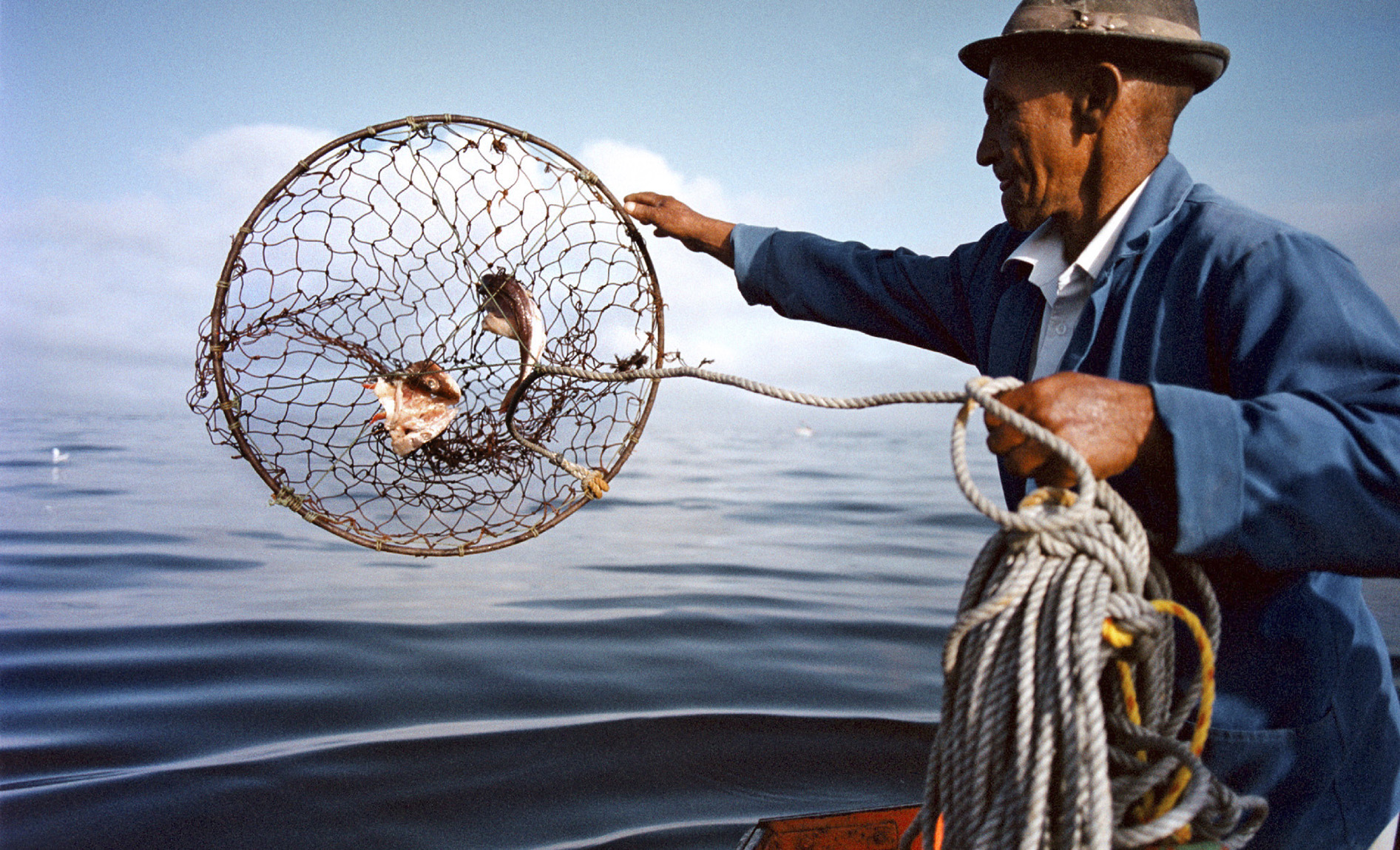
 (Photo: Gallo Images / Schalk van Zuydam)
 The government of national unity (GNU) assumes office at a pivotal ecological moment. Unprecedented biodiversity loss characterised by accelerating ecosystem degradation and species extinction leaves us vulnerable to climate shocks, food and water scarcity and disease.
South Africa is one of a handful of mega-biodiverse nations which collectively hold about 70% of the world’s biodiversity. We have already experienced a series of environmental and climate-linked disasters – and the world was halted by the tragedy of the Covid pandemic.
Good biodiversity governance is not optional. It is imperative that the GNU gets it right.
Foremost, the GNU bears fiduciary obligations as trustees of South Africa’s natural heritage. Its trusteeship is rooted in the democratising values of the Constitution and the section 24(b) right to have the environment protected for the benefit of present and future generations.
It is incumbent upon the GNU to ensure that biodiversity governance realises the rights of its constituents as well as the dignity and equality attaching to generations of future electorates.
Moreover, South Africa’s mega-biodiversity emphasises that this duty of care extends beyond our borders.
These obligations are a baseline to ensure the health and wellbeing of people and nature. Human health and healthy ecosystems are intertwined, while human and animal wellbeing are integrally connected and tied to constitutional conceptions of dignity. This is expressed in section 24(a) of the Constitution and recognised in the vision of “Thriving People and Nature” in the White Paper on the Conservation and Sustainable Use of Biodiversity.
At this critical juncture, we call upon the GNU to secure the rights to the dignity, equality, health, wellbeing and security of our people by mainstreaming biodiversity and attending to the critical obligations of preventing biodiversity loss and conserving the variability and functioning of ecosystems.
The GNU would do well to recognise that ecologically sustainable development cannot subsist upon a deteriorating environmental base.
What are the biodiversity basics?
Good biodiversity governance depends on inter-departmental cooperation. The obligations and principles of cooperation should come as no surprise: they appear in Chapter 3 of the Constitution.
The critical inter-relationship between biodiverse ecosystems, agricultural productivity, livelihoods and food security requires that cooperative governance and public participation be taken seriously.
It also necessitates addressing the particular vulnerability to ecological disasters and climate change of rural and indigenous peoples. Proper implementation of the National Spatial Development Framework – which seeks to balance biodiversity protection, ecological services and other land uses – would be a good start.
In placing livelihoods, food security, ecological services and biodiversity at the fore, the GNU will inevitably need to resolve conflicts between the expansion of mining and exploration and the prevention of biodiversity degradation.
Such resolution requires strategic environmental assessment (SEA), particularly in water-stressed areas such as the West Coast where extensive mining pressure threatens the fynbos and succulent Karoo biomes.
SEA is equally important to assess whether the ecological carrying capacity of South Africa’s ports can sustain the cumulative impacts of ship-to-ship bunkering, aquaculture, maritime traffic, commercial as well as small-scale fisheries, and recreational and naval uses. Such assessment is critical to preventing unwitting ocean degradation.
So is accelerating the marine spatial planning process in terms of the Marine Spatial Planning Act, 16 of 2018, and implementing the policy objectives of the White Paper on National Environmental Management of the Oceans, 2014.
Addressing and resolving these complexities has implications for South Africa meeting its obligations under the Kunming-Montreal Global Biodiversity Framework (GBF). A key GBF target is the conservation of 30% of the marine and terrestrial habitat by 2030.
With less than six years to go until 2030, the GNU needs to take immediate steps to implement the actions specified in the 30x30 Implementation Workshop Synthesis Report, 2023.
These include improving the regulatory regime for protected area declaration and Other Effective Area-Based Conservation Measures verification and reporting; securing funding to achieve South Africa’s “30 by 30” commitments; and incorporating spiritual and cultural protections into protected area expansion and management.
There is a critical nexus between cultural rights and the natural world which needs to be carefully balanced and integrated into participatory planning and biodiversity governance.
Similarly, the GBF and instruments such as the Convention on the Elimination of All Forms of Discrimination against Women have called for full, equitable, inclusive, effective and gender-responsive representation and participation in decision-making.
Participatory decision-making, the importance of free, prior and informed consent and meaningful consultation are already features of our environmental management framework. The GNU needs to uphold and strengthen such participatory rights while recognising a key weakness in failing to provide specifically for the voices of children in formal biodiversity governance.
Children’s right to generational equity
The GNU’s obligation to recognise children as environmental actors arises from the right to inter-generational equity which is built into the section 24(b) rights of future generations to have their environment protected.
The GNU is urged to ensure that children are empowered through education, play, appropriate care and security to voice their needs and speak for their futures.
It is also enjoined to follow the recommendations of General Comment No. 26 of 2023 on the Rights of the Child, by taking immediate action to conserve biodiversity, strengthen accountability and amend and enforce national laws to secure children’s rights to a clean, healthy and sustainable environment.
A good starting point for legislative reform that upholds rights is ensuring that South Africa has ratified and domesticated treaties and laws addressing pollution and over-exploitation of our oceans and atmosphere – interrelated matters where South Africa cannot act in isolation.
South Africa needs, urgently, to domesticate the Agreement on Port State Measures to address illegal, unregulated and unlawful fishing. Similarly, it is imperative that South Africa ratify the “High Seas Treaty” which concerns biodiversity conservation in international waters.
Existing commitments to address marine pollution and climate change must be fully domesticated. Consequently, the President needs, urgently, to sign the Marine Pollution (Prevention of Pollution from Ships) Amendment Bill [B5-2022] and Climate Change Bill [B9-2022] into law while the Marine Pollution (Preparedness, Response and Cooperation Bill) [10B-2022] (dealing with oil spill response) must be revived in Parliament to enable enactment.
The GNU is reminded of the particular vulnerability of South Africa’s coastal zone and is urged to adopt measures to properly regulate marine noise pollutants and reduce maritime noise.
International climate obligations
Finally, the GNU is urged to cure South Africa’s silence in respect of international engagements such as the General Assembly’s request to the International Court of Justice for an advisory opinion on states’ climate obligations.
Enactments, however, are not enough without implementation. The GNU must ensure that those tasked with monitoring and enforcing environmental compliance and prosecuting environmental crimes are knowledgeable, skilled, properly funded, accountable and transparent.
Access to information is key – with more needed to ensure transparent publication of licences and authorisations for the use of mineral resources, water, and land development. This includes finalising the mining cadastre, signing up to the Extractive Industries Transparency Initiative standard, publishing fishing rights and quotas, and not using personal information protections to refuse environmental disclosures.
Incentives for biodiversity protection are also necessary, including those linked to innovative finance solutions which facilitate the implementation of GBF targets and White Paper goals.
The business community needs to be incentivised to regard biodiversity conservation as a priority in planning, forecasting and measuring their bottom line. Conversely, financial disincentives should be attached to business practices which undermine the long-term flourishing of South Africa’s biodiversity.
National Treasury and the finance cluster are urged to act decisively, with full recognition of the relationship between economic resilience and measures to address the triple planetary crisis of biodiversity loss, climate change and pollution.
All ministries and departments play a role in protecting our environmental rights. Thirty years into democracy, there is urgent work to be done to safeguard our biodiversity, the environmental base on which South Africa rests, and thus our futures.
We have entrusted Cabinet with this enormous task. It is your duty to ensure our people and nature thrive. DM
Kate Handley is co-founder and executive director of the Biodiversity Law Centre, a non-profit organisation that seeks to use the law to reverse the catastrophic decline of biological diversity in southern Africa. Nina Braude is a senior attorney at the Biodiversity Law Centre.