



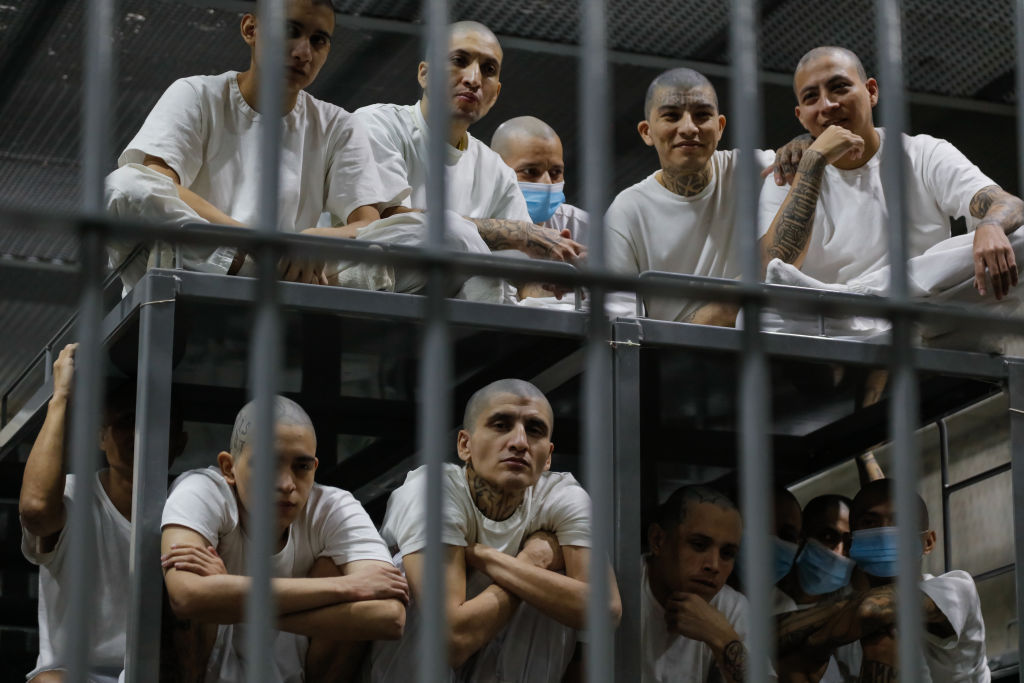
 Inmates are seen in cells at CECOT in Tecoluca on February 6, 2024 in San Vicente, El Salvador. On February of 2023 El Salvador inaugurated Latin America's largest prison as part of President Nayib Bukele's plan to fight gangs. Since then, the UN and NGOs have raised concern about the treatment of inmates, minors being held and suspects incarcerated as gang members without sufficient proof. Meanwhile, Bukele claims El Salvador's murder rate has fallen from the world's highest to the lowest in the Western Hemisphere. (Photo by Alex Peña/Getty Images)
Police and soldiers have detained 3,319 children and teenagers from March 2022 to April this year - the time from when the state of emergency was introduced and suspended certain civil rights to the start of mass trials, according to the New York-based rights group.
"Many children who have been arrested and detained had no apparent connection to gangs' abusive activity," the report said. "In detention, authorities subjected children to severe ill-treatment that in some cases amounted to torture."
The Salvadoran government did not immediately respond to Reuters' request for comment, but has previously said torture does not take place in its prisons.
The report, compiled from more than 90 interviews, said jailed children had been deprived of adequate food, healthcare and contact with their families, and "in many cases" coerced into making false confessions.
"Authorities have taken few, if any, steps to protect the children from violence by other detainees, including beatings and sexual assault," HRW said.
The group documented 66 cases of minors subjected to arbitrary detention, torture and police harassment, warning that arrests appeared to be based on physical appearance and socioeconomic conditions rather than credible evidence.
It also found over 1,000 minors have been sentenced to terms of up to 12 years for broadly-defined crimes in trials with dubious evidence and lack of due process.
Over 80,500 people have been arrested under the state of emergency, which has managed to drastically reduce the number of homicides making the small Central American country one of the safest in the Americas, and earning President Nayib Bukele strong popular support.
Last week, local rights group Cristosal said at least 265 people have died in state custody, including four babies.
(Reporting by Nelson Renteria; Editing by Sarah Morland and Michael Perry)
Comments
Scroll down to load comments...