




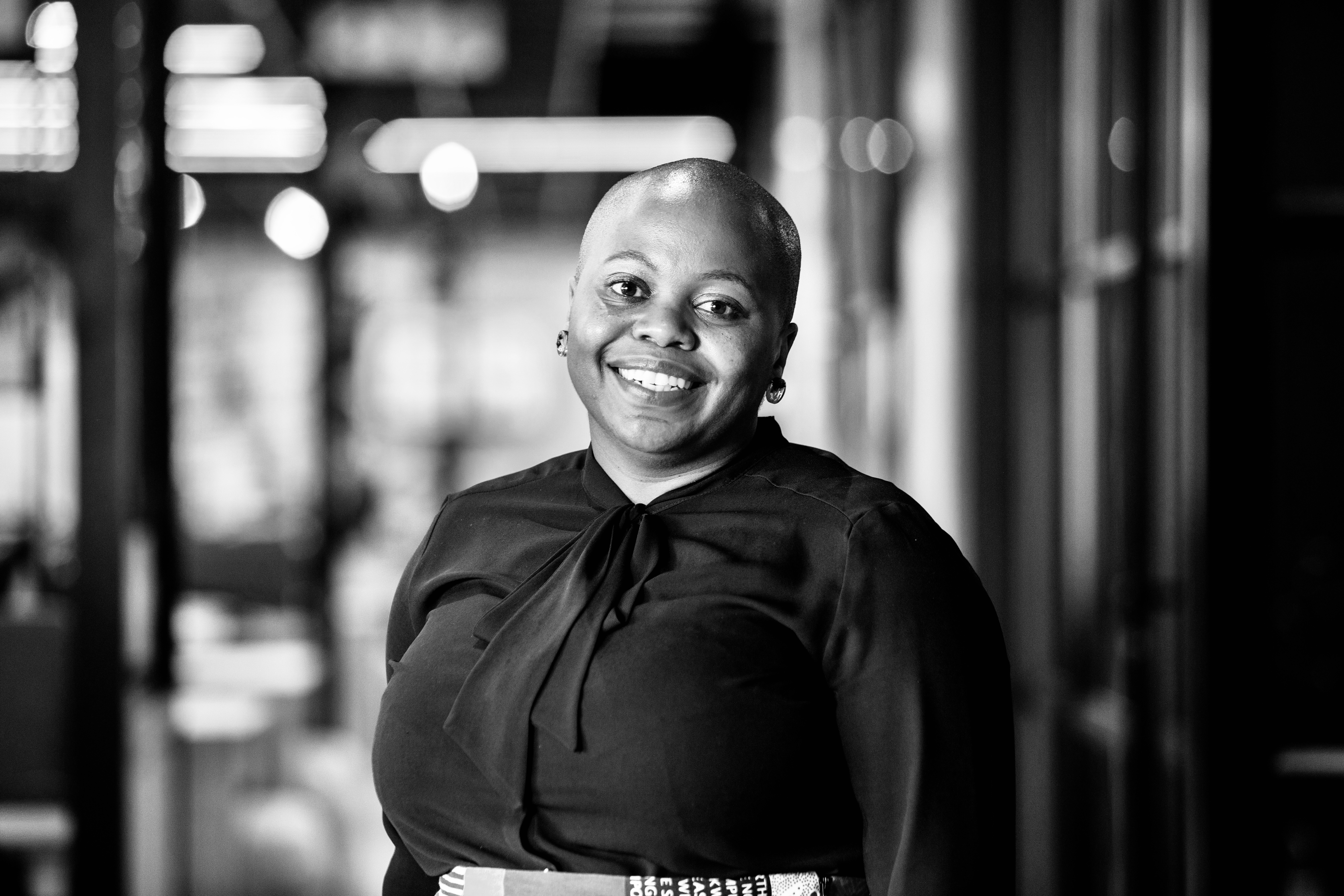
Managing Director of Idea Engineers, Katlego Mahura, journeys deep into the new world of marketing and engages influential Chief Marketing Officers (CMOs) on the most pressing issues in branding today.
With sustainability and ESG (Environmental, Social, and Governance) driving transformative changes in marketing strategies, companies are compelled to commit to responsible practices, highlight purpose-driven initiatives, and foster trust with a public that increasingly values ethical and environmentally conscious brands.
In this interview, Mahura speaks to Zanele Hadebe, Vice President: Marketing for Sasol Energy. The pair discuss corporate purpose, brand success and the importance of paying it forward.
Katlego Mahura: Tell us about yourself and the legacy you aspire to leave.
Zanele Hadebe: I have been in marketing since I was eight. My family owned a shop, where I worked to earn my school pocket money. During school holidays I would be exposed to the shopping environment and that is where I learned about supply and demand in a practical, hands-on way. This background made my decision to study marketing at university an obvious one.
At Sasol, I look after marketing for the Energy business. My portfolio covers the business functions from mobility to low carbon solutions. It comprises brand, marketing, loyalty and rewards, external and internal communications, stakeholder relations, CSI and customer experience. Everything you touch, feel, and experience around our brand is part of the portfolio. This includes fuel retail stations and the Sasol Delight convenience stores as well as the Sasol Rewards programme.
What really excites me is helping people reach their potential. I like to come into teams and help people to grow. My hope is that my legacy will be one that builds teams and people who pay it forward, helping those who come after them to grow and thrive. I also want people to remember me as a person and not my title.
Katlego Mahura: How does your brand define success?
Zanele Hadebe: At Sasol, we live by the values of accountability, inclusivity, resilience, safety, and caring. When it comes to people and profit and given the nature of our business as a petrochemicals and energy company, a commitment to safety and driving zero harm cannot be understated. I personally believe in focusing on the happiness of our people and their wellbeing in the workplace. Happy people will deliver and perform. Get the people aspect right and everything else falls into place.
Katlego Mahura: Drawing from your experience, how does adopting a stakeholder-focused approach contribute positively to long-term success and reputation?
Zanele Hadebe: When we go into a community and we set up shop, we must think of the ripple effect for everyone there. It does not just end at the community—it also encompasses customers, our peers and competitors, contractors, service providers and our staff. We must not only engage with community leaders but also with government and municipalities to align on investment decisions like a fuel retail site. It is also key to work with local suppliers and ensure that our investments create jobs in the community.
Katlego Mahura: Could you share insights on the social and environmental gaps within your industry that require attention?
Zanele Hadebe: National statistics on unemployment and skills development show the education and technical skills gaps in our industry and compel industry players to improve the opportunities for our youth. The education of young people about our industry and enabling them to consider careers in STEM (Science, Technology, Engineering and Mathematics) is key.
Education, including early childhood development, is a major focus for Sasol. Besides bursaries and career expos, we are implementing 'bridge to work' programmes with our partners to enable young people to find jobs more easily. We also have a significant role in health and community safety.
Something that is close to my heart is inclusivity for women. We would like to see more female ownership of our fuel stations and more women in executive positions in the energy space. I am proud of the ‘Women in Energy’ network, which is a forum for industry women to advocate for gender equity and discuss the challenges we face.
Katlego Mahura: Could you name a marketer you admire and explain why?
Zanele Hadebe: There are many marketers I have huge respect for, like Sbusiso Kumalo at African Bank, Sydney Mbhele at Absa, and Nontokozo Madonsela at Momentum. You can see the marketer's hand on the brands of the companies where they work--their work speaks for itself. Of course, some CEOs are also great marketing voices for their brands, like the CEO of Ocean Basket, Grace Harding. Nando’s is one of my favourite examples of a brand that always delivers on its brand promise.
Katlego Mahura: How does your brand integrate the needs of local communities, the environment, and society with your financial objectives?
Zanele Hadebe: We believe that profit, people, and the planet are interlinked, so we are engaged in a range of projects and programmes for the good of the environment and the communities we work in. This we term our decarbonisation strategy which is driven by our technological capabilities developed in over 70 years of experience through our operations in-line with our commitment to a sustainable future. DM