




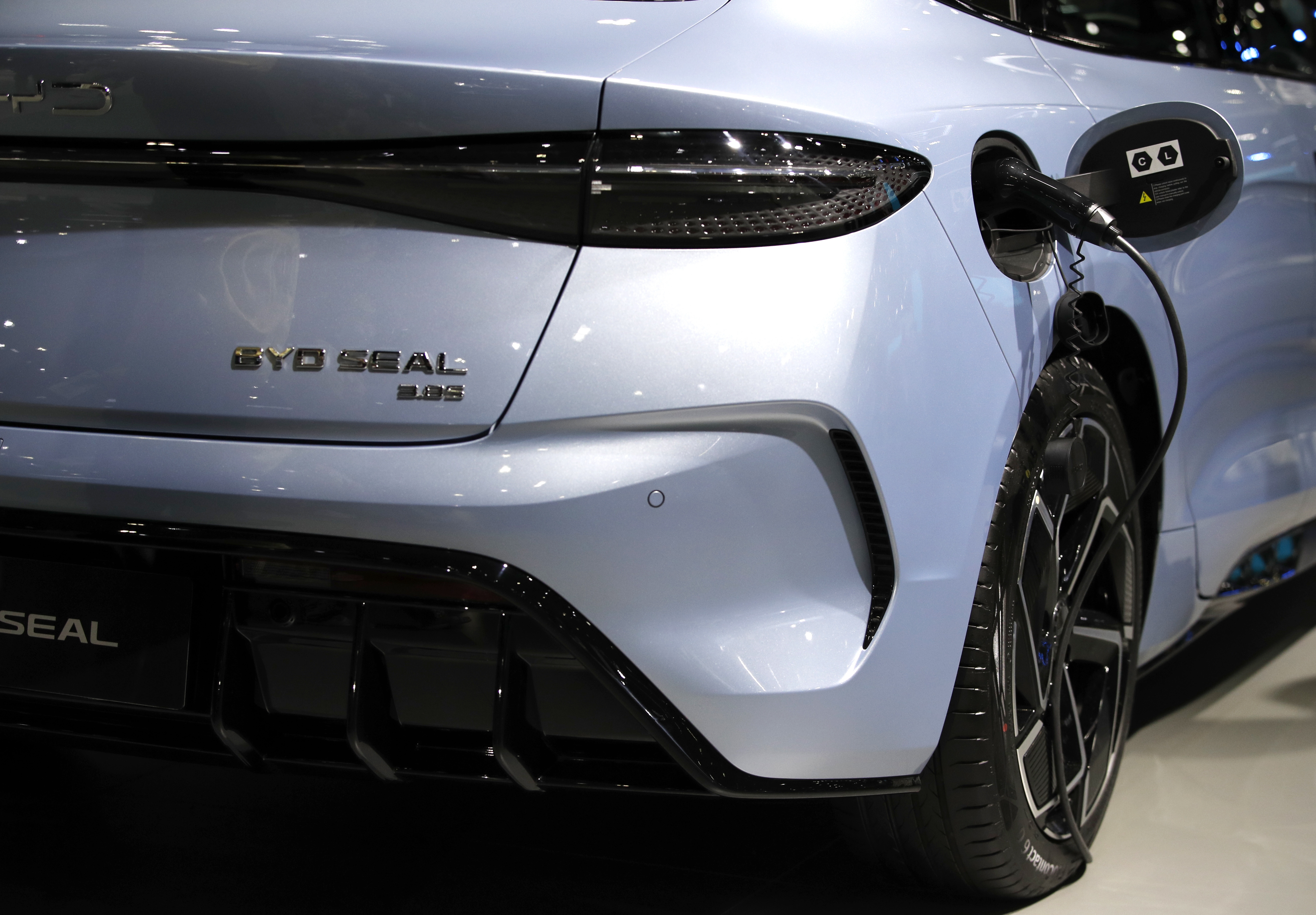
 Chinese automaker BYD's Seal electric car at the 40th Thailand International Motor Expo 2023 in Bangkok on 4 December 2023. (Photo: EPA-EFE / Rungroj Yongrit)
 Slightly more than half the total amount of support was in the form of sales tax exemptions, according to the research from Scott Kennedy, a China specialist at the Centre for Strategic and International Studies. The rest is made up of nationally approved buyer rebates, government funding for infrastructure such as charging stations, government procurement of EVs as well as R&D support programme, he wrote in a blog post.
The findings come just after the European Union announced it will hike tariffs to as high as 48% on vehicles imported from China to compensate for subsidies. That followed the decision by the US to quadruple tariffs on the cars, while Canada is now preparing potential new tariffs, according to a Bloomberg report.
“Chinese EV’s have benefited from massive industrial policy support, and their quality is improving, making them attractive to domestic and overseas consumers,” Kennedy wrote. “An effective response by the US, Europe and others must take account of both facts.”
He described the data as “highly conservative”, noting that it doesn’t include local-level rebate programs in cities like Shanghai and Shenzhen designed to encourage owners of conventional cars to switch to EVs. It also doesn’t include low-cost land, electricity, and credit that some EV manufacturers can access and benefit from, and excludes support for battery companies and other parts of the supply chain.
JUST OUT! By our conservative count, Chinese industrial policy spending on its EV sector for 2009-2023 totaled $230.8 billion, = to 18.8% of total sales. For our numbers & the dilemma such support & improving quality create for Western policymakers, see: https://t.co/MASewpb4QY pic.twitter.com/z0S6clpiFF
— Scott Kennedy (@KennedyCSIS) June 20, 2024
On a per-vehicle basis, support has fallen from $13,860 in 2018 to just under $4,600 in 2023, or less than the $7,500 credit available to US buyers of qualifying vehicles under the Inflation Reduction Act, according to the post. Sales-tax exemptions were worth almost $40-billion last year, with this jumping from under $10-billion in 2020 due to the rapid increase in sales of EVs.
“If Chinese EVs were pieces of junk, then they would not be a serious challenge to the rest of the world’s automakers,” Kennedy wrote. “In general, Western automakers and governments have dilly dallied and not been aggressive enough.”