



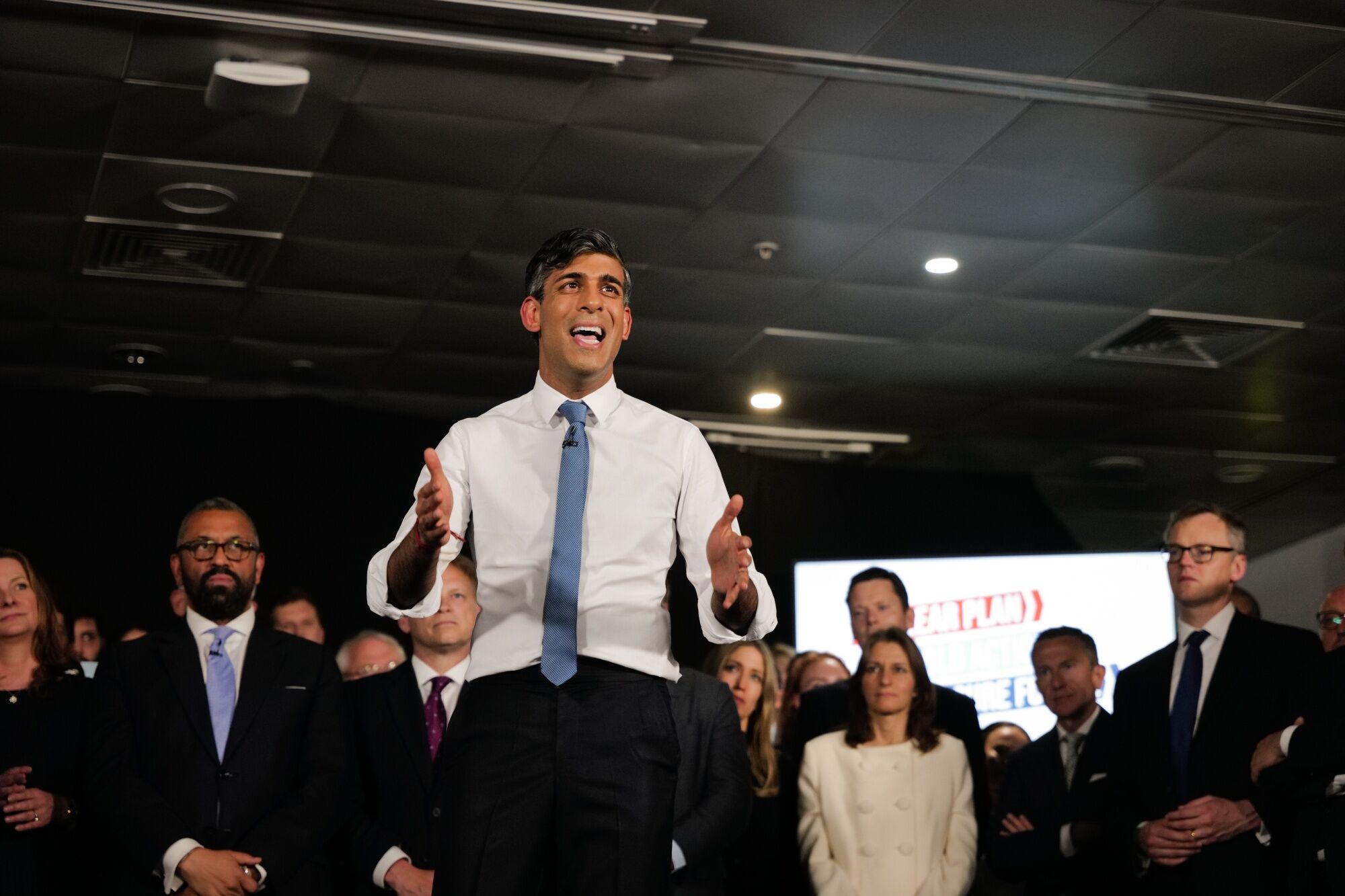
 Rishi Sunak
 The party’s electoral offer — including another two-percentage-point reduction in the national insurance payroll tax, a cut to stamp duty on property purchases by first-time buyers and protecting pensioners from having to pay income tax — was shared with cabinet ministers last week, according to people familiar with the matter, who requested anonymity disclosing internal party discussions.
Some of those who had seen the provisional policies said they offered little to capture voters’ attention and shore up the Conservative vote. Some ministers were urging Sunak’s aides to improve the offer at the end of last week, and while there have been no signals that their demands on tax and immigration will be met in the final document, some alterations have been made in recent days following those conversations, the people said.
The Conservative campaign did not respond to a request for comment.
| Read More Stories About UK Election |
|---|
One of the people said the draft manifesto was long, dense and lacking a retail offer, after being controlled by a very small team of aides. They suggested there was a danger of a mistake comparable to former premier Theresa May’s manifesto in 2017, which derailed her election campaign by proposing to make people pay more of the costs of social care, a controversial pledge that was branded the “dementia tax.”
Other policies in the document include measures to restrict mobile phone social media usage for teenagers and a promise outlined in the first few days of the campaign to reintroduce mandatory National Service for 18 year-olds.
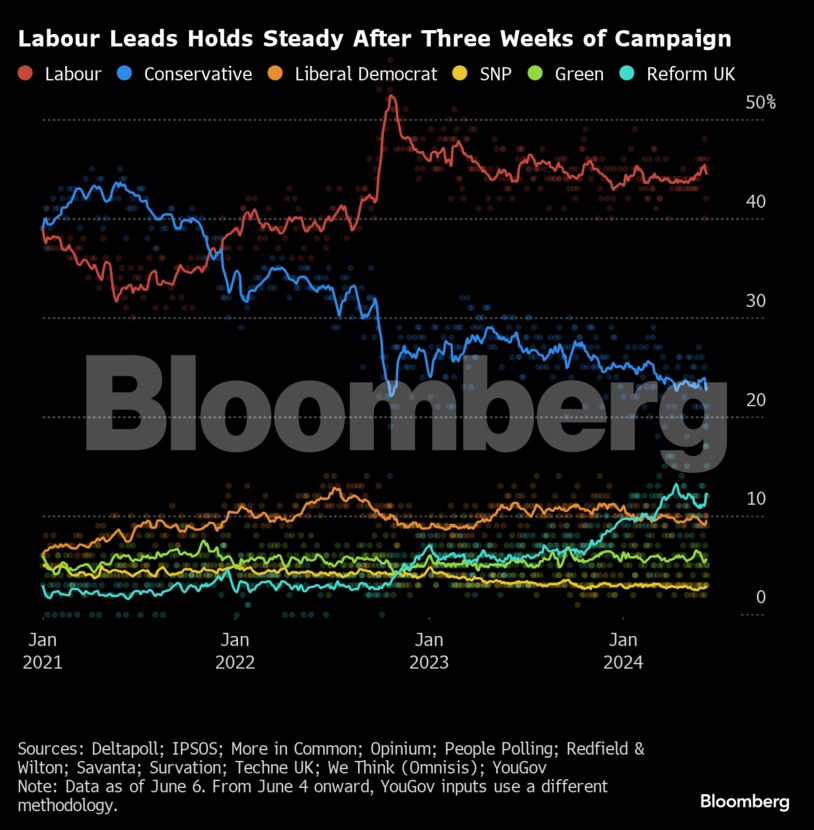
Labour enjoys a lead in excess of 20 points, according to Bloomberg’s composite poll, a rolling 14-day average using data from 11 polling companies. The margin has slightly increased since Sunak called the election just under three weeks ago, suggesting Tory policies announced so far have done little to shift the dial.
Multiple Tory lawmakers said they were disappointed that no pledge to cut or abolish inheritance tax was included in the manifesto proposals shared with them. One said they hoped Sunak had changed his mind on that tax over the weekend and would include the policy on Tuesday. The best hope the Tories had was that Sunak’s aides were holding back other policy announcements in order to spring a surprise, another said.
Still, expectations even among Tory lawmakers that Sunak can find a game-changing policy is low. Internal conversations about the manifesto in recent days were difficult and chaotic as Sunak and his chief policy aides, James Nation and Will Tanner, wrestled with the demands of other advisers and Tory lawmakers, the people said. There is frustration that Sunak appears set on proposing a third national insurance cut, after two at the last two fiscal events failed to move opinion polls. One Tory aide said repeating the move was the definition of insanity.
Yet Sunak is in something of a bind. Other major new tax cuts could risk a lack of credibility and lead to comparisons with his market-roiling predecessor Liz Truss, while a much stronger immigration policy could upset Tory moderates and split the party.
Some aides and lawmakers on the right have called on Sunak to harden his position on the UK’s membership of the European Convention on Human Rights, which right-wingers blame for the failure so far of the Tory government’s policy to deport asylum seekers to Rwanda, a measure designed to deter migrants from crossing the English Channel in small boats. However, language on the ECHR in the draft manifesto would not satisfy the demands of the right, people familiar with the matter said.