




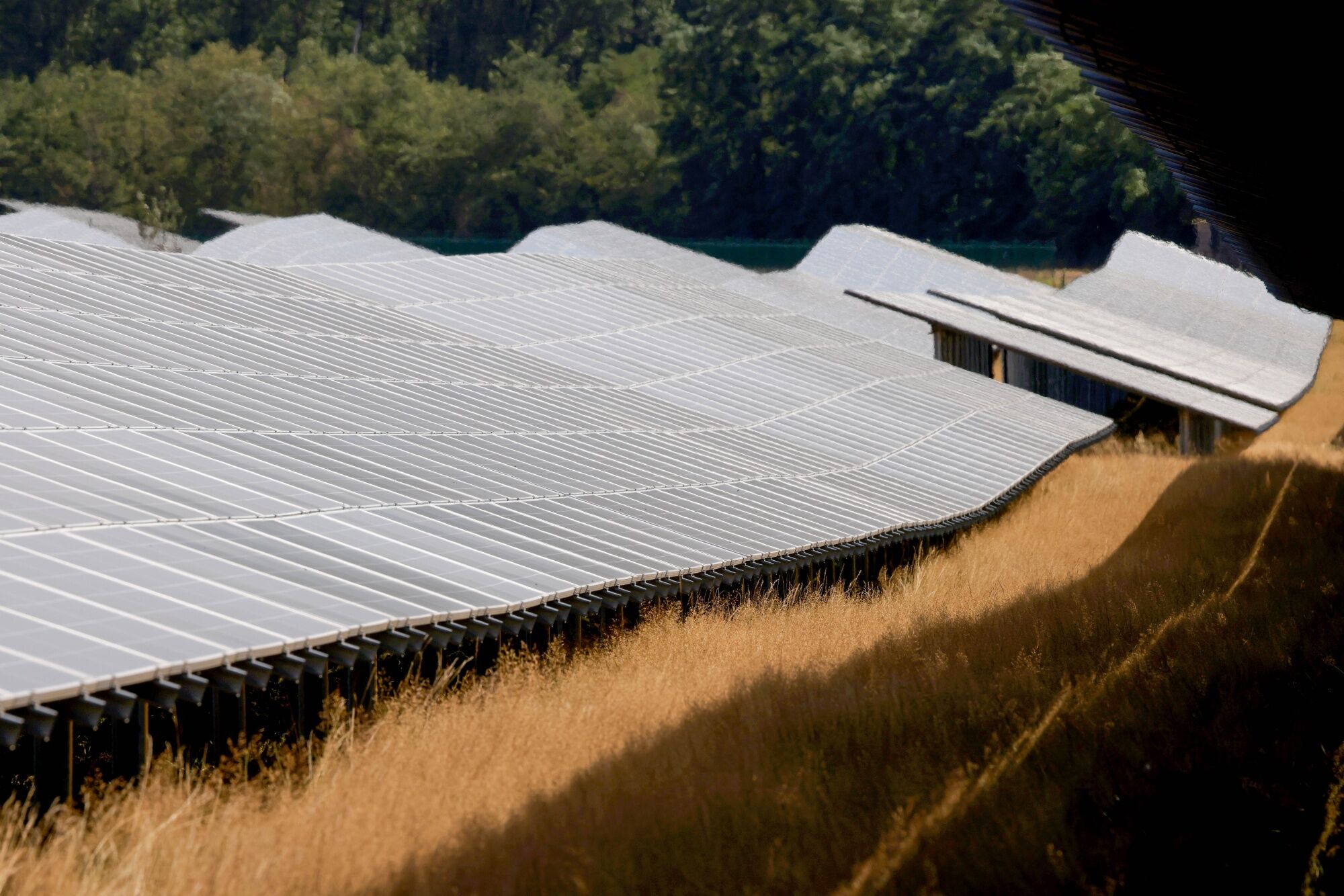
 Solar panels at the Weesow-Willmersdorf solar park, operated by EnBW Energie Baden-Wrttemberg AG, in Werneuchen, Germany, on Tuesday, Aug. 2, 2022. The European Union seeking to double solar capacity to 320GW by 2025 and to hit 600GW by the end of the decadewhich would make solar Europe's biggest source of electricity, whereas today it's not even in the top five.
This means on sunny days, output can outstrip demand leading to negative prices in the market, with the grid unable to handle so much power and insufficient storage capacity. Although many producers are not directly exposed to the spot prices, these trends bring down revenues overall.
Total installed solar capacity soared to more than 80 gigawatts at the end of 2023, according to the bank, 30 gigawatts higher than average demand.
Read more: German Solar Generation Hits Record, Prices Dip Across Europe
“The collapse in solar-hour-power-prices implies a collapse in solar power producer earnings,” Bjarne Schieldrop, chief commodities analyst at SEB AB wrote in the note. “Unless the earnings of the installations are secured with subsidies” or private purchase agreements.
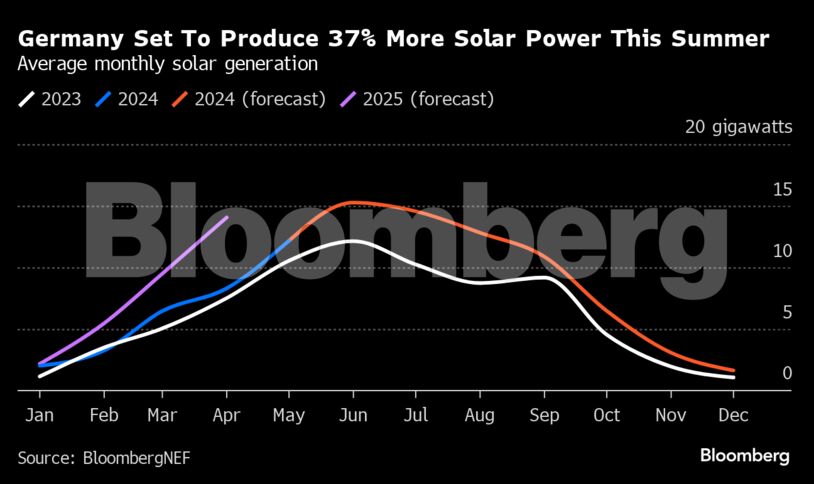
The benefits of cheap renewable energy don’t always trickle down to consumers because peak demand is usually later in the evening, not when the sun is at maximum.
“All consumers are of course happy for cheap power as long as they are able to consume it when it is cheap. At the moment they can’t,” Schieldrop added.
The world will have to spend more on power grids than on renewable capacity in order to achieve net zero emissions by 2050, according to BloombergNEF’s New Energy Outlook published Tuesday.
Comments
Scroll down to load comments...