




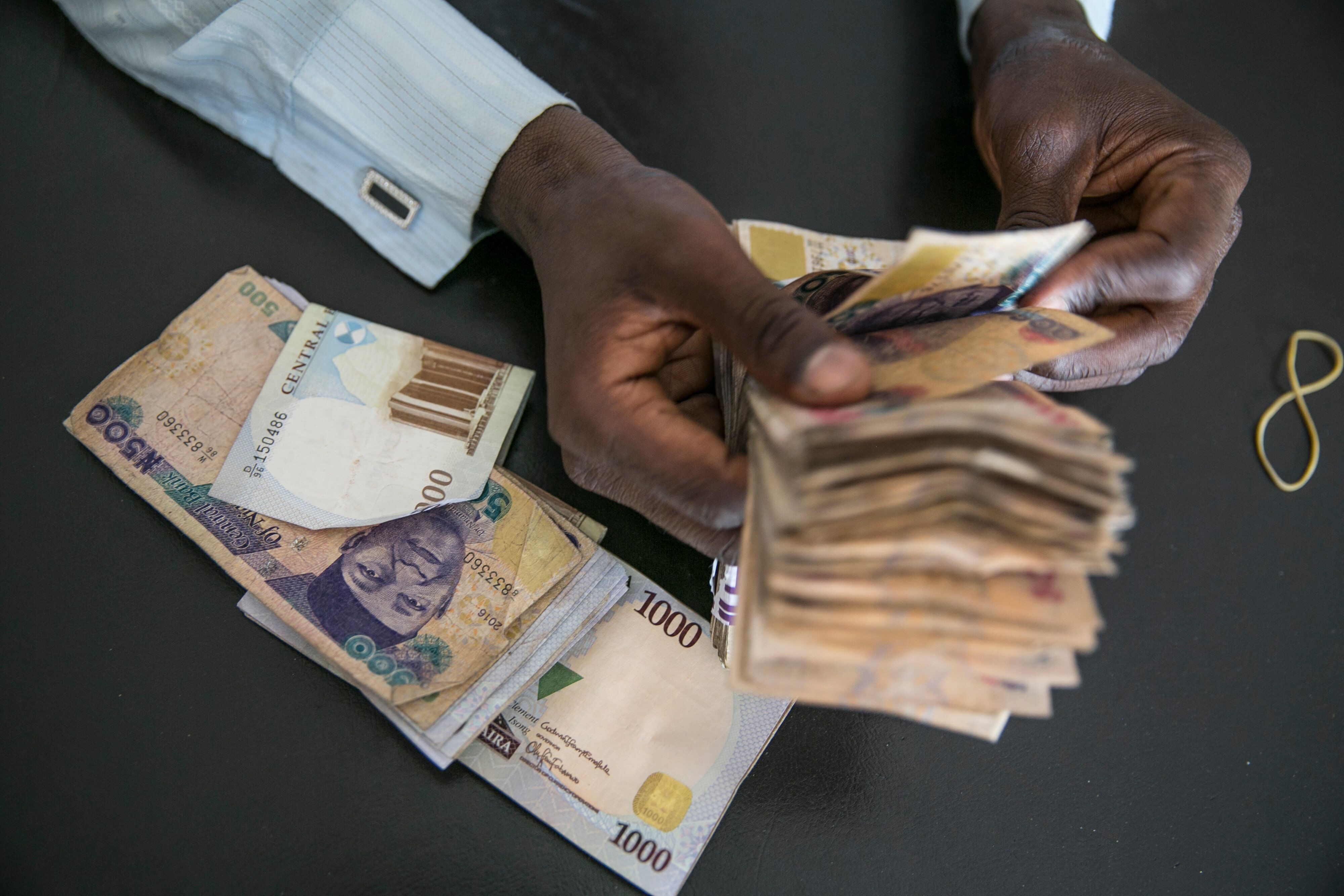
 A clerk at a currency exchange bureau counts Nigerian naira banknotes in Maiduguri, Nigeria, on Wednesday, May 1, 2019. Nigeria will propose a supplementary budget later this year to boost capital spending and fund a 67 percent increase in the minimum wage as government revenues improve, Budget Minister Udo Udoma said. Photographer: Jean Chung/Bloomberg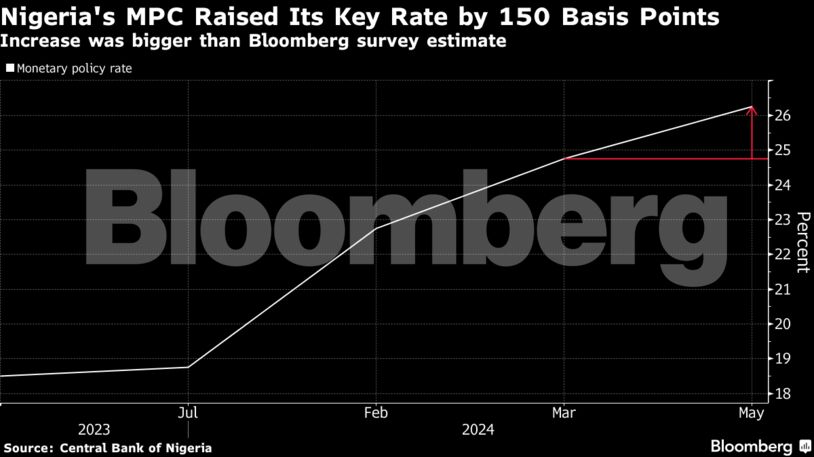
“The key focus of the MPC at this meeting remained to achieve price stability by effectively using tools available to the monetary authority to rein in inflation.” Governor Olayemi Cardoso told reporters at a press conference on Tuesday in Abuja, the capital.
The yield on Nigeria’s $1.5 billion of eurobonds dropped four basis points to 8.83% by 3:07 p.m. in London.
The central bank has now lifted the key rate by 1,475 basis points since its tightening campaign began in May 2022 to temper inflation that’s accelerated since January 2023 and is now at 33.7%.
What Bloomberg Economics Says...
“The Central Bank of Nigeria has taken a further step in its battle to get ahead of inflation by agreeing a large rate hike. Interest rates are now approaching their peak, with the rhetoric from policymakers suggesting a belief they are winning the fight against price gains. Looking ahead, we expect another a rate hike — the last of this hiking cycle — in July, at which point inflation is likely to have started slowing.”
— Yvonne Mhango, Africa economist
— To read more click here
A threefold increase in electricity tariffs, high food costs and a more than 27% depreciation in the naira in the past month are fanning inflation. Cardoso said the policymakers observed the recent foreign exchange volatility, which they attributed to “seasonal demand, a reflection of the interplay between supply and demand in a freely-functioning market system.”
Carlo Morelli, senior portfolio manager at Azimut Investments SA., said the naria’s recent woes were due to the scarcity of dollars in the local market and the central bank’s latest move should help the currency onto a firmer footing.
“The current authorities added credibility to fight inflation with higher rates, which I did not expect,” he said. “Hopefully now tailwinds from the oil sector and external funding will help shore up dollars supply in the local market.”
A $1.05 billion prepayment facility arranged by African Export-Import Bank expected at the end of this month will help boost the country’s foreign currency supply, as well as possible loans from the World Bank and African Development Bank anticipated for later this year. The country is also aiming to double remittance flows within a year, said Cardoso.
The World Bank estimates that Nigerians living abroad remitted $20.1 billion during 2022.
Comments
Scroll down to load comments...