




 A neon sign for Bitcoin in the Paralelni Polis project, an organisation combining art, social sciences and modern technology, in Prague, Czech Republic, on Friday, 25 January 2024. (Photo: Milan Jaros/Bloomberg)
 The ETFs from the likes of BlackRock Inc. and Fidelity Investments were earlier part of an historically successful launch for a new fund category. Money poured in, lifting Bitcoin to an all-time peak of almost $74,000 in March.
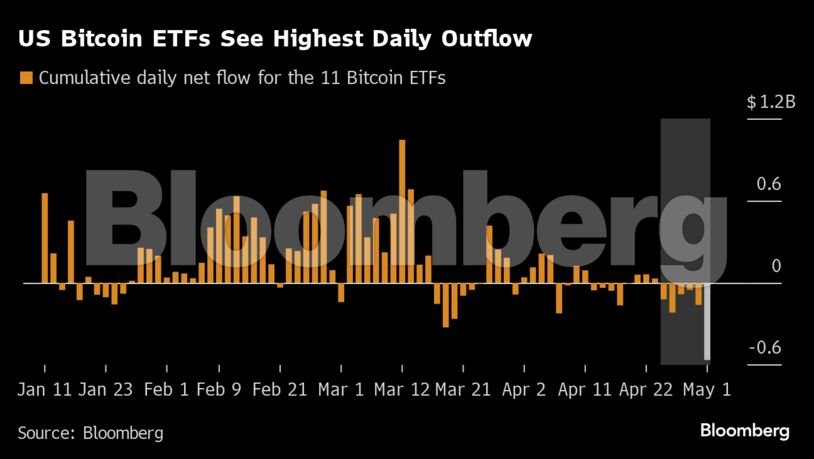
The group still has a net inflow of more than $11 billion to date but demand has slumped of late alongside a tightening of financial conditions in the US, where the Federal Reserve faces the challenge of overcoming sticky inflation.
“This is a snapshot in time,” said Caroline Bowler, chief executive officer of crypto exchange BTC Markets Pty. “There has been a retrenchment in Bitcoin and outflows from the ETFs, but the overall picture is healthy in terms of ETF demand in different geographies.”
Hong Kong this week listed its first ETFs investing directly in Bitcoin and Ether, but the development failed to lift the mood in crypto markets.
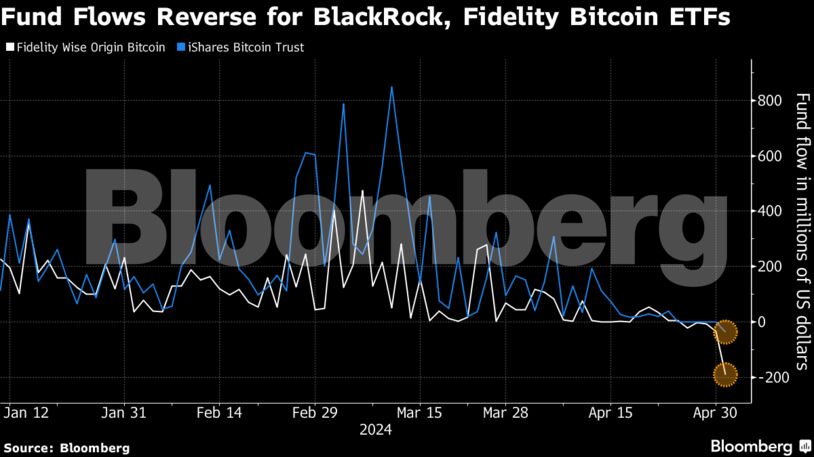
A net $191 million left the Fidelity Wise Origin Bitcoin Fund on Wednesday, the portfolio’s highest daily net outflow so far. BlackRock’s iShares Bitcoin Trust saw a $37 million drawdown, its first. Investors pulled $167 million from the Grayscale Bitcoin Trust, the largest spot-Bitcoin ETF.
Bitcoin fell 23% from its last record on March 14 to a two-month low reached Wednesday. The original cryptocurrency rebounded on Thursday following three straight days of declines. It was trading near the $58,600 level at 9 a.m. New York time.