



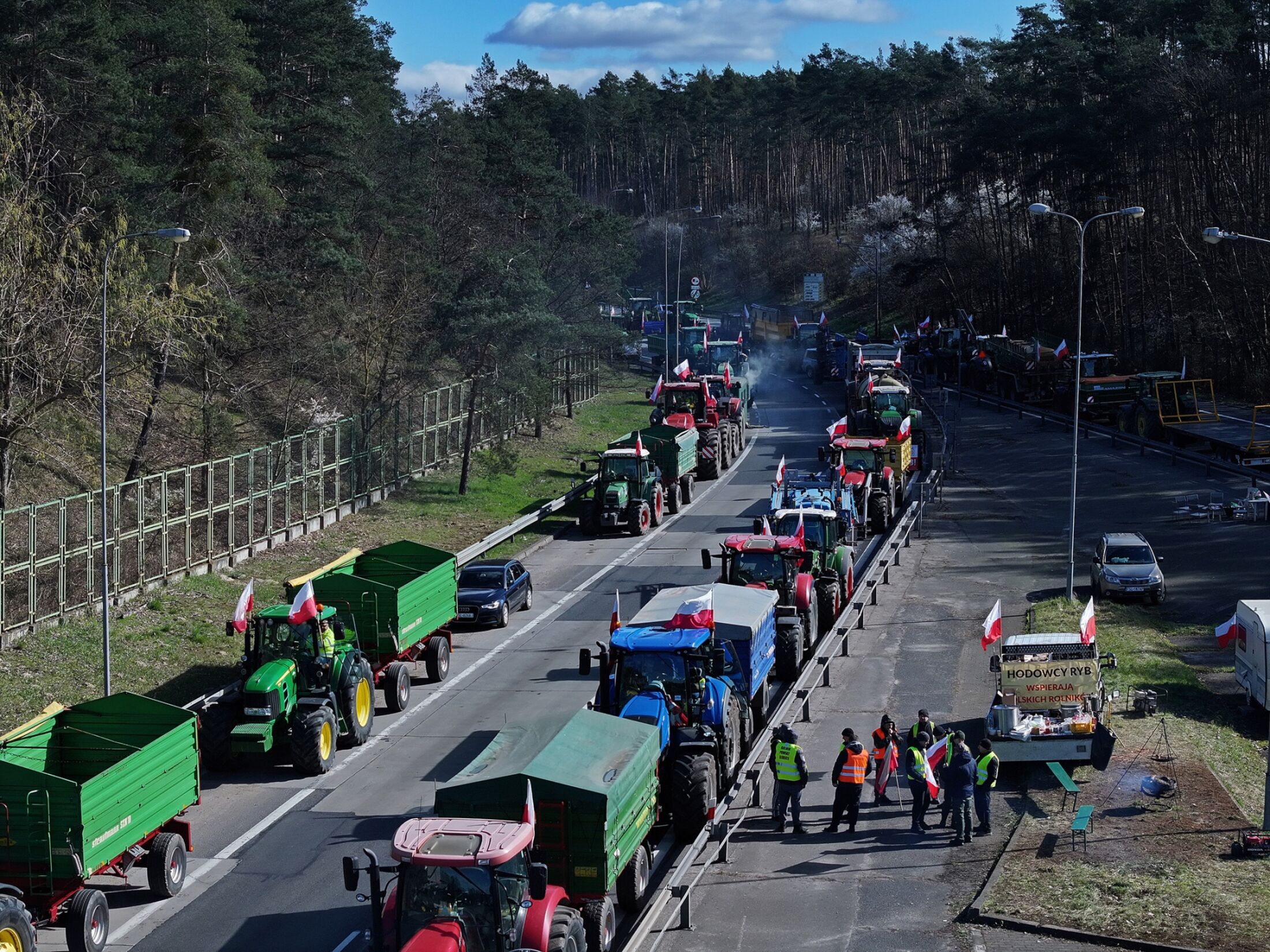
 Farmers with their tractors block the A12 highway border crossing to Germany, near Slubice, Poland, on March 18.
Still, the bloc increased protection for sensitive agricultural products such as sugar, corn, eggs and poultry — allowing tariffs to kick in if inflows exceed the average of the past two years. Imports of wheat will also be monitored for any surges. The proposal must be passed by the European Parliament, in a vote set for April, and approved by member states, before it comes into force.
Agriculture lobby group Copa-Cogeca said that without direct inclusion of wheat, the proposal fails to address producers’ concerns and remains unacceptable.
Crop imports from Ukraine have been at the heart of farmer protests that have swept Europe in recent months, alongside rising costs and administrative burdens. Last month, growers asked the European parliament to limit the free trade measures, saying they endanger the bloc’s economies and disrupt the single market.
The agreement doesn’t go far enough for Polish farmers, who want to set import quotas for Ukrainian products at levels from before the Russian invasion.
In the latest wave of protests, growers on Wednesday blockaded hundreds of roads across the country demanding further action. Poland’s Agriculture Ministry will ask the government to extend its ban on sensitive food products and halt their transit to other countries, officials said following talks with the protesters.
The country will hold talks with Ukraine on Thursday about suspending transit, Deputy Agriculture Minister Michal Kolodziejczak said.
Comments
Scroll down to load comments...