




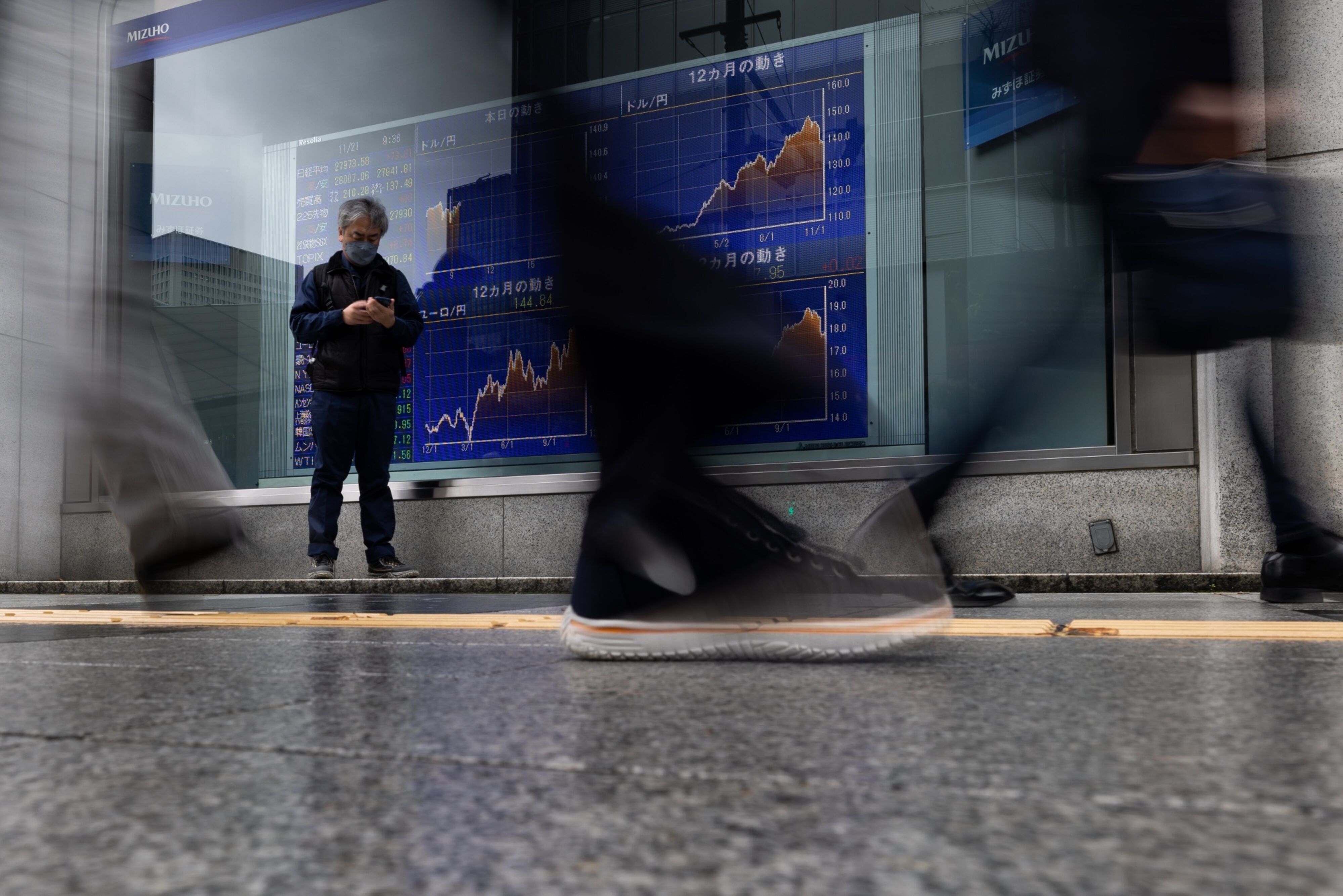
 An electronic stock board outside a securities firm in Tokyo, Japan, on Monday, Nov. 21, 2022. (Photo: SeongJoon Cho/Bloomberg)
 The Nikkei 225 index jumped more than 1% to extend gains after the benchmark hit its highest since 1990 on Tuesday. The gains buoyed a gauge of Asian stocks, which edged higher despite declines in Australia and South Korea. Benchmarks in China fluctuated.
US equity futures were little changed. The S&P 500 closed on Tuesday 0.2% lower, while the tech-heavy Nasdaq 100 managed an advance by the same magnitude, extending a rebound in tech stocks following heavy selling last week.
“With the market’s expectation of an early Fed rate cut receding after the start of the new year, Japanese stocks remained firm on the back of expectations that the yen’s depreciation against the dollar will support corporate earnings,” JPMorgan chief Japan equity strategist Rie Nishihara wrote in a note.
Bitcoin steadied to trade 1% higher at around $45,934, following wild swings on speculation the US Securities and Exchange Commission had approved spot-Bitcoin exchange traded funds. The SEC said in a statement that it hadn’t yet granted approval for the ETFs, and said a conflicting post minutes earlier on the regulator’s official X account was untrue.
Treasury 10-year yields and the dollar were steady in Asia trading. The yen extended its weakness against the greenback.
Among major data from Asia, wage growth for Japanese workers slowed sharply, an unwelcome development for the Bank of Japan that wants to see pay hikes leading to price increases as a prerequisite for normalising monetary policy. Australia’s inflation moderated, boosting the case for interest rates to be kept unchanged. The Australian dollar rose against the greenback.
Investor focus will be on a key inflation report from the US later this week for cues on the timing of the Federal Reserve’s rate cut.
A growing mismatch between aggressive pricing for US interest rate cuts and resilient economic fundamentals reducing the need for such easing risks creating a “reverse Goldilocks” scenario for global markets, according to Max Kettner at HSBC Holdings. He sees the Fed starting its easing cycle in June, later than market pricing indicating May or even March.
China’s inflation, trade and credit reports are also due in the following days, and will offer a health check on the world’s no. 2 economy.
Geopolitics remained in focus. China’s US envoy said the country had no room to compromise with those advocating for Taiwan independence.
Elsewhere, oil inched higher to compound gains of more than 2% on Tuesday on signs US stockpiles continued to contract, and as an official forecast pointed to a narrow global deficit this year.
Comments
Scroll down to load comments...