



 Illustrative image | (Photos: Rawpixel | Ahmad Hasaballah / Getty Images | David Silverman / Getty Images)
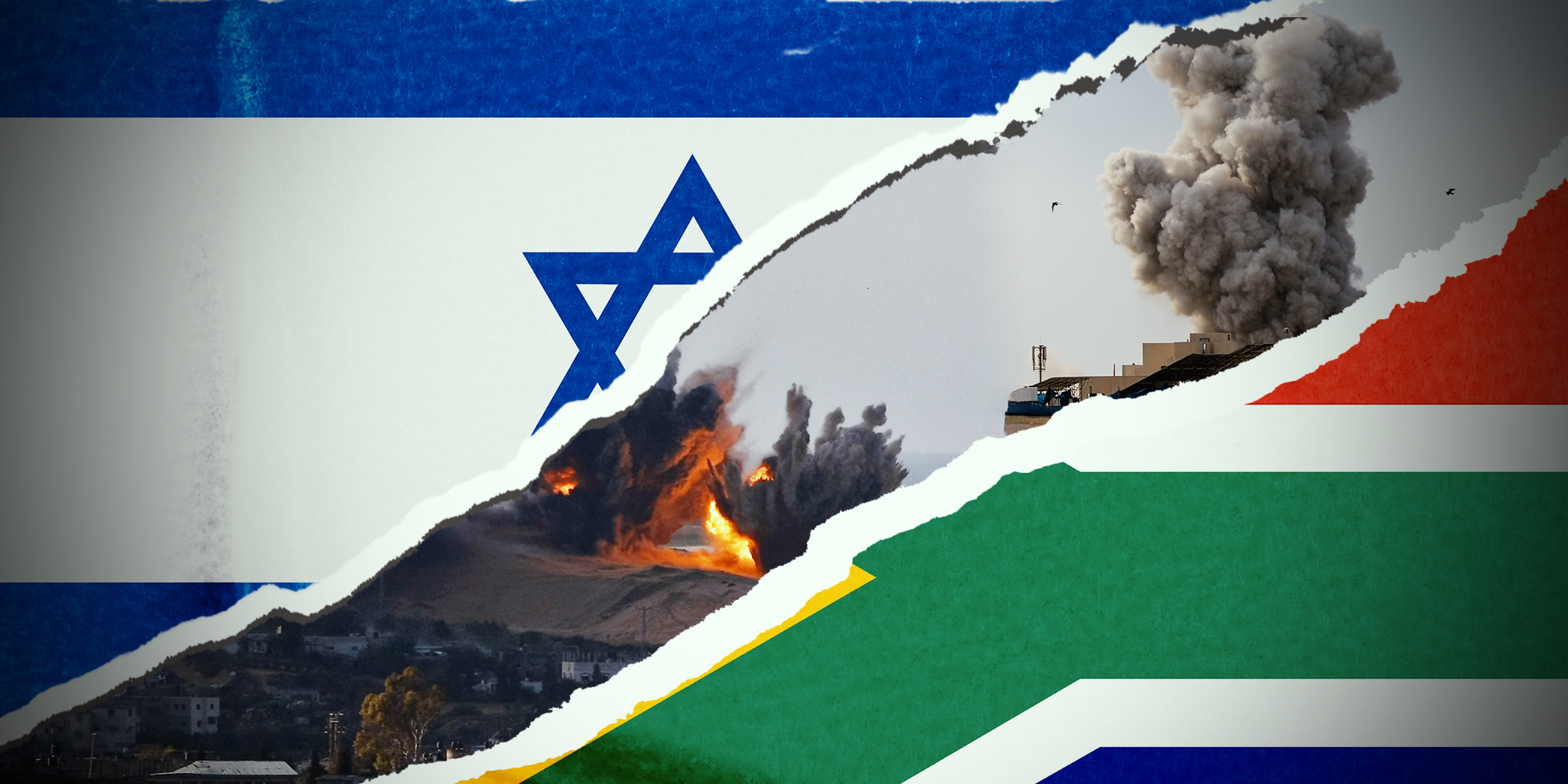
 Unlike South Africa, Israel has apparently not yet formally revealed the argument it will use against SA’s charge of genocide against it at the International Court of Justice (ICJ, aka World Court) this week. Nor has it revealed who will argue its case, as South Africa has.
Israel is perhaps holding its cards close to its chest.
But it seems clear it will argue it has no genocidal intent in Gaza by submitting evidence to the 17 judges of its claim that it has done all it can to avoid civilian Palestinian casualties in the war it launched against Hamas in Gaza in response to the Hamas attack of 17 October on Israel.
The application by South Africa asks the ICJ to declare that Israel has violated the 1948 Genocide Convention by deliberately trying to destroy part of the Palestinian people. It includes a request to the court to “indicate provisional measures to protect the rights invoked herein from imminent and irreparable loss”. In other words, to order Israel to halt its attack on Gaza, pending the court’s final decision on whether it is perpetrating genocide.
South Africa’s 84-page application is a detailed catalogue of what it says are atrocities committed by the Israel Defense Forces (IDF) against the innocent civilians of Gaza of which more than 22,000 have been killed and many more injured, according to Gaza’s Ministry of Health. The application quotes a wide range of sources, many of them UN officials and also several Israeli officials.
Israel’s Ministry of Foreign Affairs gave the outline of its likely defence in its response on 29 December to SA’s submission to the ICJ. It said, “South Africa’s claim lacks both a factual and a legal basis.”
Some Israeli government statements suggest it will also try to discredit South Africa as lacking the moral standing to bring a humanitarian case at an international court.
It added that Hamas “is responsible for the suffering of the Palestinians in the Gaza Strip by using them as human shields and stealing humanitarian aid from them.
“Israel is committed to international law and acts in accordance with it, and directs its military efforts only against the Hamas terrorist organisation and the other terrorist organisations cooperating with Hamas.
“Israel has made it clear that the residents of the Gaza Strip are not the enemy, and is making every effort to limit harm to the non-involved and to allow humanitarian aid to enter the Gaza Strip.”
Elsewhere Israel has spelt out its efforts to warn Gaza residents to evacuate their buildings before bombings, including through numerous phone calls and text messages. Its lawyers before the ICJ will probably repeat these claims as well as Israel’s claims that it is allowing humanitarian pauses in the fighting and humanitarian corridors for civilians to escape combat areas.
Read more in Daily Maverick: Israel-Palestine War
The Israeli government website said that by Tuesday, 137,920 tonnes of humanitarian aid had entered the Gaza Strip on 7,653 trucks since the war started. Responding to accusations, including in South Africa’s application, that Israel is targeting hospitals and other health facilities, the lawyers are expected to cite recent government references to new field hospitals set up by the International Medical Corps (IMC) Jordan, the United Arab Emirates and the Red Crescent as well as two floating hospitals provided by France and Italy.
Hamas atrocities
Israel’s lawyers can also be expected to provide the ICJ judges with graphic descriptions of the atrocities committed by Hamas against Israeli civilians when it invaded southern Israel on 7 October, killing about 1,200 people, mostly civilians, and taking 240 hostages.
Some Israeli government statements suggest it will also try to discredit South Africa as lacking the moral standing to bring a humanitarian case at an international court, citing its refusal to hand over the then Sudanese president, Omar al-Bashir, to the International Criminal Court in 2015, despite arrest warrants against him for genocide, war crimes and crimes against humanity.
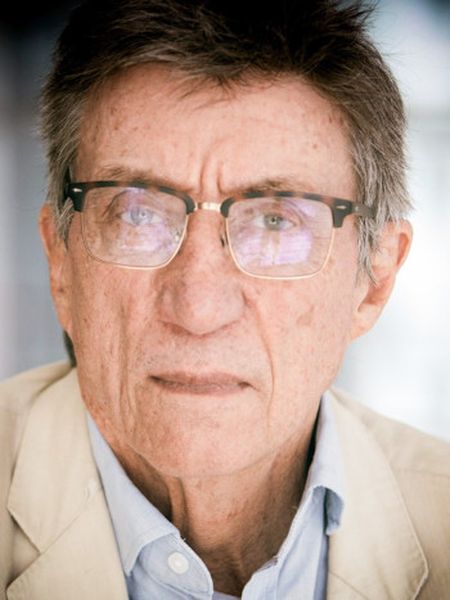
This week it emerged that Israel had made what was widely considered a shrewd move by appointing Aharon Barak, a retired Israeli Supreme Court president, and Holocaust survivor as its ad hoc judge to sit on the ICJ Bench which hears the genocide case.
Barak was outspoken in criticising Prime Minister Benjamin Netanyahu for his efforts to curb the powers of the Supreme Court. This would boost Israel’s credibility before the ICJ, it has been suggested.
The ICJ could hold the US complicit in Israel’s alleged genocide because of its failure to curb its strong ally.
ICJ rules allow a country which is involved in a case before the court to appoint an ad hoc judge to join the court’s 15 elected judges to hear the case if it does not already have a judge on the Bench.
The South African government announced last week that it had appointed former Deputy Judge President Dikgang Moseneke as its ad hoc judge to hear the case.
Read more in Daily Maverick: South Africa’s Gaza genocide case against Israel — how it will be argued, and the prospects for success
Zane Dangor, the director-general of the Department of International Relations and Cooperation, acknowledged in an interview with the Sunday Times that Pretoria’s ICJ initiative against Israel could damage South Africa’s relations with Western allies.
And US State Department spokesperson John Kirby said last week: “We find this submission meritless, counterproductive and completely without any basis in fact whatsoever.”
Dangor said Pretoria would engage with these governments to explain Pretoria’s position.
According to Francis Boyle, a professor of international law at the University of Illinois College of Law, the ICJ could hold the US complicit in Israel’s alleged genocide because of its failure to curb its strong ally.
Boyle represented Bosnia and Herzegovina before the ICJ and in 1993 won two orders for provisional protection of it against genocidal acts by Yugoslavia.
He told Democracy Now that he believed South Africa would likewise win an order against Israel “to cease and desist from committing all acts of genocide against the Palestinians”.
And then, “the Biden administration will stand condemned under Article III, paragraph (e) of the Genocide Convention, that criminalises complicity in genocide”. DM