




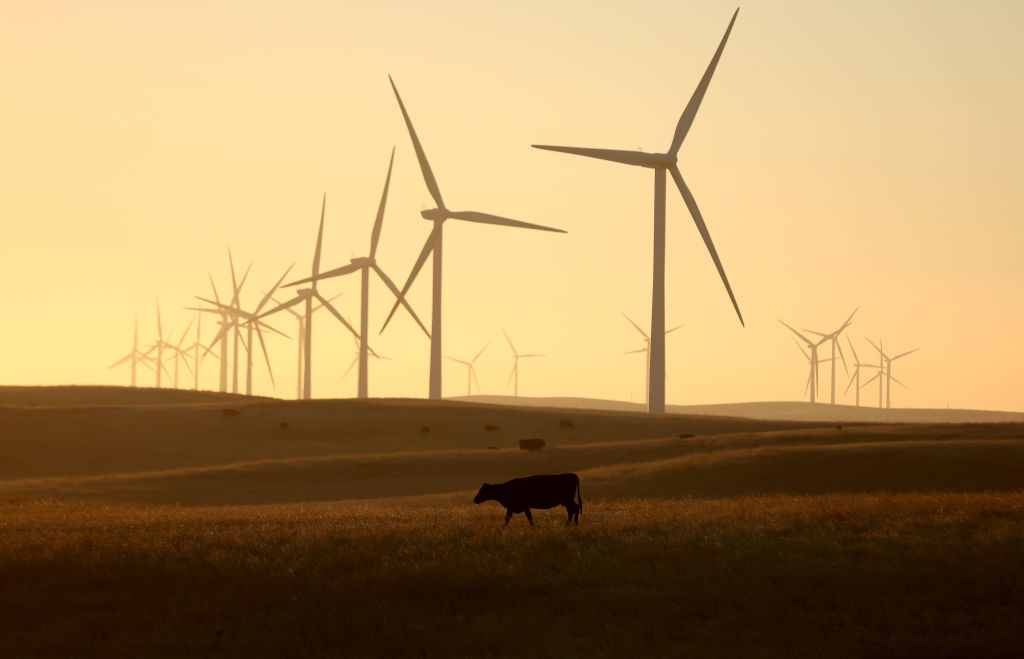
 A cow grazes on a parcel of land that was recently purchased on August 29, 2023 near Rio Vista, California. (Photo by Justin Sullivan/Getty Images)
 “The challenge in New York is the New York City area,” Mark Olson, a manager at the North American Electric Reliability Corp, said on Wednesday on a call with reporters about its latest reliability report. “Under high demand, getting transmission to flow into the load centres could be a challenge.”
In California, on the other hand, the risk of blackouts has fallen as more renewable energy and batteries are added, reducing the need to import electricity from other regions, NERC said. The grid has been designated “elevated risk”, which means it has enough energy for normal conditions though could fall short in extreme weather.
That’s an improvement over last year’s designation of “high risk” — meaning shortfalls were more likely and additional power sources were needed. New York’s designation increased from “normal risk” to “elevated risk”.
Read More: Half of US Is at Risk of Losing Power During Extreme Cold
The US power grid has been tested by severe heat and extreme cold in recent years, including a Texas winter storm in 2021 that killed more than 200 people. Climate change has increased the frequency of extreme weather events, from hurricanes to wildfires, that can trigger blackouts. While utilities and power generators have tried to weather-proof equipment, NERC has determined that many are still at risk.
New solar panels and big batteries have helped beef up the California grid, which includes parts of Nevada and Mexico. Engineering upgrades to some power plants so they can generate more electricity also increased reliability, the report said.
“The challenge is that the risk periods are emerging in the latter part of the day when solar power is diminished and demand is still high,” Olson said on the call. “The combination of solar and batteries can help by storing some of that excess.”
Comments
Scroll down to load comments...