




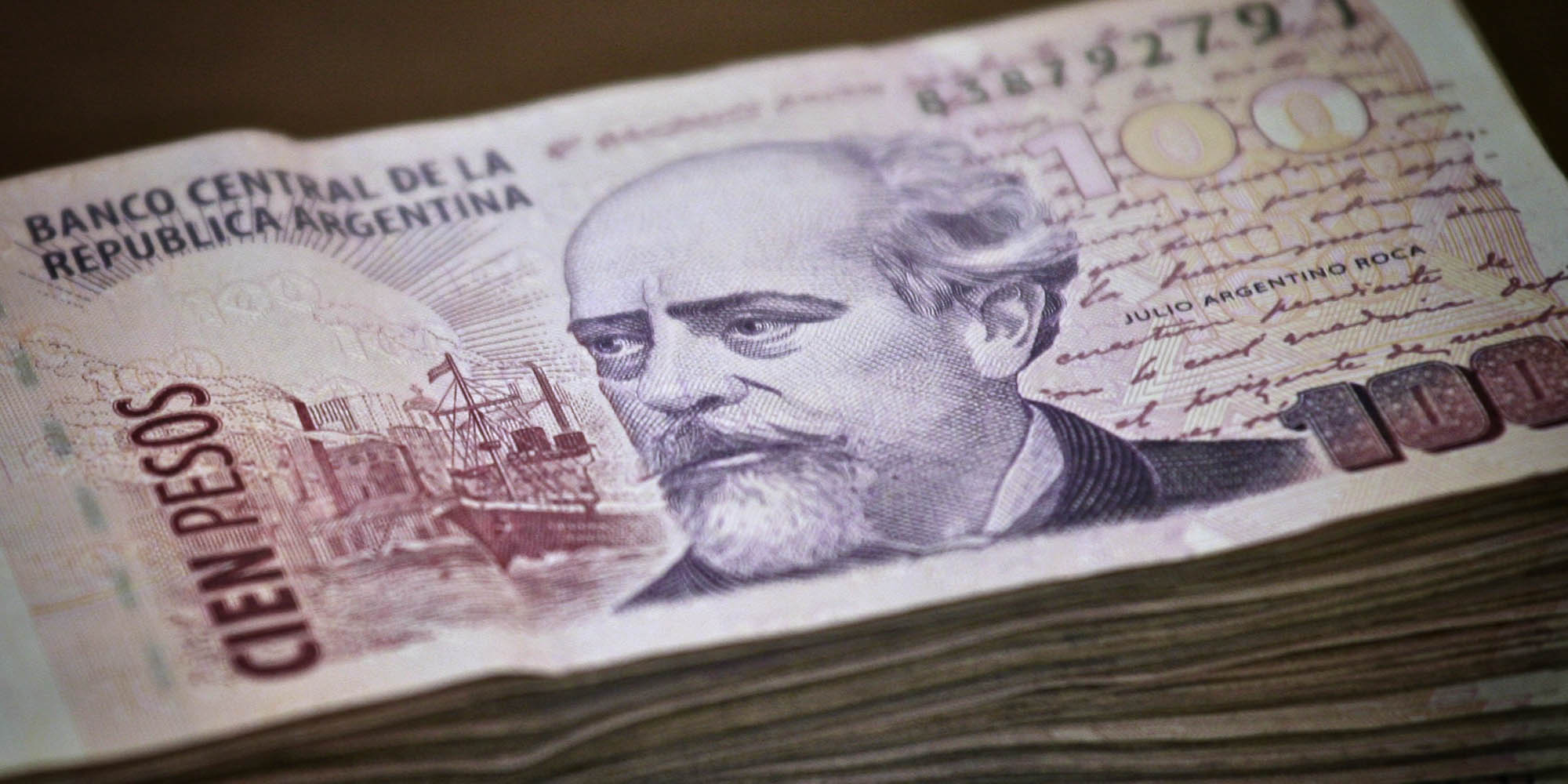
 Argentina peso (Photo: Alex Proimos / Flickr)
 Shares fell across the board in both Hong Kong and mainland China, with property developers among the biggest losers. The declines came after China’s annual economic work conference this week prioritised industrial policy and indicated little desire for large-scale stimulus.
“There was no surprise from the conference,” said Hao Hong, chief economist at Grow Investment Group. “The focus on security and risk, as well as high-quality development, naturally implies that at this stage high-quality growth trumps fast growth.”
Equities benchmarks also fell in South Korea but were modestly higher in Australia and Japan. US stock futures gained slightly after the S&P 500 hit the highest since January 2022 on Tuesday. Wall Street’s “fear gauge” — the VIX — slid toward a four-year low.
Globally, the focus is on the conclusion of the Fed’s policy meeting later Wednesday. While the central bank is widely expected to be on hold, the latest US inflation data raised doubts about the likelihood of an aggressive pivot toward policy easing. Markets have trimmed bets on rate cuts next year, with the first one projected to occur in May.
The dollar and Treasuries were steady in Asia trading, with yields on the policy-sensitive two-year notes staying above 4.7%. Long-term Treasuries swung to a small gain Tuesday after solid demand in a $21 billion sale of 30-year bonds.
Signals from Powell
Following the last Fed decision, Chairman Jerome Powell reminded investors that inflation progress will “come in lumps and be bumpy”. The fact that Tuesday’s consumer price index was roughly in line with estimates — and ticked up a bit — underscored the choppy nature of getting prices back to the 2% target — especially in the service sector, which the Fed has zoned in on as the last mile in its inflation fight.
“I don’t think that the Fed will rush to cut rates anytime soon,” Nancy Daoud, private wealth adviser at Ameriprise Financial, said on Bloomberg Television. “The risk is too high to put us back into like where we were in the 1970s, if that occurs. They’re going to just remain on track to meet their goal.”
With the Fed widely expected to keep its target rate range steady for the third straight meeting at 5.25% to 5.5%, traders will carefully scrutinise any signals from Powell on the path for policy and the update to the central bank’s quarterly forecasts.
Signs of disinflation helped drive the US bond market last month to its biggest gain since the mid-1980s, with yields tumbling sharply on speculation the Fed will cut its benchmark rate by over a full percentage point in 2024.
US Treasury Secretary Janet Yellen said on Tuesday she doesn’t believe the “last mile” in returning inflation to the Fed’s 2% goal will be especially difficult.
How the Fed frames its outlook for rate policy ending next year and 2025 via its “dot plot” could inject some uncertainty into a market that has run ahead of the central bank’s current forecast.
Elsewhere, Argentina devalued the peso by 54% after the close of local markets on Tuesday and announced a swath of spending cuts, in the first steps of President Javier Milei’s shock-therapy program to revive the nation’s troubled economy. The nation’s central bank now targets a 2% currency devaluation per month.
Oil turned steady after plunging to the lowest level in five months Tuesday as signs of robust supplies piled up. Gold was flat as investors awaited the Fed’s rate decision.
Comments
Scroll down to load comments...