




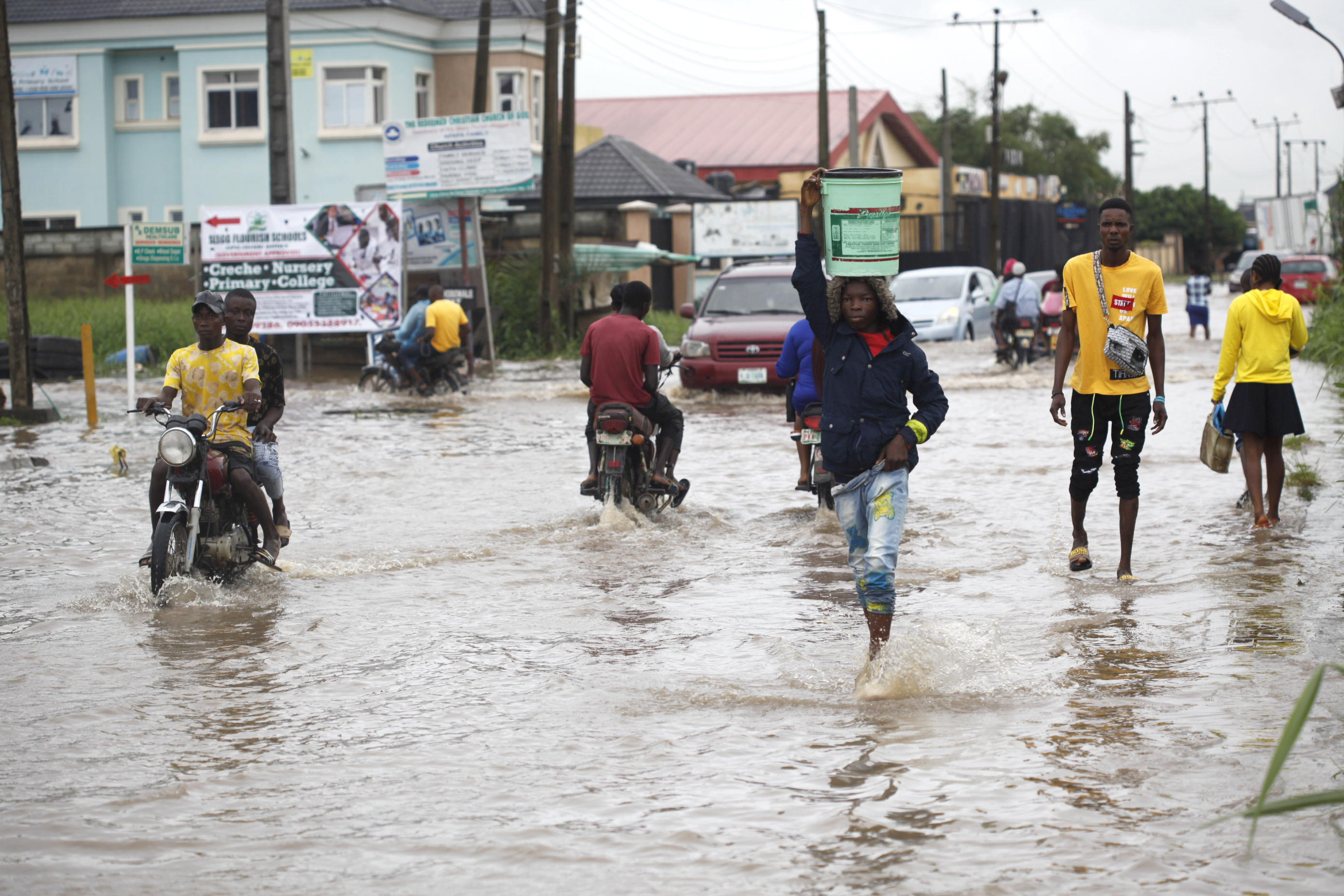
 People wade through a flooded road after a rainfall in Lagos, Nigeria 12 September 2022. EPA-EFE/Akintunde Akinleye
 Floods are an annual scourge in Africa’s most populous nation but the damage done in 2022 was the worst in a decade, hitting 33 of the country’s 36 states, 64% of households and causing an “unprecedented disruption and destruction,” according to the NBS.
The report contained several recommendations for the future, including early warning systems, flood-risk financing and insurance, as well as a focus on post-disaster recovery to safeguard food security.
It comes as leaders from around the world gather in Dubai for the COP28 summit on how to tackle climate change.
Talks will include a discussion about how countries that industrialized early might compensate their developing counterparts who are first to suffer the worst impacts of global warming, which has had a particularly devastating impact on Africa.
Read more: Climate Change Made Rains That Flooded West Africa Far Likelier
This year, floods in Nigeria, Niger and Chad killed more than 800 people, according to a report by the World Weather Attribution. It found that climate-changing pollution has made severe seasonal rains in West Africa 80 times more likely and 20% worse than they might have been before the world industrialized.
A warming planet may exacerbate existing “chronic food insecurity” in the region, the researchers said in a separate study, warning it could contribute to increasing conflicts that harm farming and access to markets.