



 South Africa general economy pics. South African Rand currency notes and coins are shown on Thursday, June 22 2017 in Johannesburg. Pic: Waldo Swiegers
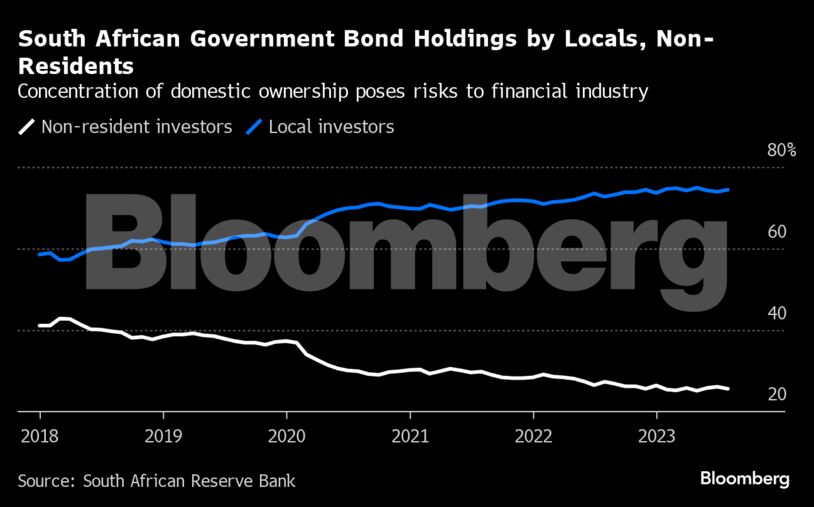
Foreigners became net sellers of South African bonds amid a global risk-off trend during the height of the Covid-19 pandemic, and that has since accelerated because of the struggling economy and fiscal challenges. The country has been hamstrung by record power cuts and rail and port constraints that have hampered economic activity and reduced tax revenue.
The decline in foreign holdings of South African bonds has coincided with growth in government debt that’s expected to peak at 77.7% of gross domestic product in 2025-26, according to the latest National Treasury budget estimates. Domestic investors have demanded ever-higher yields, complicating the government’s pledge to reduce its budget deficit and debt.
“As government debt has increased, so has the domestic financial sector’s exposure to it,” the central bank said. “This could lead to a negative feedback loop between the sovereign and the financial sector.”
Read More: Alarm Bells Ring as Local Investors Cool on South Africa’s Debt
The central bank said that growth in South African banks’ holdings of government bonds has also outpaced the growth in total assets.
“The disproportionate increase implies a change in the composition of bank balance sheets, where other assets may have been crowded out,” it said.
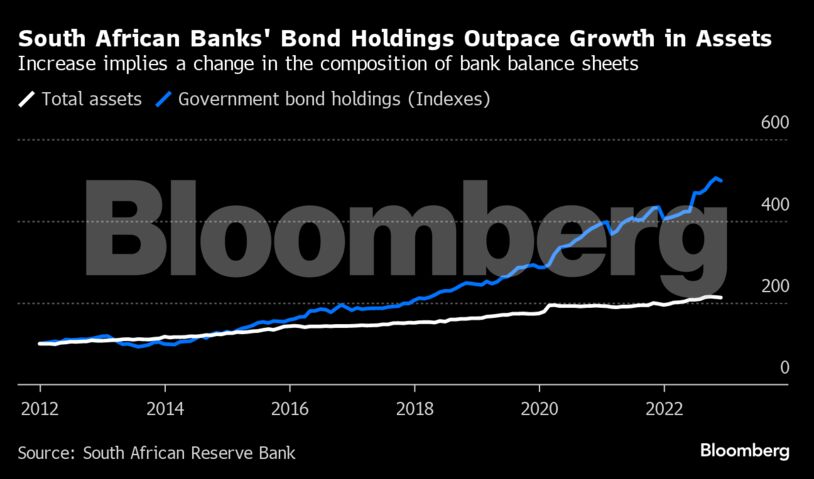
The combination of the financial sector’s increased exposure to government debt with the deterioration in South Africa’s fiscal position and its credit rating poses various risks for financial stability, the bank said.
They include the repricing of bonds when yields rise, resulting in both realized and valuation losses on holdings of government bonds, along with the impact of government’s higher funding costs, it said.
“A third is the possible crowding-out effects of a large amount of government debt that increasingly has to be funded in domestic financial markets,” the bank said. It has previously warned about the growing reluctance of domestic investors to finance the budget deficit.
The central bank also warned that money market funds may be vulnerable to a shock that would make them unable to meet redemptions as they fall due. As the coronavirus pandemic experience showed, issues could arise when liquidity doesn’t flow through from banks to the rest of the non-bank financial institutions, it said.
Comments
Scroll down to load comments...