



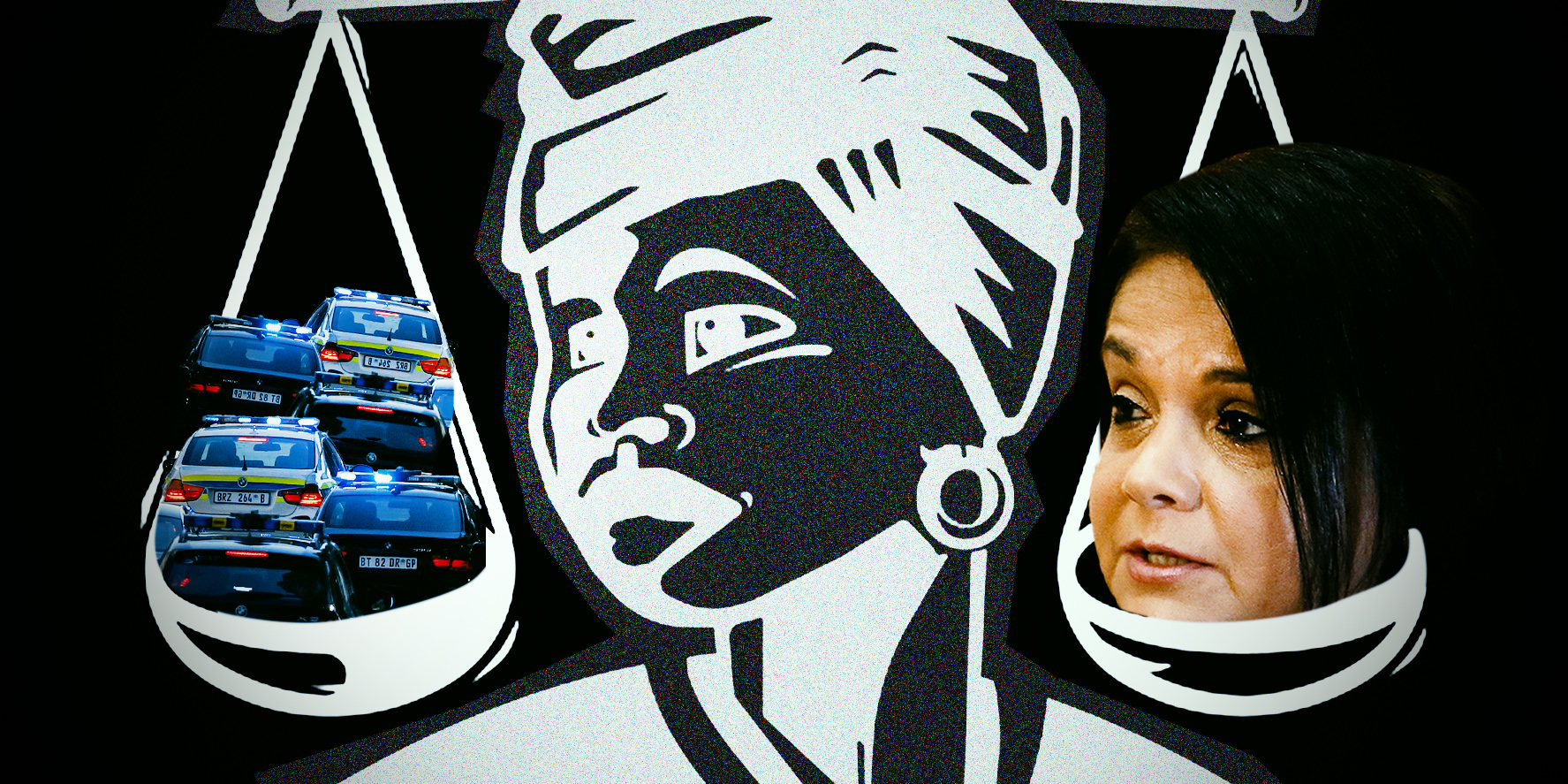
 Illustrative image: (Photos: X – formerly Twitter) / @kg007man | Wikipedia | Gallo Images / Phill Magakoe)
 On Sunday, more information was revealed about the situation inside the National Prosecuting Authority (NPA), with a Sunday Times report showing how the fight against crime will be weakened by budget cuts.
These cuts, along with others in many government services, including health and education, were first announced in the Medium-Term Budget Policy Statement (MTBPS).
The cuts mean the NPA will not have money to pay prosecutors for overtime, nor can it afford to hire new prosecutors.
This is an authority that is already suffering from a critical shortage of skills, money and experience.
The NPA context is crucial here. There is plenty of evidence of the huge amount of often violent crime that the people of South Africa are forced to suffer and endure.
Already, only about 14% of murders in the country end in a conviction.
The murder rate in KwaZulu-Natal is so high that, as Daily Maverick’s Chris Makhaye reported, many people in the province have hired bodyguards (themselves often involved in criminality). Countrywide, there is an explosion of armed private security companies.
Then there are the high-profile cases that the NPA is dealing with. It has lodged an appeal in the Nulane case, which was described as the “blueprint” for State Capture.
The fact it lost this case was plain embarrassing for the NPA — if it does not win the appeal, its credibility will be dealt another blow, casting doubt on its ability to prosecute other State Capture cases.
Then there is the matter of former Eskom CEO Matshela Koko.
This is a case that gets to the heart of some of the corruption that has occurred at Eskom, and yet the NPA was not ready to proceed with the corruption case against Koko on the date it was meant to do so.
https://www.dailymaverick.co.za/article/2023-09-04-ex-eskom-boss-matshela-kokos-corruption-case-still-not-ready-for-trial-magistrate-demands-answers-from-npa/
There is, obviously, a direct line between the lack of accountability and SA’s rising levels of crime. And there is no doubt that our leaders know this.
Just two weeks ago, President Cyril Ramaphosa said at the National Dialogue on Anti-Corruption that “those individuals and companies that have enriched themselves at the expense of the people must face the consequences of their misdeeds”.
In 2020, he promised to fight gender-based violence and said one of the key undertakings was “strengthening the criminal justice system”.
Instead, as Gender Politics Professor Amanda Gouws has written in The Conversation, violence against women has become normalised in South Africa.
Crime pays
Ramaphosa has presided over a situation where the prosecution of crime has fallen through the floor, conviction rates have declined, and more and more women are the victims of violence, with perpetrators getting away with it.
Under Ramaphosa, crime pays.
So normalised has this systemic failure become that it threatens the fabric of our society.
The most public rending of this fabric occurred in July 2021, when civil unrest and looting broke out in KZN and Gauteng, and the authorities were powerless to stop it. The army did nothing and the police often needed to be protected by the communities they were supposed to protect.
At the time it was obvious how important some level of accountability was going to be. We suggested then that for South Africa to survive, everyone involved in the violence had to be held accountable.
Since then, almost nothing has happened.
It defies belief that an event even Ramaphosa described as a “failed insurrection” has not been properly dealt with. This shows how directly the state itself is threatened by a lack of capacity in the criminal justice system.
It appears that there’s nothing to prevent such a “failed insurrection” from happening again.
While Ramaphosa, the government he leads and the party he heads are comfortable with cutting the NPA’s budget, they are also content to spend more public money on themselves.
That same MTBPS that cut funding for the NPA also included an increase of R52-million for presidential and VIP protection.
This means that more state money is being spent on VIP protection officers who assault the occupants of a vehicle in broad daylight on a highway.
It means that more money is being spent on the head of the Presidential Protection Service, Wally Rhoode, the man who failed to ensure that charges were laid against those accused of the break-in at Ramaphosa’s Phala Phala farm.
It means that more money is being spent to pay VIP protection officers who failed to stop Transport Minister Sindisiwe Chikunga from being robbed on the N3 in Gauteng and R37,000 in cash from being taken from one of her guards.
It means more money to protect people who already receive, free, two homes, generators and diesel to run them. And when they are challenged on this, they say they need these perks because of the high cost of their medical aid.
Spending decisions are always revealing – they show what decision-makers’ priorities are.
It is clear that the VIP Protection Unit is of crucial importance to the ruling party. The rest of us — not so much. We are on our own. DM