



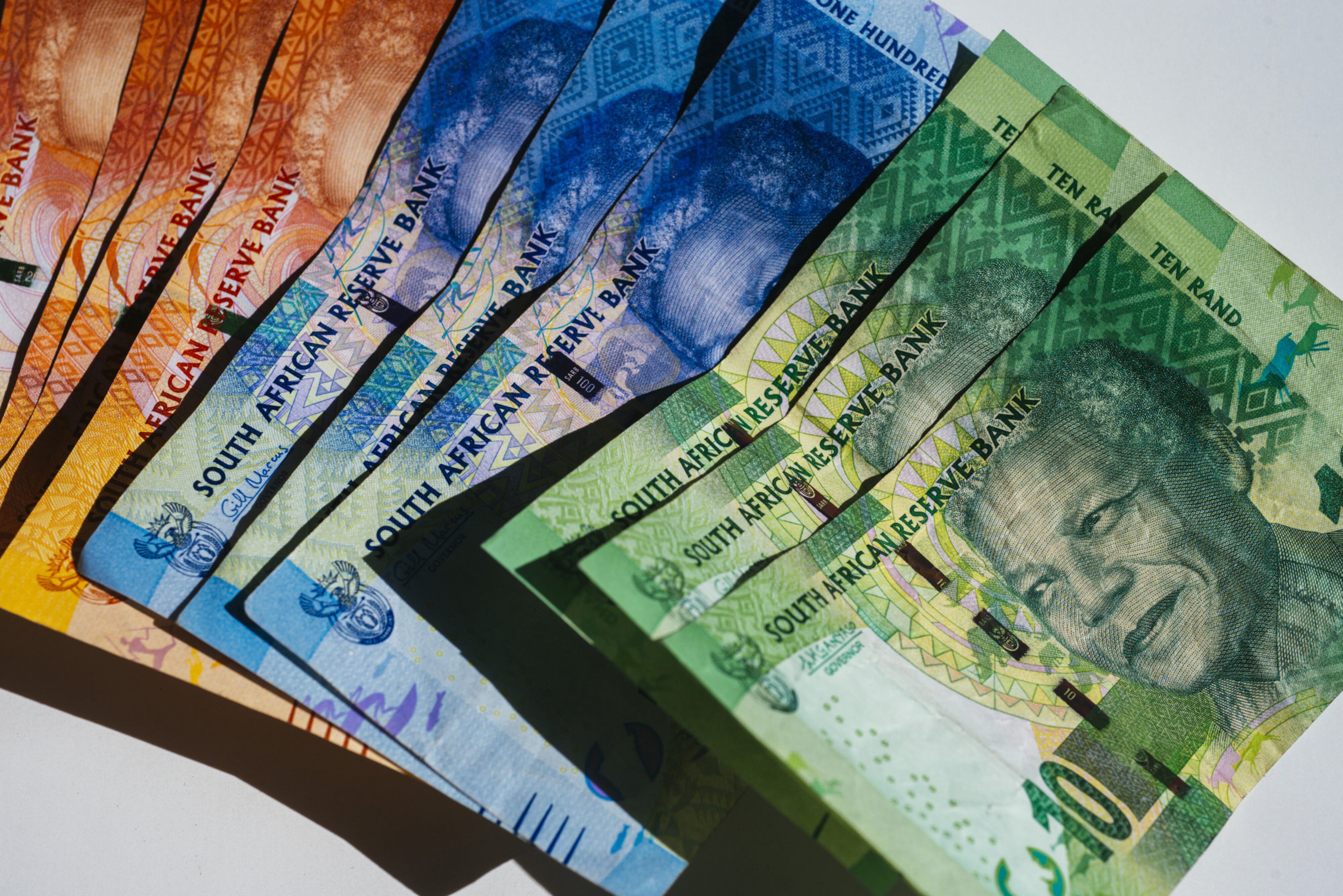
 South Africa general economy pics. South African Rand currency notes and coins are shown on Thursday, June 22 2017 in Johannesburg. Pic: Waldo Swiegers
Moody’s rates South Africa’s long-term foreign debt with a stable outlook at a sub-investment grade Ba2, which it defines as carrying substantial credit risk with speculative characteristics. Africa’s most-industrialized economy has been badly hobbled by crippling power cuts, logistics constraints, crime, corruption and high levels of unemployment.
Read more: South Africa Confronting Debt Blowout as Revenue Misses Forecast
South African Finance Minister Enoch Godongwana told lawmakers on Wednesday the country’s budget deficit would rise to 4.9% of gross domestic product in the fiscal year through March and narrow to 3.6% by 2026-27. Gross debt is seen peaking at 77.7% of GDP in 2025-26, as opposed to February’s forecast of 73.6%.
Investors reacted positively to the budget news despite the sober assessment, with yields on government debt declining sharply as the rand strengthened against the dollar. The ruling African National Congress faces a tough election next year and Godongwana has been under pressure to take an even-softer line on social support.
Mali said that the forecast for debt to stabilize, and the fact that South Africa’s National Treasury had held the line on spending, were encouraging. But it was important to watch whether the projections are met.
“We know that there are social spending pressures and pressure from the SOE sector that will probably affect the budget,” he said, referring to state-owned enterprises that include the struggling power utility Eskom Holdings SOC Ltd. and Transnet SOC Ltd. “So, the risk of a bigger deterioration than the stabilization of the debt has risen.”
Comments
Scroll down to load comments...