




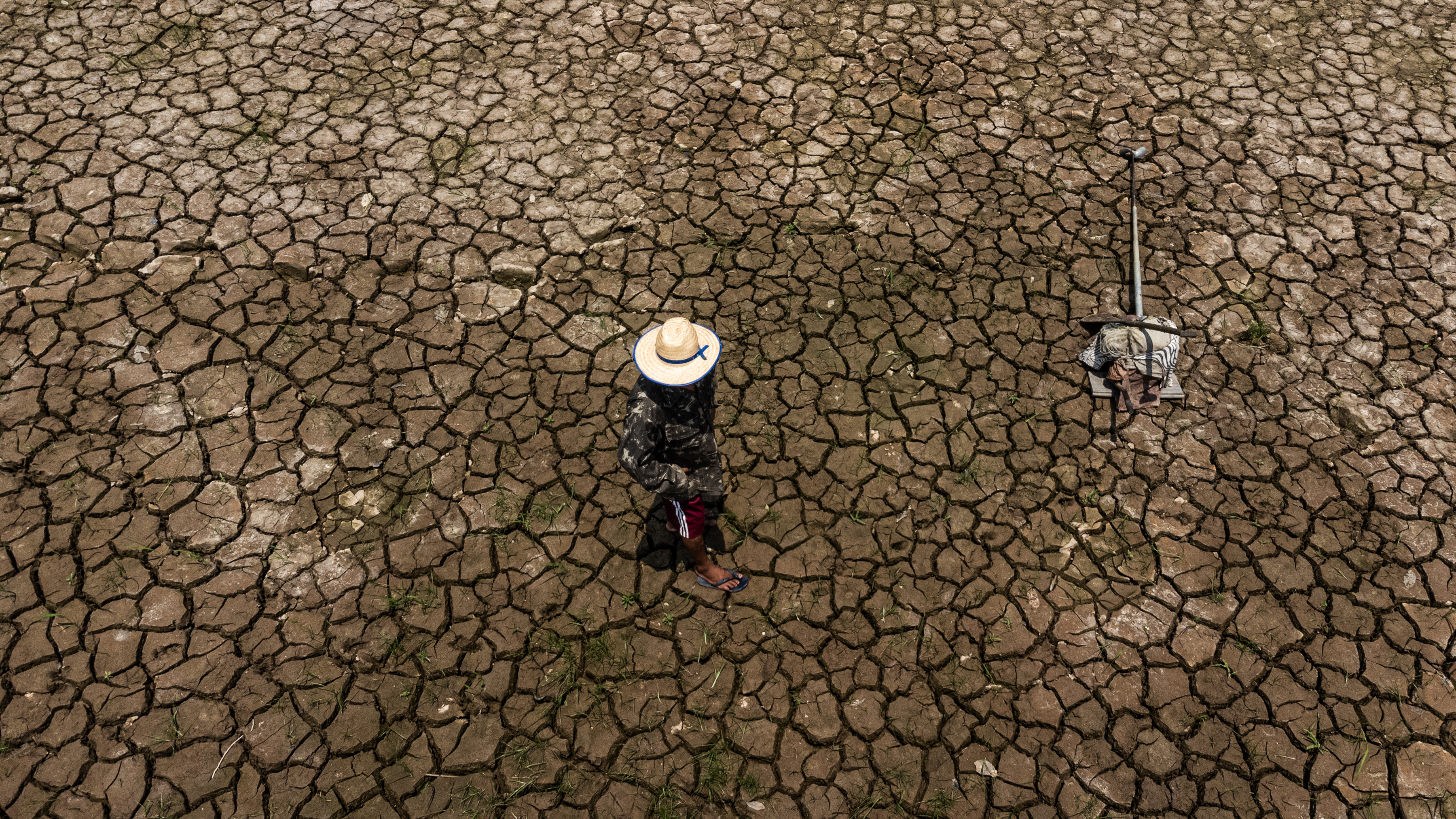
 A picture taken with a drone shows inhabitants of the Bom community carrying supplies over a dry river bed due to the severe drought that is hitting the Amazon basin, in Manaquiri, Amazonas, Brazil, 21 October 2023. After the Negro River fell to a record level, the Solimões River (the name given to the Amazon River before its meeting with the Negro River, in the capital Manaus) also reached its minimum levels in several cities where measurements are carried out. EPA-EFE/Raphael Alves
 Some rock carvings had been sighted before but now there is a greater variety that will help researchers establish their origins, archaeologist Jaime de Santana Oliveira said on Monday.
One area shows smooth grooves in the rock thought to be where Indigenous inhabitants once sharpened their arrows and spears long before Europeans arrived.
"The engravings are prehistoric, or precolonial. We cannot date them exactly, but based on evidence of human occupation of the area, we believe they are about 1,000 to 2,000 years old," Oliveira said in an interview.
The rocky point is called Ponto das Lajes on the north shore of the Amazon near where the Rio Negro and Solimoes rivers join.
Oliveira said the carvings were first seen there in 2010, but this year's drought has been more severe, with the Rio Negro dropping 15 meters (49.2 feet) since July, exposing vast expanses of rocks and sand where there had been no beaches.
"This time we found not just more carvings but the sculpture of a human face cut into the rock," said Oliveira, who works for the National Historic and Artistic Heritage Institute (IPHAN) that oversees the preservation of historic sites.
By Suamy Beydoun
(Reporting by Suamy Beydoun; Writing by Anthony Boadle; Editing by Richard Chang)