




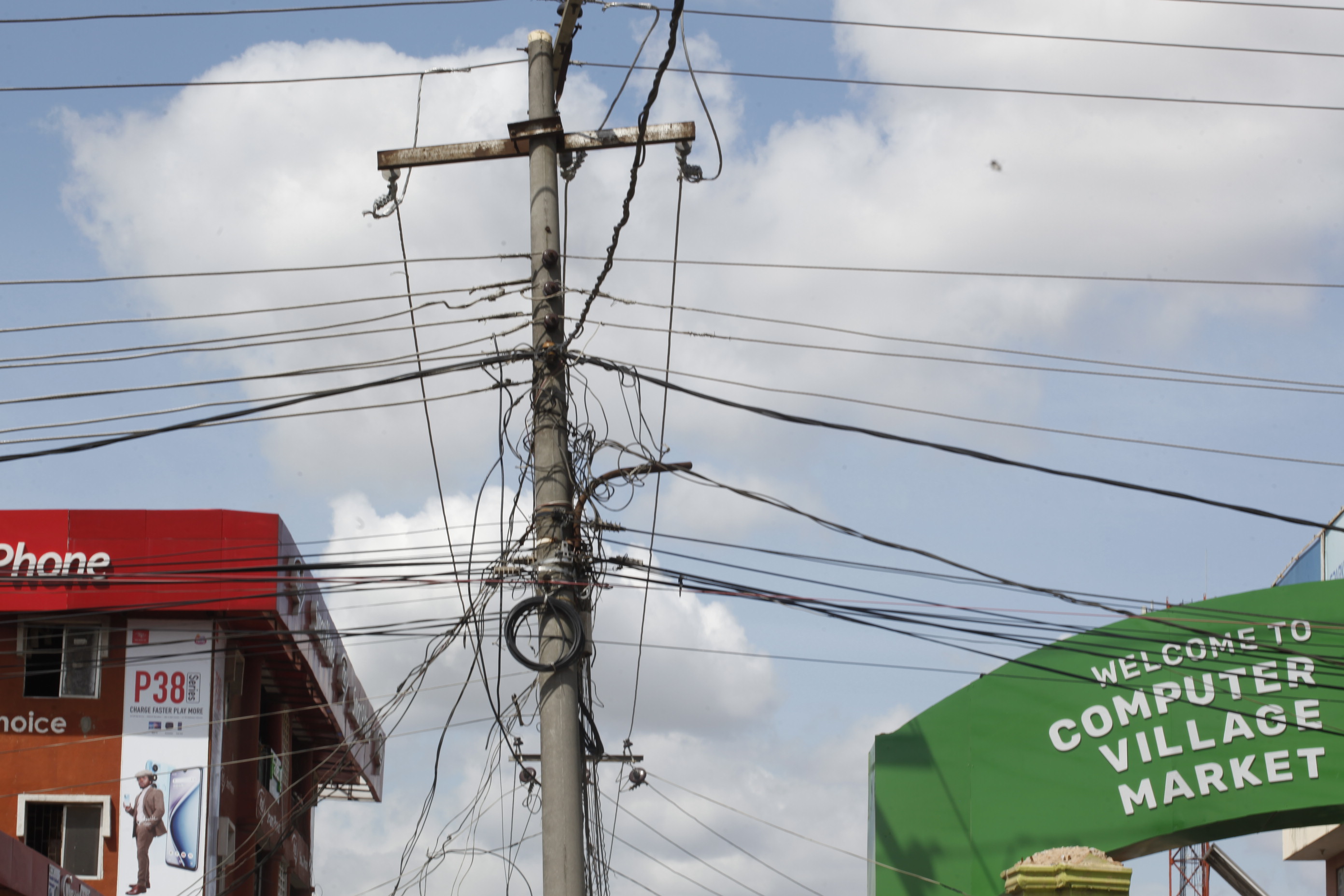
 Electric wires are seen on a pole in Ikeja district of Lagos, Nigeria 22 June 2022. Of late, the issue with the dilapidated state of electricity in Nigeria is recurring with critical blackouts in many parts of Nigeria's commercial city of Lagos. With several billions of Naira already expended on this state of disrepair by successive governments, electric failure in Nigeria remains a factor hampering basic economic development in Nigeria. EPA-EFE/Akintunde Akinleye
 Power generation fell to zero in the early hours and had risen to 273 megawatts (MW) by 1030 GMT, still well below the daily average of 4,100 MW, data from the Transmission Company of Nigeria (TCN) showed.
TCN did not immediately respond to a request for comment.
Grid power supply is erratic in Nigeria, a major oil and gas producer, forcing households and businesses to use diesel and petrol generators.
The grid collapsed at least four times in 2022, which authorities blamed on technical problems.
Nigeria has 12,500 MW of installed capacity but produces about a quarter of that.
President Bola Tinubu has promised to improve supply by allowing state governments to build their own power plants in a bid to help spur sluggish economic growth.
(Reporting by MacDonald Dzirutwe; editing by Jason Neely)