




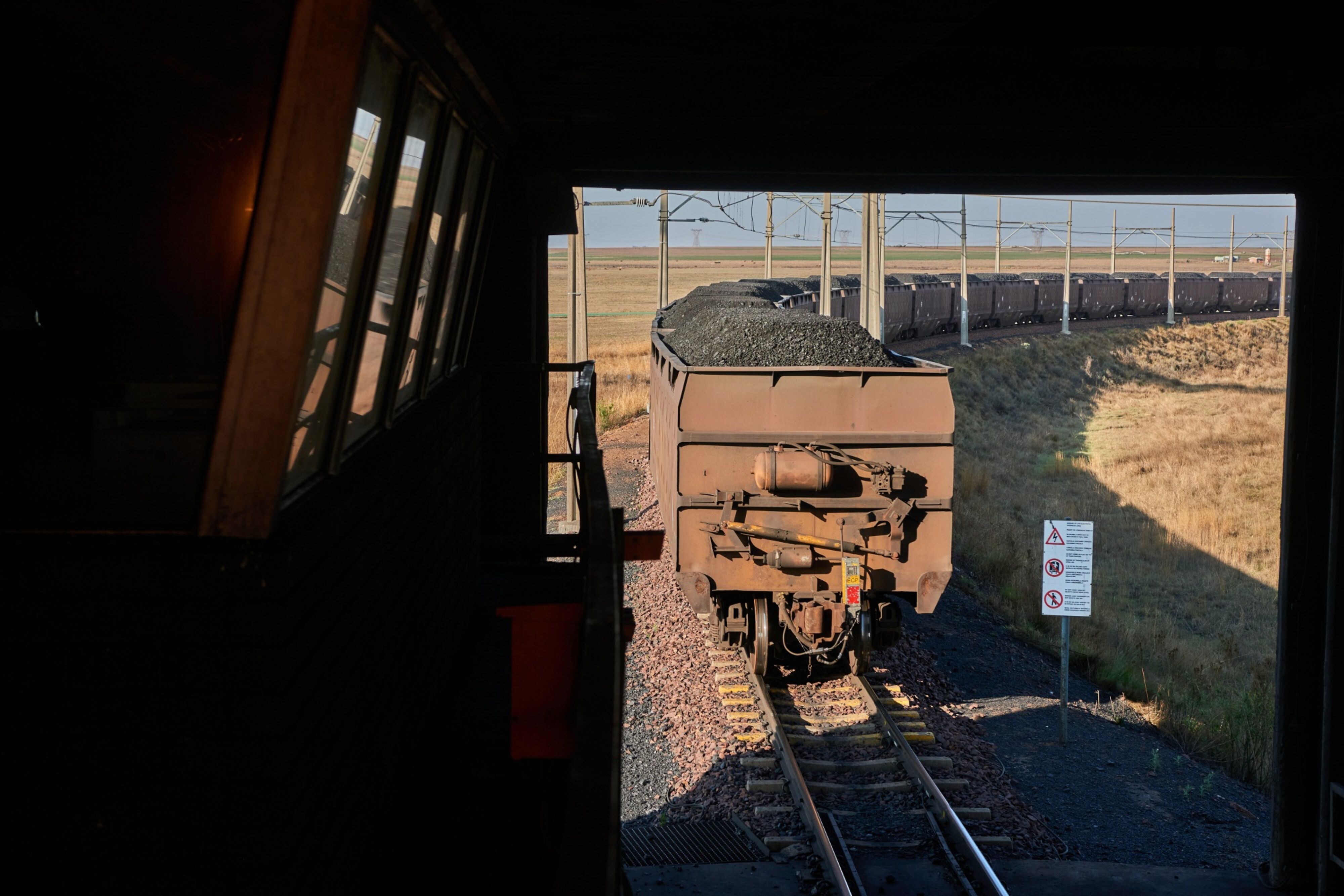
 Freight wagons loaded with coal depart the rapid-loading terminal of the Mafube open-cast coal mine, operated by Exxaro Resources Ltd. and Thungela Resources Ltd., in Mpumalanga, South Africa on Thursday, Sept. 29, 2022. South Africa relies on coal to generate more than 80% of its electricity, and has been subjected to intermittent outages since 2008 because state utility Eskom Holdings SOC Ltd. can't meet demand from its old and poorly maintained plants.
 The European Union plans a levy on certain carbon-intensive imports, though South Africa has argued the so-called carbon border adjustment mechanism may break World Trade Organization rules.
Read More: EU Carbon Import Tax Shifts Climate Burden, South Africa Says
South Africa, which gets 80% of its electricity from coal, is trying to increase its supply of renewable energy to reduce greenhouse gas emissions and its reliance on Eskom Holdings SOC Ltd.
The country is suffering from its worst power outages on record because the state-owned utility’s poorly-maintained and aging power stations can’t meet demand.
The South African central bank has predicted that power cuts, known locally as load shedding, will shave 2 percentage points off the nation’s economic growth this year.
Part of preparing for the country’s energy transition is legislation to provide regulatory certainty necessary to draw capital from the private sector.
“People need to know what they’re investing in and the carbon intensity of what those investments are and long-term sustainability of those investments,” Davidson said during a virtual National Treasury conference. “There is a particular case for long-term savers through pension funds and the like.”
Comments
Scroll down to load comments...