




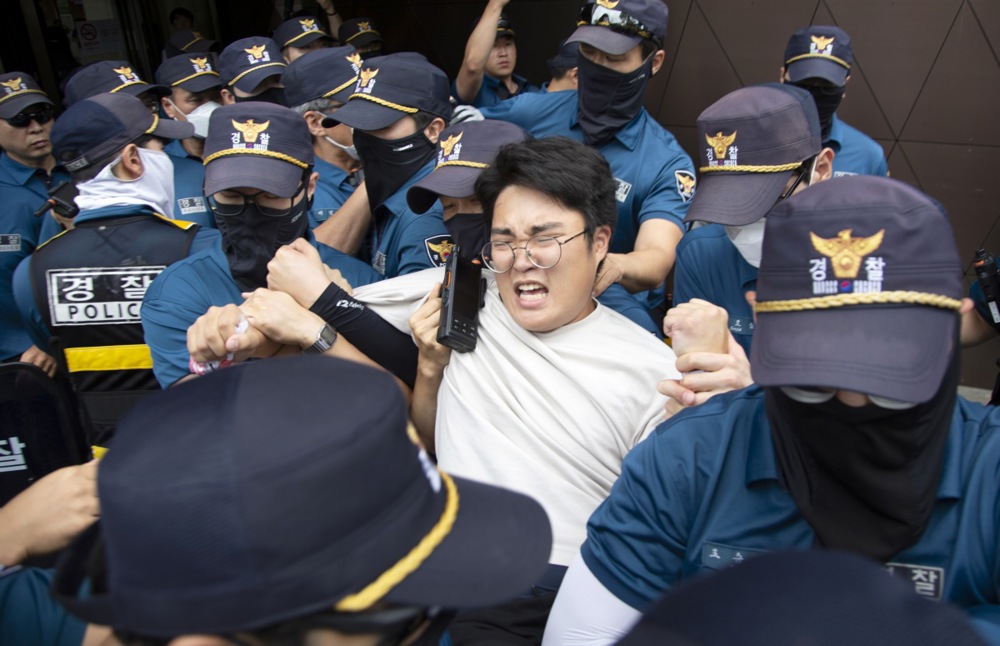
 Police officials detain a university student protester as they try to enter the Japanese embassy amid a rally in Seoul, South Korea, 24 August 2023. Protesters gathered to oppose Japan's discharge of treated radioactive water from its crippled Fukushima nuclear power plant into the ocean on 24 August. (Photo: EPA-EFE/JEON HEON-KYUN)
 Tokyo-based cosmetics firm Shiseido Co. fell as much as 3.3% to a five-month low, on a day when the broader share market gained. Its revenue from China accounts for 30% of the total, according to Bloomberg-compiled data. Shiseido’s local competitors including Pola Orbis Holdings Inc. and Kose Corp. also declined. Department store Takashimaya Co. dropped over 5%, and shoe retailer ABC-Mart Inc. fell more than 3%.
China said last week that it will suspend seafood imports from Japan, with its foreign ministry saying in a statement that it’s asked Japan to “stop this wrongdoing”. Chinese chat pages have been flooded with posts about boycotting Japanese products, including on Weibo, one of the country’s largest social media platforms.
“The Chinese government’s reaction to treated water has been surprisingly severe,” said Hajime Sakai, chief fund manager at Mito Securities Co. “Local media reports of cancellations of Japan tours and boycotts have raised concerns that the impact on inbound business may spread unexpectedly as China prepares for the travel demand season.”
Signs that consumers are steering clear of Japanese products are especially disappointing for companies that had expected their sales to be bolstered by China’s resumption of group tours to its neighbouring nation earlier this month. But the share selloff may be short-lived considering that China’s boycotts haven’t lasted long in the past, according to Asymmetric Advisors Pte strategist Amir Anvarzadeh.
For now, the boycott is a hot topic online in China. One post on Weibo lists dozens of Japanese brands to avoid buying, including Shiseido, Panasonic, Uniqlo, Mitsubishi, Aeon and Nomura. The post has received more than 10,000 “likes” since it was published on 24 August.
“I’ll never buy Japanese cosmetics again, not to mention seafood,” one user identified with a nickname posted on Weibo on Monday. “I won’t touch anything where the water source might be tainted.”
But despite the online protests, some analysts say that demand for Japanese products will return after a while, especially when foreign exchange moves have made those goods cheaper for Chinese shoppers.
“Japan’s products are highly sought after by the Chinese tourists and the weak yen is only going to make them more attractive,” said Charu Chanana, a market strategist at Saxo Capital Markets. DM