




 Farmers pour grain from a combined harvester in a field near Kyiv (Kiev), Ukraine, 04 August 2023. (Photo:EPA-EFE / Sergey Dolzhenko)
 The Bank of Russia raised its benchmark rate to 12% from 8.5% on Tuesday after the ruble briefly broke through 100 to the dollar for the first time since March last year. Forced sales of export revenues, along with other measures such as limits on bank transfers of foreign currency, helped to stem the ruble’s slide after the start of the war.
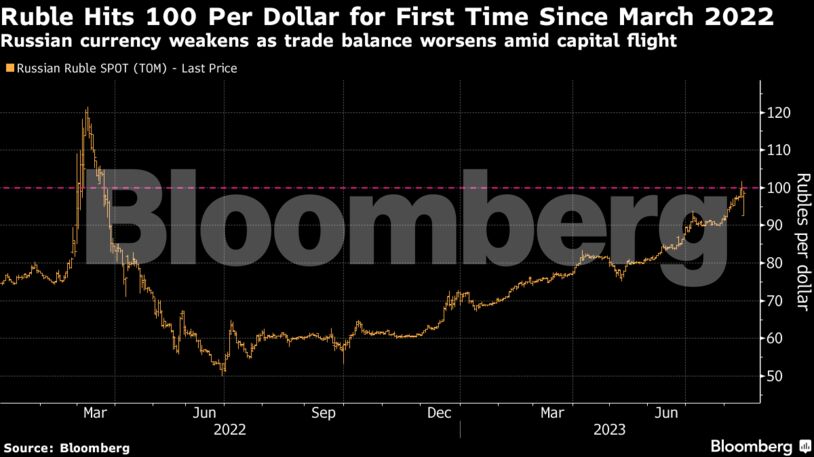
The ruble appreciated after the rate announcement before reversing gains and is still among the three worst performers in developing economies this year with a loss of about 25%. Without additional measures such as the central bank interventions or mandatory sales of export revenues it may take several months for the ruble to strengthen, according to Sofya Donets, an economist at Renaissance Capital.
With much of the central bank’s reserves already frozen by sanctions, policymakers will be reluctant to wade into the currency market with direct interventions.
What Bloomberg Economics Says...
“The causes of the ruble decline are home-made and have little to do with a capital account shocks, which capital controls are best suited to address. Capital restrictions will also damage nascent supply chains that Russia is trying to build to avoid sanctions.
Alex Isakov, Russia economist
In recent months Russian exporters have already been selling more than 80% of their revenues on the market, central bank data shows. Governor Elvira Nabiullina said in July that the Bank of Russia is closely monitoring foreign currency sales from the exporters and only 1% of total incomes remains outside of the country.