




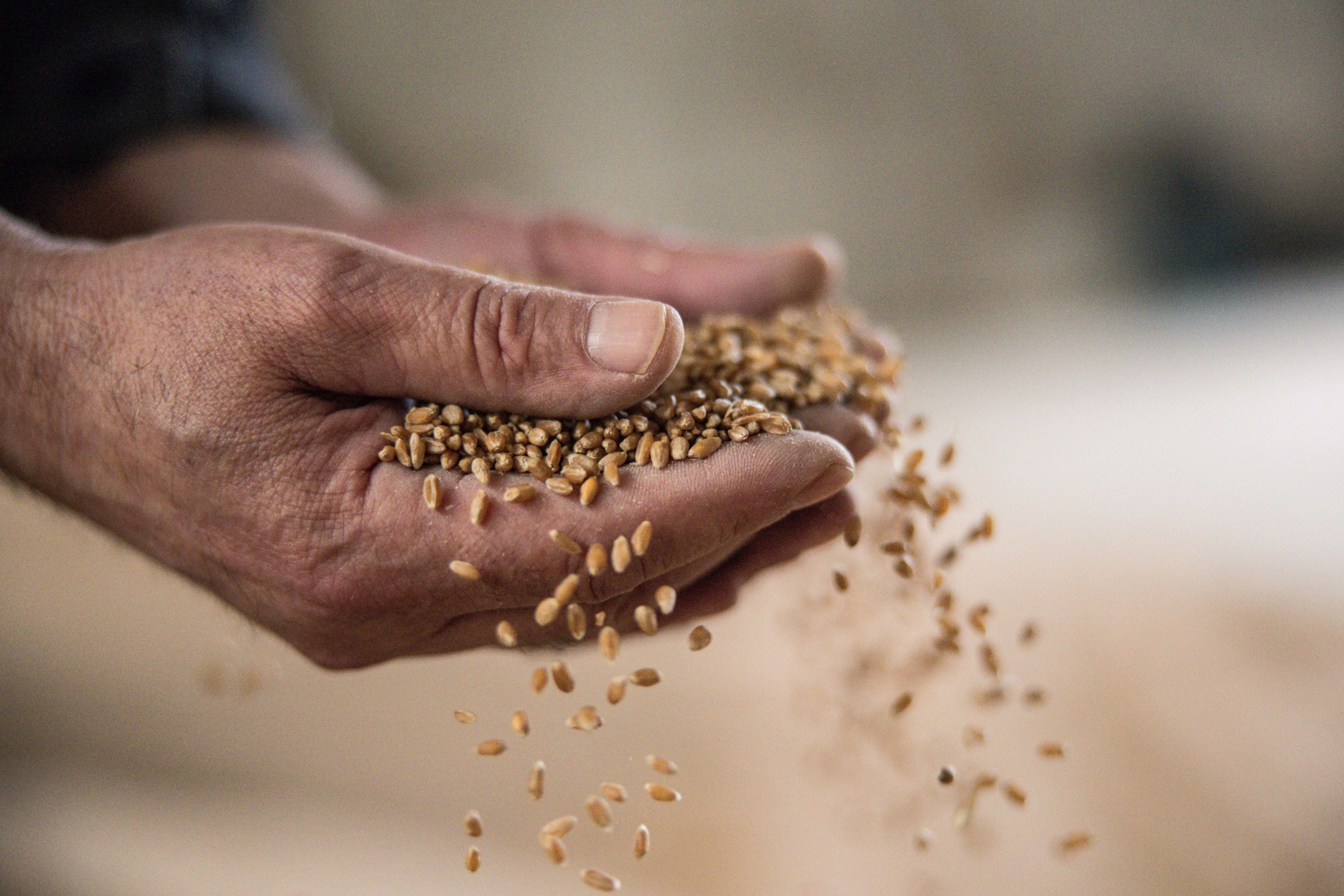
 A worker handles wheat grain in a storage granary at Aranka Malom kft mill in Bicske, Hungary on Tuesday, May 16, 2023. The Black Sea deal has allowed Ukraine to ship more than 30 million tons of produce from three major ports, helping to bring down global food prices down after they spiked following Russias invasion. Photographer: Akos Stiller/Bloomberg
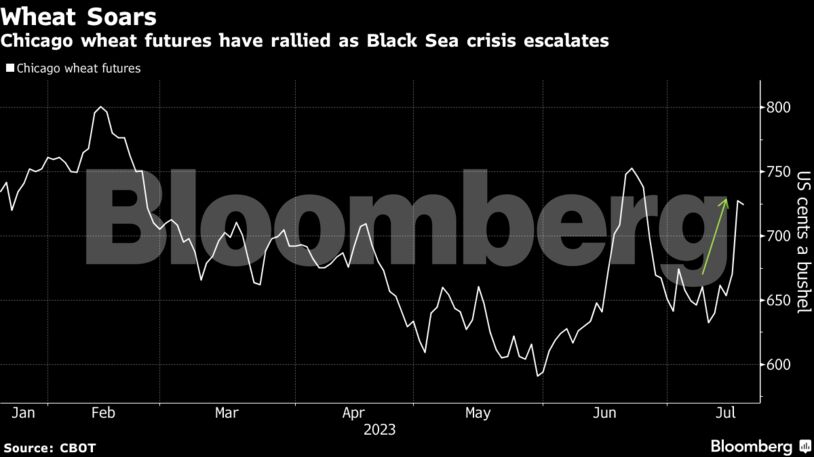
 Wheat futures swung between losses and gains Thursday, after having surged more than 11% in the previous two sessions, with Russia earlier this week ending the Ukraine grain deal. That had helped to keep trade flowing for a time and marked a rare example of Russian cooperation during its war. A breakdown of the trade route will force supplies to world markets through narrower and more cumbersome avenues.
In the days since its withdrawal from the accord, which was initially agreed a year ago, Russia has repeatedly targeted Ukraine’s agriculture infrastructure — shelling ports and damaging crop terminals. Ukraine’s largest sunflower-oil producer, Kernel SA, said damage at one of its facilities could take at least a year to repair.
Targeting such infrastructure “marks a new phase in the conflict,” according to Paris-based adviser Agritel. On top of that, export capacity is being shut off at the same time as many of Ukraine’s crops are coming to harvest.
All ships using the Black Sea corridor had departed Ukraine before the grain deal came to a close. The last vessel — the TQ Samsun — cleared its outbound inspection on Monday in Istanbul. The Black Sea ports are a vital artery for Ukraine’s crop sales abroad, previously accounting for the bulk of its shipments.
Read More: Ukraine Warns Ships Going to Russia Ports in Retaliatory Move
The shutdown — and the new threats to shipping — will heighten the need for alternative routes to get Ukrainian crops to market. The nation has increased reliance on its Danube River ports and rail and road routes via the European Union throughout the war.
Some of Ukraine’s eastern European neighbors have pledged to help with transit shipments of its grain through their territories to countries elsewhere. However, the group which includes Poland, Bulgaria, Hungary, Slovakia and Romania insists it wants to keep restrictions on domestic sales of those goods, after local farmers protested declining prices when Ukrainian crops initially flooded their markets.
The grains rally is sparking renewed fears of food inflation. Prices had, until recently, been moderating, due in part to the Black Sea accord. But the costs of many products made from wheat, such as flour and breakfast cereal, have continued to climb. Grain supply risks may raise costs for food manufacturers once again.
“We are working with all partners internationally to make sure that the grain won’t rot in the silos in Ukraine in the coming weeks, but get to those people in the world who desperately need it,” German Foreign Minister Annalena Baerbock said to reporters before a European Union meeting of foreign ministers in Brussels.
| Prices: |
|---|
|