




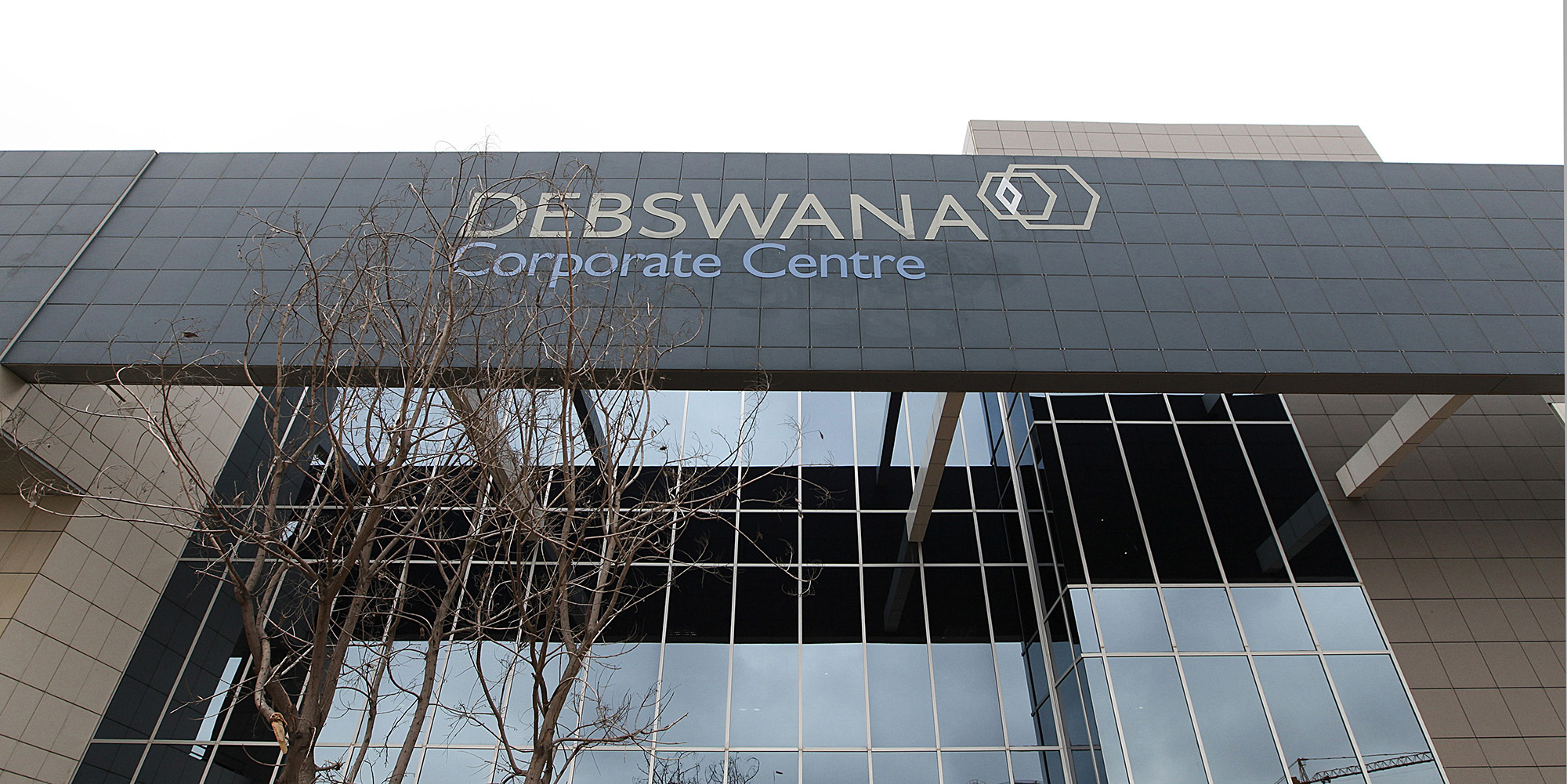
 The headquarters of the Debswana Diamond Company a joint venture between the Botswana government and De Beers, stand in Gaborone, Botswana, on 25 October 2012. (Photo: Chris Ratcliffe / Bloomberg via Getty Images)
 There is a theory that the only thing harder than a personal relationship is the relationship between a government and a company. Their incentives overlap somewhat, but they are also fundamentally different. For politicians, political pressures mount up; for the company, financial pressures are always there.
And of all the corporate/state relationships, there is nothing trickier than those which involve natural resources. The reason is obvious: people often regard the minerals in the land to be the property of people, or the state, or at least they should be. But getting the minerals to market so that this value can be realised requires resource companies to perform that tricky function. So there is always tension.
Because this is all so complicated, it's just such a breath of fresh air when a company and a country can agree in such a way that both the population and the company benefit. And of all of those agreements, none, or at least very few, can match the overall sensibleness of the long-term agreement between De Beers and the Botswana government. In some ways, this agreement between Botswana’s single largest export earner and Anglo American was a defining act in Botswana’s economic development.
The starting point itself has always been unusual: a 50/50 deal, theoretically also something very difficult to operate, never mind sustain. Debswana is half owned by the Botswana government and half owned by Anglo.
Every decade, their agreement is renegotiated and every time, the Botswana government has demanded a bit more, but in such a way that both sides win. The agreement has just been renewed after tense negotiations which lasted right till the last minute. The Botswana government has previously pressed for a larger role in polishing diamonds. But this time, it has been pushing for a greater role in the polished diamond trade.
It's not quite nailed down yet, but the main components are as follows: the Botswana government's polished diamond trader, the Okavango Diamond Company (ODC), will now be allocated 30% of Debswana's output, an increase of 25% over the previous allotment, rising to a maximum of 50% in the next decade. Meanwhile, the government has agreed to a 25-year extension of the Debswana mining licences through to 2054, which provides De Beers with the long-term certainty required to invest in two of the biggest diamond mines on the planet.
The market liked it and Anglo closed more than 3% higher, outperforming the other diversified miners. There is also going to be a diamonds-for-development fund, which will invest about $75 million into the economy to reduce Botswana’s dependence on diamonds.
The agreement is probably a plus for Botswana's incumbent president Mokgweetsi Masisi, who made it clear that he expected a positive deal he could sell to voters in next year's general election.
It doesn’t feel to me like an exploitative deal; 80% of Debswana’s profits got to the government in the form of taxes and royalties. It's certainly a critical one for De Beers since Botswana constitutes about 70% of its diamond production.
But I think the critical takeaway for SA is how a constructive, give-and-take kind of deal can actually benefit both government and resource companies. It's hard but not impossible, with the right kind of goodwill and trust.
The benefits can be - how does one put it? - stagge..ring.
Good investing,
Tim Cohen