




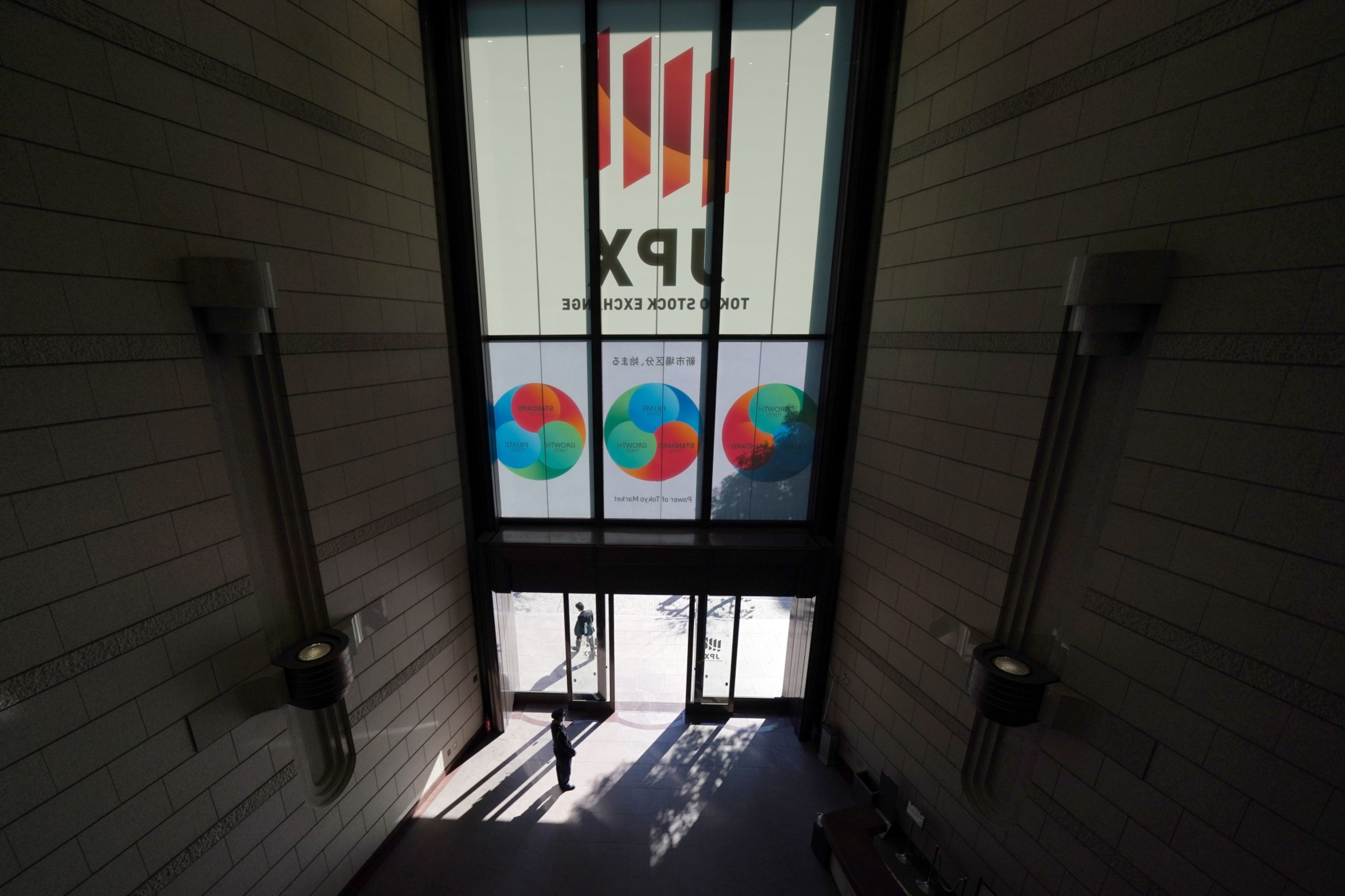
 The entrance of the Tokyo Stock Exchange in Tokyo, Japan, on Thursday, Jan. 13, 2022.
Benchmark 10-year yields rose around 16 basis points in Australia and 12 basis points in New Zealand while Japanese yields of the same maturity edged about two basis points higher. The yield on Australia’s three-year note touched the highest level since 2012. Government bond yields in Indonesia, the Philippines and Malaysia also rose.
The unexpected decision by the Bank of Canada to restart its rate-hiking campaign — which followed an increase earlier in the week in Australia — had immediate impact across global markets. It spurred traders to boost wagers on Federal Reserve rate increases, with swaps at one point fully pricing in a quarter-point hike for the July meeting. Bets for next week’s decision edged higher but still priced less than 40% odds of such an increase.
The moves in Japan, meanwhile, were heavily influenced by GDP data that was much stronger than estimated, with the economy expanding 2.7% in the first quarter versus projections for 1.9% growth. The news also saw the yen strengthen.
Treasury yields stabilised in Asian trading after a sharp increase across the curve Wednesday that added 14 basis points to the 10-year benchmark.
A gauge of Asian equities fell, weighed down by weakness in Chinese stocks. Benchmarks in Australia, South Korea and Japan also declined slightly. Investors were also focused on a potential new record high for Indian equity benchmarks after a recent rally.
Overnight in the US, tech shares bore the brunt of jitters over higher rates, sending the S&P 500 down for a second day this week and the Nasdaq 100 to its worst day since April. Contracts on the US benchmarks were marginally lower in Asian trading.
“Given the rally that we’ve had, it would be normal to see a bit of a pause, particularly in the context that we see where rates might plateau quite soon, but stay higher for longer,” Virginie Maisonneuve, global chief investment officer for equities at Allianz Global Investors, said in an interview with Bloomberg Television.
Bridgewater Associates’ billionaire founder Ray Dalio said while interest rates won’t go much higher, the economy will get worse.
“We are at the beginning of a late, big-cycle debt crisis when you are producing too much debt and have a shortage of buyers,” Dalio said from the Bloomberg Invest conference in New York.
The Reserve Bank of India is widely expected to keep rates on hold in its decision Thursday. Bloomberg Economics economist Abhishek Gupta sees the central bank switching its policy stance to neutral, tempering its shift with hawkish rhetoric that reflects rising upside risks to inflation.
Elsewhere, gold advanced, while oil slid after a rally on Wednesday and Bitcoin was little changed, hovering around $26,400. DM
Comments
Scroll down to load comments...