



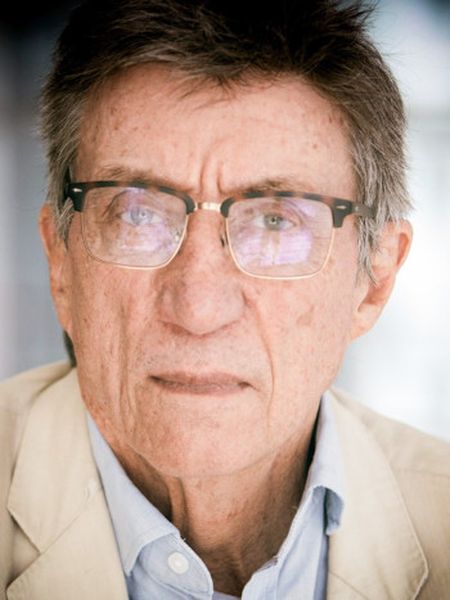
 From left: President Cyril Ramaphosa. (Photo: Gallo Images / Luba Lesolle) | Russian President Vladimir Putin. (Photo: EPA-EFE / Vladimir Smirnov / Sputnik / Kremlin Pool
 President Cyril Ramaphosa has embarked on a “course correction”, despatching special envoys to the G7 countries to try to counter the damaging impression that South Africa has become pro-Russian.
A growing opinion in the government and the ANC — which Ramaphosa himself apparently shares — that Russian President Vladimir Putin should not come to South Africa in August to attend the BRICS summit appears to be part of the same rethink.
A report from the SA Reserve Bank last week that secondary US sanctions could have a “catastrophic” impact on the SA economy, by cutting SA out of the US financial system and triggering a financial crisis, appears to have jolted the government into pre-emptive action to try to persuade the US and other G7 countries that Pretoria does in fact remain non-aligned.
Read more in Daily Maverick: ‘Non-alignment’ is not a real ANC policy, just a useful tool
Late in May, Ramaphosa appointed International Relations Minister Naledi Pandor as his special envoy to the G7 specifically to explain the six-president African peace initiative to Russia and Ukraine that he is part of.
The presidents are expected to visit Ukraine and Russia next week. Pandor met her French counterpart and spoke by phone to the German and Italian foreign ministers on 26 May and to British Foreign Secretary James Cleverly the following week. Pretoria is still trying to organise meetings or calls with the US, Canada and Japan.
Mission scope expands
But then last week, Ramaphosa expanded both the size and the scope of the mission to the G7, announcing in Parliament that because of concerns “raised about our commitment to our non-aligned position”, he was also sending Finance Minister Enoch Godongwana, Trade, Industry and Commerce Minister Ebrahim Patel and Minister in the Presidency responsible for State Security Khumbudzo Ntshavheni “as my envoys to the G7 countries, to explain our peace mission and to deal with various diplomatic matters”.
The impression South Africa has created in Western capitals, particularly Washington, DC, that it has abandoned its professed “non-aligned” stance on Russia’s war against Ukraine and is moving steadily closer to Moscow is the source of SA’s deteriorating relations with the G7.
Pretoria has contributed to this perception by holding a joint naval exercise with Russia and China which coincided with the anniversary of Russia’s 24 February 2022 invasion of Ukraine; by sending several high-level government or ANC delegations to Moscow and by allowing the US-sanctioned cargo ship Lady R to secretly dock in the Simon’s Town Naval Base last December.
Read more in Daily Maverick: The landing of a sanctioned Russian plane at Waterkloof undermines Mufamadi’s US mission
According to Defence Minister Thandi Modise, the Lady R offloaded Russian ammunition for SA’s Special Forces. But last month the US ambassador to SA, Reuben Brigety, dropped a diplomatic bombshell by claiming he had hard evidence that weapons and ammunition bound for Russia were also loaded on to the Lady R.
This claim remains unproven, but the accumulation of these episodes has persuaded Western governments that Pretoria is joining the Russian camp.
A little confused
Western diplomats are nonetheless a little confused by Ramaphosa’s G7 special envoys initiative. Initially, Pandor was the only envoy and her mission was just to explain the African peace mission which Ramaphosa was originally expected to embark on this week, with the presidents of Senegal, Democratic Republic of the Congo, Zambia, Egypt and Uganda.
The visit of the six presidents to Kyiv to meet President Volodymyr Zelensky and to Moscow to meet Putin was postponed probably to mid-June, apparently because of the African presidents’ clashing schedules.
Diplomatic sources told Daily Maverick that, as a special envoy of Ramaphosa, Pandor first sought meetings with the G7 heads of state, but none could see her, so she was “defaulted” to her counterparts.
She met French Foreign Minister Catherine Colonna in Paris on 26 May and spoke telephonically to German Foreign Minister Annalena Baerbock, and to Italian Deputy Prime Minister and Foreign Minister Antonio Tajani as neither could meet her in person.
Daily Maverick understands a phone call between Pandor with Canadian Foreign Minister Mélanie Joly is being arranged. It is not clear if calls with US Secretary of State Antony Blinken and Japanese Foreign Minister Yoshimasa Hayashi have also been finalised.
G7 embassies in Pretoria have apparently not yet been asked to arrange meetings or phone calls with Ramaphosa’s other three special envoys.
Defence delegation
An announcement by the SA Department of Defence on Sunday that it was sending a 20-member delegation to Washington this week to participate in the 19th SA-US defence committee meeting is also being viewed by some observers as part of Pretoria’s “course correction”.
Sources said the SA defence department did not usually make a fuss about this routine meeting and that the announcement appeared to have been designed to send a message that South Africa also enjoys close defence cooperation with the US and not just Russia.
The statement said the meeting with the US would continue and consolidate the “Strategic Defence Relationship and partnership between the two countries”.
It said the SA delegation would be headed by the acting secretary for defence, Thobekile Gamede.
The moves in the ANC and the government to withdraw Putin’s invitation to visit SA for the BRICS summit are apparently also a part of the course correction. Senior government official sources have told Daily Maverick that Pretoria was exploring the possibility of asking China to host the summit instead or to hold it entirely online.
Read more in Daily Maverick: South Africa now looking to China to host BRICS summit, say officials
At the weekend, the Sunday Times quoted ANC Secretary-General Fikile Mbalula as saying SA would not undermine its membership of the International Criminal Court (ICC) by welcoming Putin to the country and not complying with the ICC warrant to arrest him. The ICC issued the arrest warrant in March, charging Putin with complicity in the abduction and deportation to Russia of Ukrainian children during the war.
Mbalula suggested that the BRICS Summit would still be held in Johannesburg, but that Putin would be asked to participate remotely. Other government sources have said the thinking is that Pretoria will ask China to host the summit — or it will be held entirely online. They said inviting the other three leaders to participate in person while only Putin remained online would be insulting to him.
Western diplomats sceptical
The interministerial committee which Ramaphosa appointed last month to discuss how to resolve the Putin dilemma was expected to meet on Monday and to make recommendations for the Cabinet to finalise.
Some Western diplomats are sceptical about Ramaphosa’s diplomatic charm offensive changing perceptions about SA’s Russia stance.
One said that the G7 countries did not need envoys to explain SA’s nonaligned stance, but needed Pretoria to act in line with this professed stance.
Another saw Ramaphosa’s despatch of the special envoys as largely a “course correction” after the Lady R incident, the naval exercise and the possibility Putin might attend the BRICS Summit in person. But this diplomat wondered what substance the special enjoys would put into this course correction.
In her conversations with G7 foreign ministers so far, Pandor has evidently been told very clearly that the six African presidents’ peace initiative is a non-starter if it does not respect Ukraine’s sovereignty and territorial integrity. In other words, no peace plan will be accepted unless it is based on Moscow returning to Ukraine the approximately 18% of its territory which Russian troops now occupy.
Italy’s Tajani, for example, told Pandor that Italy appreciated South Africa’s commitment to negotiations “towards a just, comprehensive, lasting peace in Ukraine that will comply with the UN Charter and Kyiv’s sovereign prerogatives”.
“It is crucial to foster favourable conditions for Kyiv and to put pressure on Moscow. Only in this way can a path to peace be set in motion and the primacy of international law be re-established.
“We believe that South Africa, and Africa in general, can contribute to our efforts by articulating the need for an immediate cessation of hostilities to Moscow,” Tajani noted.
An official from another country whose foreign minister Pandor talked to likewise said that Pandor had been told that any peace plan would have to respect the territorial integrity of Ukraine, and the UN Charter.
The charter states in Article 2 (4) that all UN members “shall refrain in their international relations from the threat or use of force against the territorial integrity or political independence of any state”. DM