



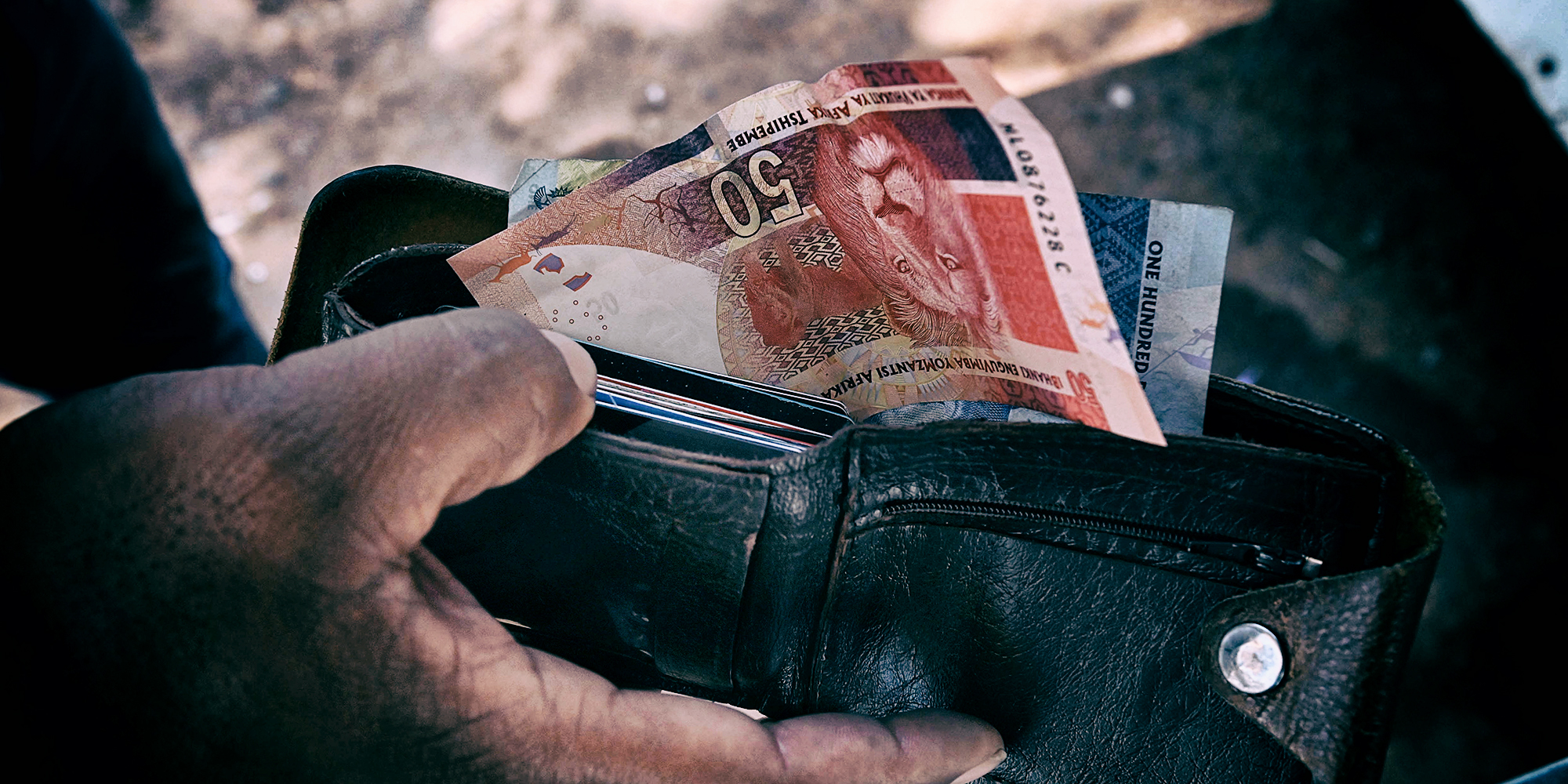
 (Photo: Leon Sadiki / Bloomberg via Getty Images)
Interest rates have been hiked, again, and the rand has fallen, again. The SA Reserve Bank (Sarb) increased interest rates by 50 basis points to 8.25%, which is more or less in line with what central banks have been doing for the past year and a bit. The rand really got thumped; it was down by 2.3% at last read, and R20 to the dollar looms on the horizon. This all seems so normal and, of course, depressing. But I wonder if people realise how abnormal the moment is.
Take, for example, the rand. Normally, when you compare two currencies, you look at the rate of exchange and, if one goes down, you think, well, that one went down. But actually, it is more complicated than that, because you have to factor in inflation.
If the inflation rate in country A is running at 12%, and inflation in country B is running at 6%, then as time goes on, the value of all the goods and services in country A is declining by 1% a month, comparatively speaking. Consequently, you would expect the currency to reflect that decline. But of course, the value of all the goods and services in country B is also declining, but at a lesser rate.
Hence, the crucial thing is the inflation differential, and if markets are playing the game correctly (they always do. Not.), you would expect this to all come out in the wash. Since inflation is normally higher in developing economies than it is in developed economies, you expect the currencies of developing market countries to slide according to the inflation differential.
But, here is the oddity: Inflation in SA has actually been lower than that of the US for at least part of this year, and is still lower than inflation in the EU. So, you would expect, in these circumstances, the rand to rise! Yet, from January this year, the rand has gone from R16.80 to R19.60 to the dollar and the reason, of course, is the rolling power blackouts.
Inflation in SA is also acting strangely, not that it doesn’t normally. Inflation hit this ridiculous low of around 2% in 2020 as the Covid threat looked as though it was going to devastate the global economy. Inflation increased during the post-Covid bounce-back, which is perfectly understandable. As the economy got going again, you expect inflation to return to the norm, which it did last year.
The increase was very sharp, rising to just under 8% in July last year. From there it has been declining, but in a drifty sort of way, and the latest figure earlier this week was 6.8%. This happened as the economy’s prospects started to look gloomy again. Why, when the economy transparently is on a downward trajectory, is inflation coming down so slowly?
The problem is that, at a certain point, the decline of the rand doesn’t follow the inflation differential; it causes it. Big rand declines increase the cost of imports and that tends to push up local prices. This is what has been happening, but it is important to remember that it’s not normal.
Inflation should continue to drop over the coming months, and it should be back in the Sarb’s 3%-6% range pretty soon. Hence, the rate increase today is probably the last of this cycle, unless rolling power blackouts push the rand a lot lower — not impossible — and in turn continue to push up inflation.
Samuel Johnson once said: “Depend upon it, sir, when a man knows he is to be hanged in a fortnight, it concentrates his mind wonderfully.” Let’s hope some minds are being concentrated on the prospect of execution over the next few months. DM
Comments
Scroll down to load comments...