




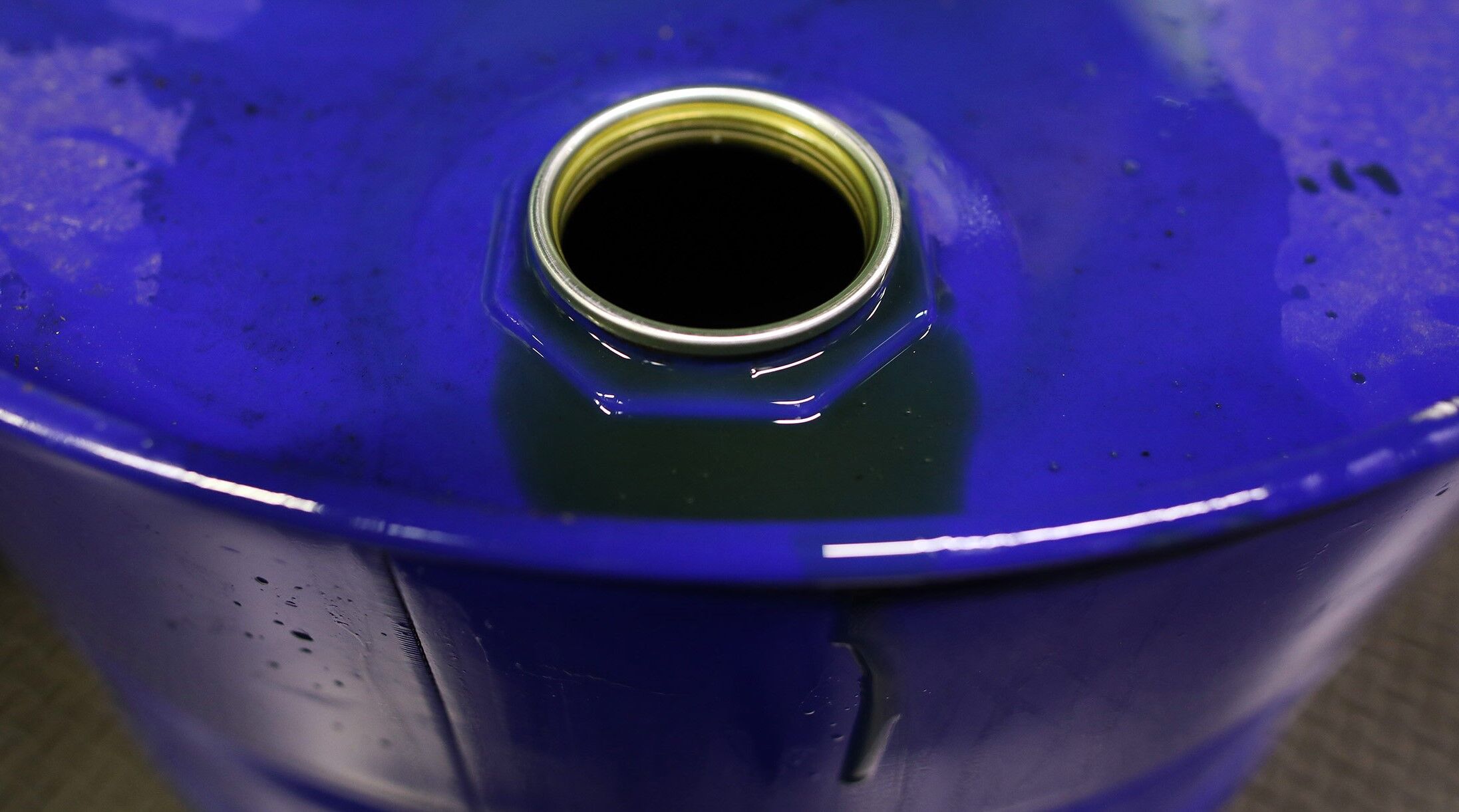
 Excess fluid sits on the rim of a barrel of oil based lubricant at Rock Oil Ltd.'s factory in Warrington, U.K., on Monday, March 13, 2017. Oil declined after Saudi Arabia told OPEC it raised production back above 10 million barrels a day in February, reversing about a third of the cuts it made the previous month. Photographer: Chris Ratcliffe/Bloomberg
 The plan “fails the principal test of equity, equality,” according to court documents filed by Ndegwa & Ndegwa Advocates on behalf of the petitioners. They asked the court to find the government’s plan unconstitutional and in violation of its procurement rules.
If enacted, the policy shift envisages terms allowing the government to make payments after at least six months instead of within a week currently, according to Energy Secretary Davis Chirchir. The government designed the plan to help ease pressure on Kenya’s foreign-exchange reserves, which have fallen to an equivalent of less than four months of import cover.
READ: Dollar Deficit Spurs Kenya to Seek $4.8 Billion Oil-Supply Cover
Under the plan, Kenya has sought a $4.8 billion credit facility from lenders including KCB Bank, Standard Bank Group and Abu Dhabi Commercial Bank to enable it secure petroleum and defer payments for cargoes. The government plans the begin imports under the new system in the April-May supply round.
The move “amounts to unfair practice as an unconscionable representation that is excessively one sided” and favors the supplier rather than the consumer, the petitioners argued. The government should have negotiated how to stabilize its dollar reserves “without having to frustrate” oil-marketing companies and “technically kicking them out of business,” according to the filings.
Judge Richard Mwongo is expected to address the matter on Friday, according to a court official.
Comments
Scroll down to load comments...