




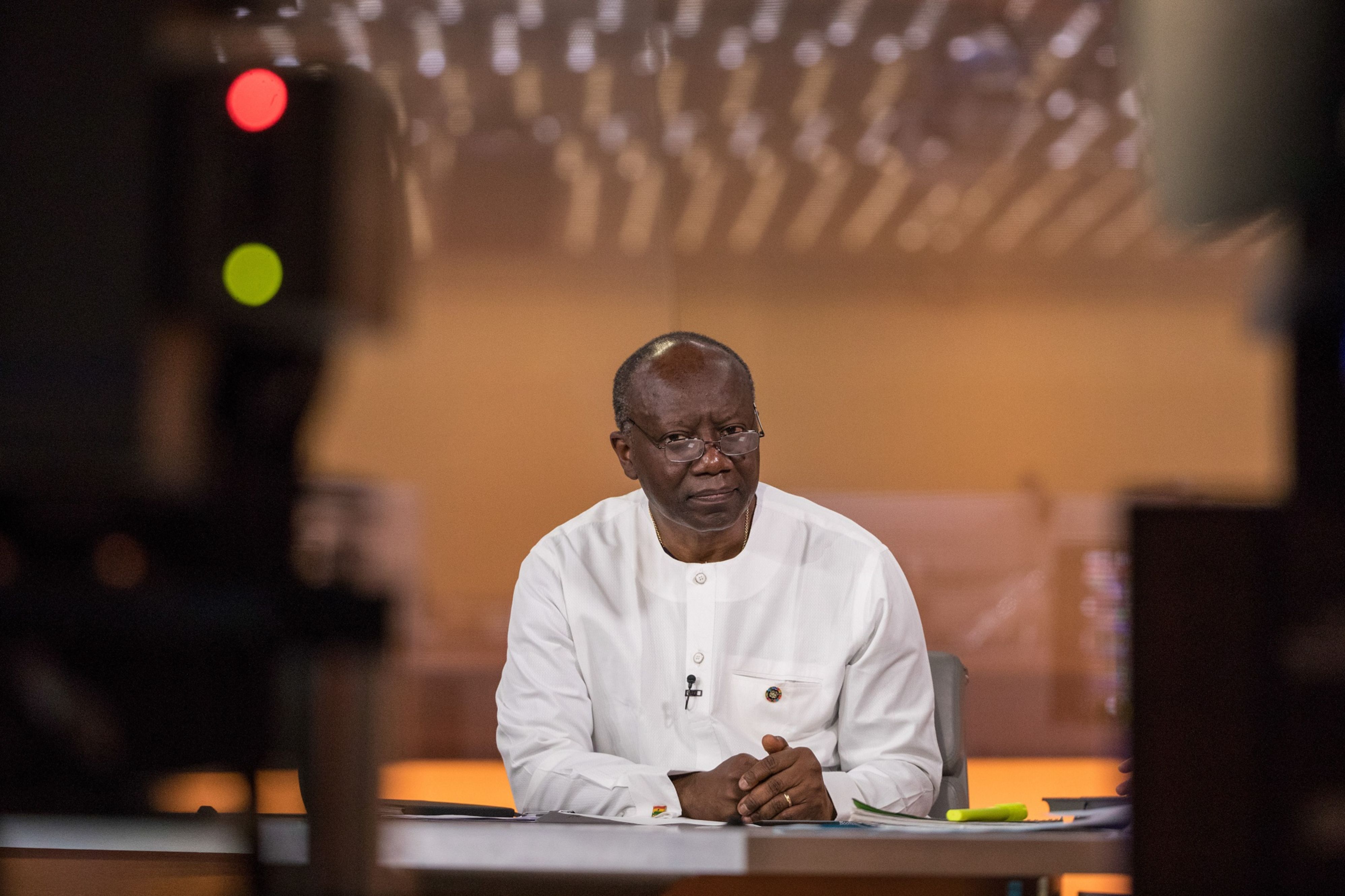
 Ken Ofori-Atta, Ghana's finance minister, pauses during a Bloomberg Television interview in London, U.K., on Wednesday, March 20, 2019. Ghana, which this week raised $3 billion through debt sales and was contemplating 100-year bonds, will work with the market to determine the tenure of its next issuance, Ofori-Atta said.
 The ruling triggers the payout of the insurance protection on Ghana’s sovereign debt. Credit-default swaps covered a gross $66.4 million and net $34.4 million of Ghana’s debt as of Feb. 10, according to data from the Depository Trust & Clearing Corp.
The nation’s eurobonds were unchanged following the decision, with the majority of the notes trading at a discount of 60-65% versus their face value, according to CBBT pricing compiled by Bloomberg.
The swaps panel had already ruled in January that Ghana’s decision to suspend debt servicing on its eurobonds, commercial term loans and most of its bilateral debt met the definition of a “potential repudation/moratorium.” This happened before the grace period on the first missed payment had expired.
Ghana has been engaging investors since November to restructure about $30 billion of its $46 billion in local and international debt. It recently completed the first part of a domestic restructuring, with investors exchanging 83 billion cedis ($6.5 billion), or 64% of holdings, for new securities, against an overall target of 80%. It aims to start “substantive” discussions with international bondholders and their advisers in coming weeks, Minister of Finance Ken Ofori-Atta said Feb. 16.
Meanwhile, the African nation has also kicked off talks with China to restructure bilateral loans, as reported by Bloomberg News earlier this week.