




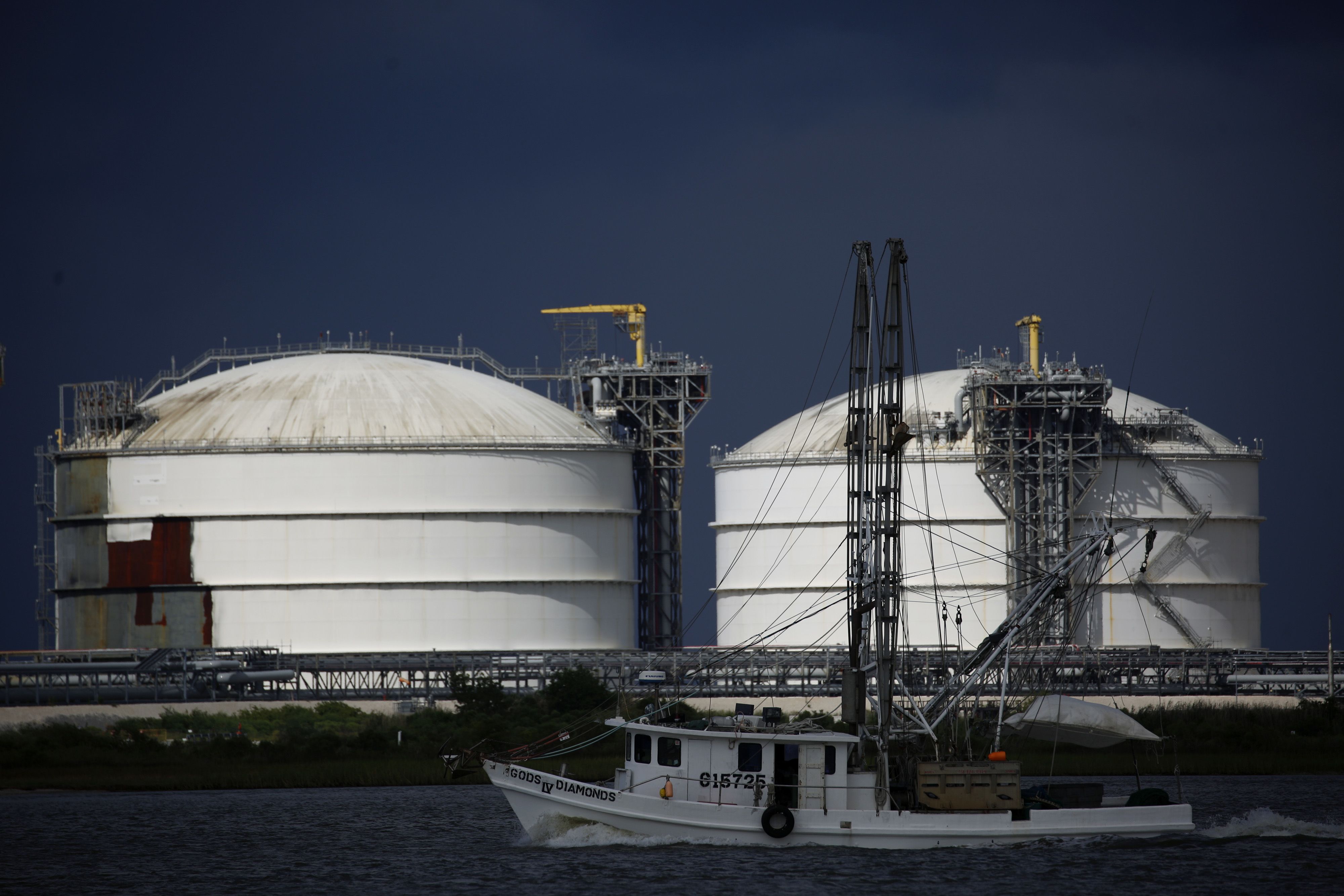
 SABINE PASS, TEXAS - AUGUST 25A shrimp boat moves past storage tanks at the Sabine Pass LNG Export Terminal before Hurricane Laura makes landfall in Sabine Pass, Texas, U.S., on Tuesday, Aug. 25, 2020. Photographer: Luke Sharrett/Bloomberg
 The 80% plunge in benchmark US gas futures since late August will cheer homeowners and manufacturers recently hammered by sky-high utility bills and input costs.
But shale explorers like Chesapeake Energy Corp. are faced with a grim choice: keep drilling new wells to expand output, further drenching the country in supplies, or idle rigs and risk losing workers in one of the tightest labor markets in history.
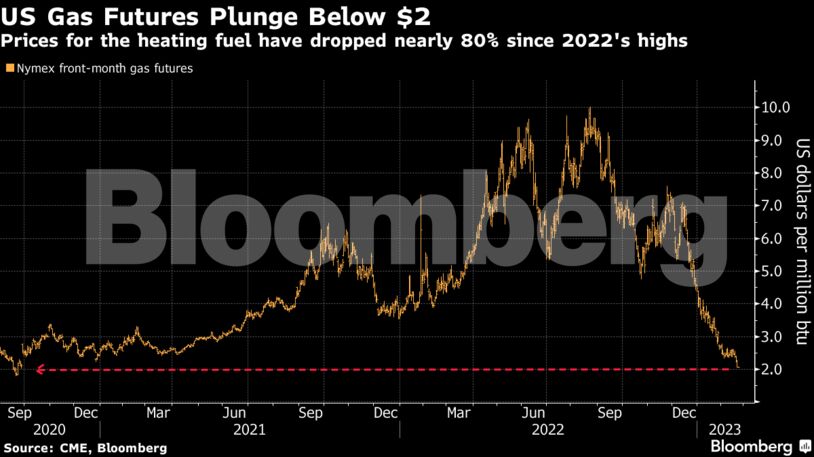
Gas for March delivery tumbled as much as 5.1% to $1.967 per million British thermal units on the New York Mercantile Exchange on Wednesday, the lowest intraday level since September 2020. The contract erased those losses later in the session.
In contrast, gas futures briefly topped $10.25 during morning trading on Aug. 23.
“The market has been hit with the worst-case scenario,” said Bloomberg Intelligence analyst Vincent Piazza. “Hard to imagine how things get worse from here.”
The slump is good news for the Biden Administration, which has taken it on the chin from stark inflation news across the economy.
The reversal in gas’s fortunes has been, above all, the result of mild winter weather in the biggest US metropolitan areas that sapped demand at a time of year when consumption normally surges. At the same time, an explosion that shut a Texas gas-export complex last summer prevented many shipments of the fuel from heading to overseas market, triggering a backup of supplies into the domestic market.
Shares of EQT Corp., the nation’s largest gas supplier, have fallen almost 40% from their 2022 peak, while Antero Resources Corp. has dropped by almost half.
Across the contiguous 48 US states, January was the sixth-warmest on record. The six New England states, as well as New Jersey, were the warmest on record, according to the US National Centers for Environmental Information. New York, Pennsylvania and Indiana had their second-warmest January in data going back to 1895.