




 A Lyft Inc. light sits on the dashboard of a vehicle in the Time Square neighborhood of New York, U.S., on Wednesday, May 8, 2019. Simmering tensions between drivers and ride-hailing companies are flaring again, as drivers in major cities across the U.S. and the U.K. went on strike Wednesday over low wages and unstable working conditions.
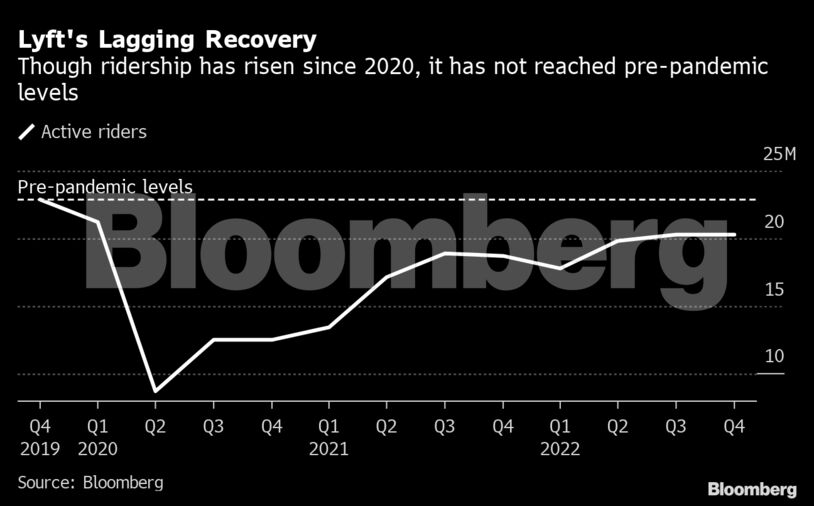
Lyft has struggled to keep customers on its platform and bring its ridership back to pre-pandemic levels. Its earnings stood in stark contrast to Uber Technologies Inc., which saw ride bookings soar by 31% in the fourth quarter, surpassing its delivery bookings for the first time since the pandemic and demonstrating that consumers are still willing to pay a premium for a car ride despite inflation.
“This is obviously not the level of growth or profitability we are aiming for or capable of, and we are laser focused on driving additional growth and managing costs,” co-founder and Chief Executive Officer Logan Green said in a conference call Thursday. Green said Lyft is “reviewing adjustments to the business, including cost-cutting measures.”
The stock plunged 74% in 2022, but had rebounded 47% this year through Thursday’s close. Lyft shares jumped in the company’s March 2019 trading debut, closing almost 9% higher than its IPO price of $72.
Read More: Uber Gains as Rides and Delivery Demand Defy Inflation Fears
Lyft had reduced base prices for a ride in January to keep up with a similar move by Uber. “Relative to three months ago, the competitive dynamics changed,” Green said. “We must prioritize competitive service levels.”
The company reported an adjusted Ebitda loss of $248 million during the final three months of 2022. The company attributed the loss to a regulatory disclosure change that requires companies to count insurance reserves, cash set aside to pay for claims and other insurance expenses, in financial measures.
“After these results, no question that Lyft is lagging its bigger competitor in terms of ridesharing growth,” said CFRA analyst Angelo Zino.
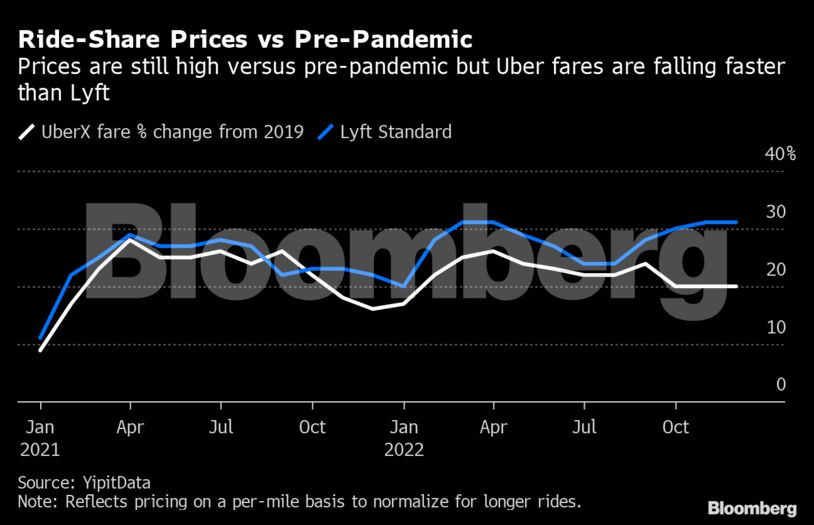
Lyft co-founder and President John Zimmer said the company will be competitive on price and wait times. In October, the company increased the service fee riders pay directly to cover higher insurance costs. Those expenses are expected to continue to rise. Rather than have riders bear the burden, Lyft is willing to take the hit to profits instead, Zim
mer said in an interview, adding the company expects the factors leading to the fourth-quarter earnings loss to be a one-time issue.
The slower revenue growth is primarily due to seasonality and the fact that a large portion of its rider base counts bikes and scooters, which customers use less frequently in colder months, Zimmer said. The outlook also reflects that Lyft is generating less revenue from higher fares from surge pricing, a product of more drivers on the platform to meet rider demand, he said.
Read more: Uber gains as rides and delivery defy price pressure
Unlike Uber, Lyft only operates in North America and doesn’t have a food delivery business. To increase customer retention, the company has worked to expand its subscription product, Lyft Pink, and has partnered with Grubhub to offer members a complimentary subscription to the food-delivery platform. Lyft also launched an advertising unit last year to tap higher-margin revenue, a strategy other on-demand platforms including Uber, Instacart Inc. and DoorDash Inc. have implemented.
Zimmer said driver supply in the fourth quarter was “the best in three years” but declined to say if Lyft would be paring back spending on incentives.
“I think the market is large enough, we are talking about ride sharing and mobility as a service, to support two large players,” said D.A. Davidson senior analyst Tom White. “I think Lyft can be a number two, but its increasingly looking like its a distant number two.”
There were some bright spots in the fourth quarter for Lyft. It said revenue rose 21% to $1.18 billion, its highest ever, beating the $1.16 billion Wall Street was expecting. Revenue per rider rose 11.5% from last year to $57.72. The 20.4 million active riders in the fourth quarter was in line with estimates, though was still more than two million customers below Lyft’s base of 22.9 million active riders at the end of 2019.
“We’re seeing it go in the right direction,” Zimmer said. He did not say whether the company was losing share to Uber but added that Lyft has “a larger portion of our market share on the west coast which has been slower to recover.”
Read more: Lyft cuts staff to cope with tough economy
In November, Lyft eliminated 13% of its workforce, its second round of layoffs in 2022, to rein in costs as it tries to cope with a difficult economic backdrop. Uber said on Wednesday it expects headcount to be “flat” in 2023.
Comments
Scroll down to load comments...